THE ACCIDENT THAT SHATTERED A HOLLYWOOD DREAM!
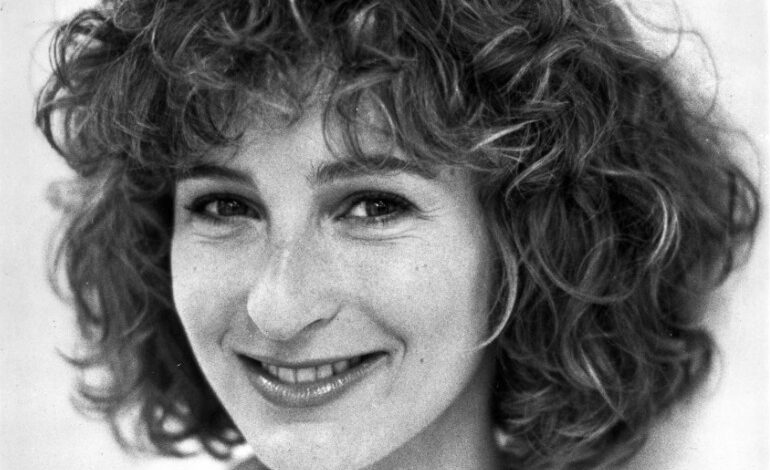
The summer of 1987 was supposed to be the definitive turning point for Jennifer Grey. At twenty-seven years old, she had just completed a project that would soon become a cultural touchstone, a film that would define a generation’s romantic aspirations and cement her place in the cinematic pantheon. As the daughter of Academy Award winner Joel Grey, performing was in her blood, but with her role as Frances “Baby” Houseman in Dirty Dancing, she was finally stepping out from the long shadow of her lineage to claim her own identity. She was the girl who carried the watermelon, the girl who learned to dance, and the girl who proved that no one puts Baby in a corner. Yet, just as the world prepared to celebrate her ascent, a horrific twist of fate on a narrow road in Northern Ireland ensured that Jennifer Grey would never truly feel like the star she had become.
To understand the weight of the tragedy, one must first recall the sheer kinetic energy of the “Dirty Dancing” phenomenon. The film was a sleeper hit, a low-budget production that defied industry skepticism to become a global juggernaut. Grey’s performance was the heart of that success; she possessed a rare, relatable vulnerability paired with a sharp comedic timing that made her the perfect foil for Patrick Swayze’s smoldering Johnny Castle. When the film premiered, the chemistry between the leads was undeniable, and the soundtrack became the heartbeat of the year. For any other young actress, this would have been the moment of ultimate triumph—the arrival of fame, fortune, and a limitless future. But for Grey, the glitter of Hollywood was obscured by the dark reality of a rain-slicked road in Enniskillen.
Just days before the film’s high-profile release, Jennifer was vacationing in Ireland with her then-boyfriend, actor Matthew Broderick. The couple had recently worked together on Ferris Bueller’s Day Off, where Grey played the frustrated older sister to Broderick’s titular charming rogue. Their off-screen romance was a closely guarded secret at the time, adding a layer of youthful intensity to their trip. On a gray, misty afternoon on August 5, 1987, Broderick was behind the wheel of a rented Vauxhall Nova when, for reasons that remain shrouded in the fog of trauma and conflicting accounts, the vehicle crossed into the wrong lane. They collided head-on with a Volvo carrying 63-year-old Margaret Doherty and her 28-year-old daughter, Anna Gallagher. Both women were killed instantly.
The aftermath of the collision was a scene of absolute devastation. Broderick suffered a broken leg, fractured ribs, and a collapsed lung, spending weeks in a Belfast hospital. Jennifer Grey, miraculously, escaped with what appeared to be minor physical injuries—some bruising and a neck injury that would later require surgery—but the psychological wounds were catastrophic. While the physical wreckage was cleared from the Irish countryside, the emotional wreckage began to settle deep within her spirit.
Returning to the United States, Grey found herself thrust into a surreal cognitive dissonance. On one hand, she was the “It Girl” of the moment. Her face was on every magazine cover, her interviews were in high demand, and “I’ve Had The Time of My Life” was playing on a loop in every public space. On the other hand, she was a woman haunted by the faces of two strangers who would never go home again. The juxtaposition of her sudden professional adoration with the profound grief and survivor’s guilt she felt created a fracture in her reality. She was being told she was the luckiest woman in the world at the very moment she felt like the most broken.
Grey has spoken candidly in later years about the paralyzing nature of that guilt. “The juxtaposition of that deep sorrow, the survivor’s guilt, and then being celebrated as the new big thing just didn’t jibe,” she once remarked. The trauma effectively robbed her of the joy that should have accompanied her breakthrough. Instead of basking in the limelight, she felt like a fraud or, worse, a person undeserving of the applause. The “Hollywood Dream” is predicated on the idea of a sparkling, uncomplicated ascent, but Grey’s rise was tethered to a literal and figurative cemetery. The psychological impact manifested as a withdrawal; she found it increasingly difficult to tap into the lightness and spark required for the romantic comedies and leading roles that were being tossed her way.
This internal struggle was further complicated by a series of career decisions that would later become the stuff of industry legend. Struggling with her identity and perhaps seeking a way to distance herself from the “Baby” persona that was now so painfully linked to the accident, Grey underwent two rhinoplasty procedures in the early 1990s. The surgeries altered her appearance so significantly that she became virtually unrecognizable to the public and to casting directors. She went from being a unique, recognizable star to someone who looked like a different person entirely.
While many viewed the plastic surgery as the primary reason her career stalled, Grey herself has suggested that the internal shift happened long before the scalpel touched her skin. The accident in Ireland had already dimmed her light. The ambition that drives a star to fight for roles, to network, and to endure the scrutiny of fame had been replaced by a desire for peace and a sense of penance. She had become, in her own words, “invisible” long before the world stopped recognizing her face. The trauma had created a barrier between her and the camera; the exuberant girl who jumped into Patrick Swayze’s arms was gone, replaced by a woman who carried the heavy burden of a tragedy she could not undo.
In the decades that followed, Jennifer Grey’s career became a series of “what ifs.” She appeared in television movies, took on guest roles, and eventually made a triumphant, albeit bittersweet, return to the public eye by winning Dancing with the Stars in 2010. That victory felt like a full-circle moment, a reclamation of the joy of movement and the spirit of “Baby” that had been suppressed for so long. During that competition, she finally began to process the physical and emotional pain that had plagued her since 1987, including undergoing a series of surgeries to repair the chronic neck damage sustained in the crash—damage that had secretly worsened over twenty years.
The story of Jennifer Grey is not just a cautionary tale about the fickleness of fame or the impact of physical transformation. It is a deeply human story about the fragility of success and the way trauma can rewrite a person’s narrative in a single heartbeat. In Hollywood, we often demand that our icons remain frozen in their moments of greatest triumph, unaffected by the messy, tragic realities of the human condition. We wanted Jennifer Grey to stay in that 1963 Catskills resort forever, dancing in the sunset. But life forced her onto a different path, one defined by resilience, quiet reflection, and the long, slow process of healing.
Today, Grey stands as a survivor of both a literal collision and the metaphorical pressures of an industry that rarely makes room for grief. Her “shattered dream” wasn’t just the loss of movie roles; it was the loss of the innocence required to enjoy them. By stepping back from the intense heat of the spotlight, she may have lost a career as an A-list leading lady, but she gained a life defined by her own terms, away from the shadow of that Irish road. Her journey serves as a poignant reminder that behind every “overnight success” is a person whose private battles are often far more dramatic than the roles they play on screen. The Hollywood dream may have been broken, but in its place, Jennifer Grey built a reality rooted in the courage to keep moving, even when the music stops.