Useful Storage Secrets To Turn Your Tiny Kitchen Gaps Into Wonders
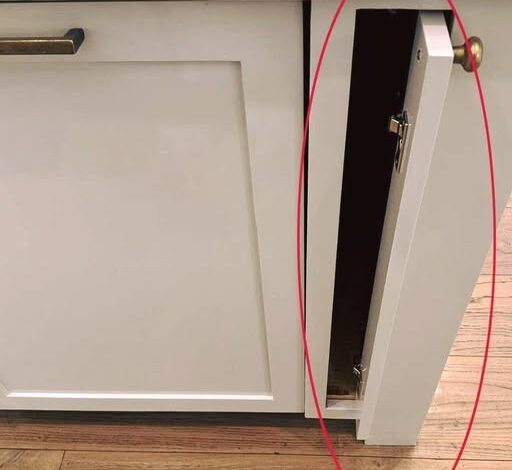
A narrow strip between kitchen cabinets can look like space that serves no purpose. It may be only a few inches wide, too small for a conventional cupboard and easy to overlook when planning storage. Yet the right kind of pull-out unit can turn that apparent gap into a useful place for the items that otherwise crowd a counter.
These slim cabinets are often called filler pull-outs. Closed, they can resemble a simple vertical panel in the run of cabinetry. Pull the front forward and the concealed unit slides out, revealing shelves arranged one above another. Instead of adding a large cupboard, the design makes use of a space that was already present.
The principle is particularly useful in a compact kitchen, where finding a home for small, frequently used items can be harder than storing the large pots. Spice jars, bottles, and other supplies do not always need a broad shelf. They need a place where they fit securely and can be found without moving several unrelated things first.
A pull-out changes access as much as capacity. In a deep cupboard, smaller containers can disappear behind larger ones. A cook may buy another jar simply because the first has been pushed out of sight. Bringing the storage unit into the room makes its contents easier to see and can help prevent that cycle of forgetting and replacing.
The shelves also reduce the need to reach into a dark corner. Rather than bending and searching behind a row of bottles, you draw the unit toward you and look along it. The benefit depends on the position and design, but the basic idea is to bring the contents within easier view instead of making the user work around the cupboard.
Hardware is important. Full-extension slides can make more of the shelf accessible, while a soft-close mechanism can keep the unit from slamming shut. These features are not present in every model, and their usefulness depends on proper installation. A narrow front panel alone tells you little about the strength or quality of the mechanism behind it.
The same caution applies to weight. Glass bottles and cans can become heavy when grouped together. Choose a unit whose rated capacity suits what you intend to store, and keep the load within the manufacturer’s limits. The fact that the space is small should not encourage treating its shelves as unlimited storage.
Adjustable shelf heights add flexibility. A collection of short spice jars needs a different arrangement from tall bottles. Setting the shelves around the actual contents can prevent awkward empty space and make it easier to remove a container without tilting or catching it on the shelf above.
Not every narrow unit is designed for the same objects. Some arrangements work well for jars and bottles; others are made for upright trays or baking sheets. Choosing the internal layout before installation is more useful than assuming any thin cupboard will accommodate every item mentioned in a storage advertisement.
Location matters as well. Supplies used together are convenient when stored near the relevant work area, but a convenient position must still be suitable for the contents. Keep food storage away from excessive heat, and preserve any clearances required by nearby appliances. An apparent gap may serve a necessary installation or ventilation purpose rather than being available to fill.
Before buying, measure the usable width, height, and depth carefully. Check whether the unit can extend fully without striking a handle, wall, or adjacent appliance. Consider how it will be cleaned and how easily the shelves can be reached. Those ordinary details determine whether an attractive idea becomes genuinely helpful.
Once installed, give the space a clear purpose. A small unit filled with an unrelated mixture can become cluttered just as a large cupboard can. Grouping similar items, keeping labels visible, and checking supplies before shopping helps preserve the advantage of having everything in view.
A filler pull-out will not transform every kitchen, and not every gap is suitable for one. Where the dimensions and layout work, however, it can make a surprisingly useful difference. The gain comes from better access and thoughtful organization, turning a slim overlooked area into storage that supports the way meals are actually prepared.