Trump officially signs order to rename Lake Ontario as trade war escalates further
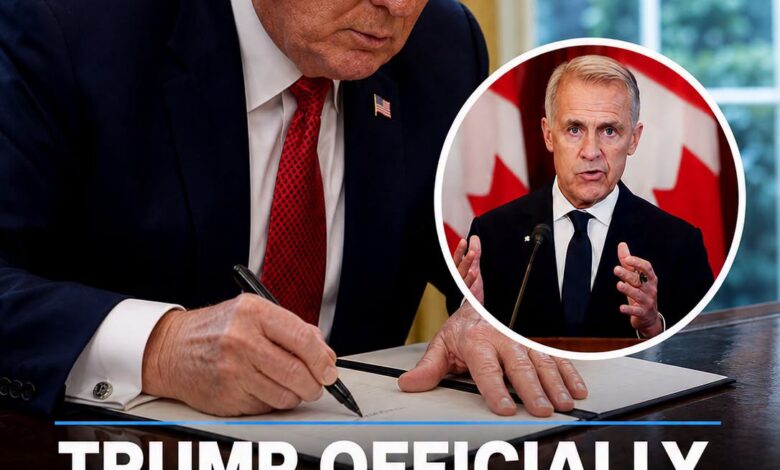
President Donald Trump has signed an executive order directing the United States government to use the name Lake America for Lake Ontario in federal communications. The order, signed on August 27, 2026, arrived as trade tensions between the United States and Canada continued to escalate and immediately drew criticism from Canadian officials.
The directive applies to agencies and official materials under United States federal authority. It calls for the new terminology to be implemented within 30 days and places responsibility on federal departments to update maps, documents, databases, and public references where appropriate. The change does not give Washington the power to dictate what Canada calls the shared body of water.
Lake Ontario sits on the international border and is one of the five Great Lakes. Its shoreline includes communities in both countries, and its waters are governed through a long history of treaties, agreements, and binational institutions. For that reason, changing the name in one government’s documents does not create a universally accepted new geographic identity.
The order was presented as an assertion of American identity at a moment when the administration was pressing Canada on trade. Supporters treated the move as a symbolic statement of national confidence. Critics described it as unnecessary provocation that could make an already strained relationship more difficult without solving any practical dispute.
Canadian leaders emphasized that the lake’s established name remains Lake Ontario in Canada. Provincial and federal authorities are not bound by an American executive order, nor are international mapmakers, educational institutions, private publishers, or ordinary residents. This means two names may appear across different official systems even though they refer to the same water.
Geographic names carry history and political meaning, which is why attempts to change them often produce reactions far larger than their administrative details suggest. Maps are not merely technical tools. They influence how people understand territory, memory, and belonging. Residents who have used the name Lake Ontario throughout their lives may see a replacement as an attempt to overwrite a familiar regional identity.
The practical effects will depend on how agencies interpret the order. Federal websites and publications can be updated relatively quickly, but printed maps, signs, data standards, and coordination with outside organizations are more complicated. Navigation companies and international bodies make their own naming decisions. A federal label can therefore coexist with older or foreign terminology for years.
The dispute also comes against a more consequential backdrop. Tariffs and countermeasures affect businesses, workers, consumers, and cross border supply chains. The United States and Canada trade enormous volumes of goods, and communities near the border are especially sensitive to delays or new costs. A naming controversy can dominate headlines while the economic disagreement continues to shape daily decisions.
Lake Ontario itself remains a shared environmental responsibility regardless of language. Water quality, shipping, fisheries, invasive species, and shoreline protection require coordination. Pollution or ecological damage does not stop at an administrative boundary. Officials in both countries must continue working through established mechanisms even when political rhetoric becomes sharper.
It is also important to distinguish the scope of the action from some of the broader claims circulating online. The executive order changes how the United States federal government refers to the lake; it does not transfer ownership, change the international border, or compel Canada to adopt the same name. Those legal and geographic realities remain governed by existing agreements.
The naming directive will likely continue to attract debate because it combines symbolism, history, and a live diplomatic conflict. Some Americans will adopt Lake America in official or political contexts, while many Canadians and international users will retain Lake Ontario. The result may be parallel usage rather than immediate replacement.
Whatever name appears on a particular federal document, the lake remains a resource shared by two countries and millions of people. The order has made it a symbol in the trade dispute, but the long term relationship around the Great Lakes will still depend on practical cooperation. Names can express power; maintaining the water requires partnership.