The Mystery of Lobsters Green Goodies (And Why Its Actually a Delicacy)
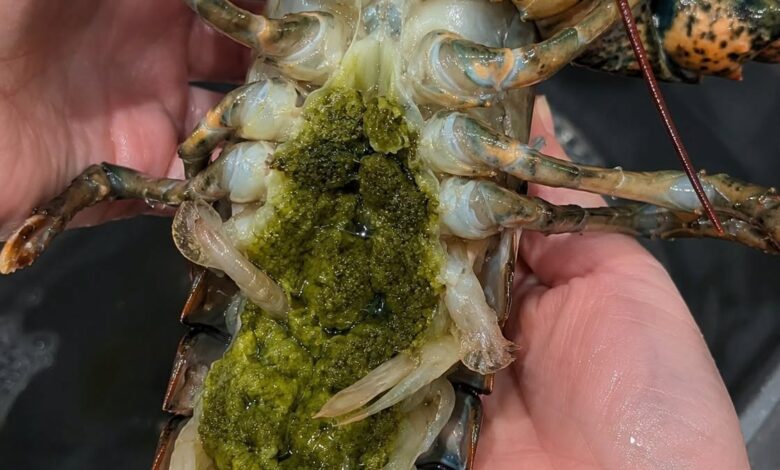
Cracking open a cooked lobster and finding a soft green substance can make dinner stop instantly. The material is not mold, poison, or spoiled meat. It is called tomalley, an organ that performs functions similar to a liver and pancreas. Its color ranges from olive green to dark green or yellowish brown, and its creamy texture is very different from the firm white lobster meat.
Many seafood lovers consider tomalley a delicacy. It has a concentrated, rich flavor that tastes more strongly of the sea than the tail or claw meat. Some diners eat a small amount directly, while cooks mix it into sauces, butter, stuffing, or broth. Others dislike the appearance and remove it completely. Both reactions are normal matters of preference.
The lobster also contains other parts that can surprise first-time diners. A female may have red or orange roe, sometimes called coral, which becomes firmer when cooked. Pale or translucent cartilage and membrane can appear around the body. None of these should be confused with the green tomalley. Learning the basic anatomy turns a mysterious discovery into an understandable part of the animal.
Tomalley requires more caution than ordinary lobster meat because the organ filters and processes substances from the lobsters environment. Health authorities sometimes advise limiting or avoiding it when marine toxins or contaminants are a concern. Cooking can kill many germs but may not remove every naturally occurring toxin. Local seafood advisories are therefore more useful than relying only on smell or appearance.
People who are pregnant, very young, older, immunocompromised, or managing certain health conditions may choose to avoid tomalley and follow local medical or food-safety advice. Anyone uncertain about the source of the lobster can discard the green material and eat only properly cooked meat. Removing it does not mean the entire lobster is spoiled; it is simply a conservative choice.
Good handling matters from purchase to plate. Live lobster should come from a reputable supplier and remain cold until preparation. Cook it thoroughly, use clean tools, avoid cross-contamination with raw seafood, and refrigerate leftovers promptly. Meat with a strongly unpleasant odor, slimy texture, or evidence of poor storage should not be rescued by extra cooking. When in doubt, discard it.
If the lobster was served in a restaurant, asking the staff is completely reasonable. The kitchen can confirm that the green substance is tomalley, explain how the lobster was sourced, and share any relevant local guidance. At home, the fish seller or regional health authority may have information about current harvesting-area advisories. A photograph alone cannot answer those location-specific safety questions.
For diners who decide to taste it, a small amount is enough to understand why enthusiasts prize the flavor. It can be stirred into melted butter or sampled beside the meat. Those who find it unappealing can scrape it away without guilt. A delicacy is optional, and no guest should feel pressured to eat an organ simply because someone else enjoys it.
The startling green discovery is therefore both ordinary and worthy of informed caution. It is a natural part of lobster anatomy, not automatic evidence of decay. Recognize it, consider the source and current advisories, and make a personal choice. That simple knowledge prevents a perfectly familiar feature from turning a special meal into unnecessary alarm.
It also helps to separate the question of identity from the question of safety. Identification is straightforward: green creamy material in the body cavity is usually tomalley. Safety depends on where and when the lobster was harvested, who will eat it, and whether an advisory is active. A viral photo cannot supply those details. Responsible enjoyment means checking reliable local information, especially during a known algal bloom or when officials have issued seafood warnings.
Once the answer is known, the object looks far less mysterious. The lobster has simply revealed an organ that most packaged seafood hides from view. Whole foods often remind diners that meat comes from an animal with complex anatomy, and that understanding can encourage more careful preparation and less waste.