The Head Nurse Froze When She Noticed His Hand
The alarm went off halfway through my father’s river song.
It was loud and sharp. Beep, beep, beep, fast and high, the kind of sound that makes everybody on a hospital floor stop what they’re doing and turn their heads.
I stopped playing. The harmonica was still at my lips.
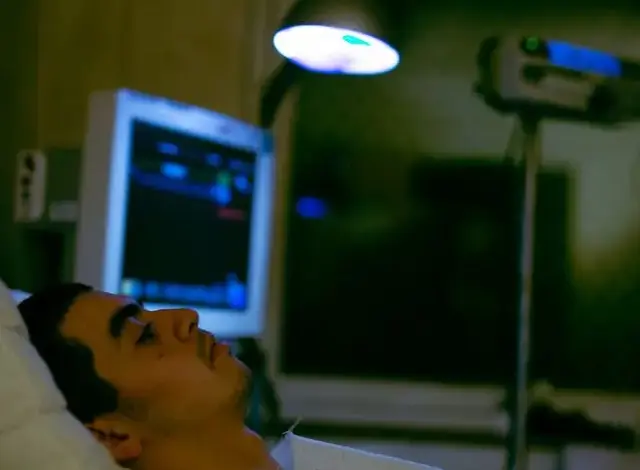
The heart monitor beside Benicio’s bed was flashing red. The numbers were climbing.
I heard running in the hallway. Rubber shoes squeaking on the floor I’d mopped two hours earlier.
The door banged open. Two nurses came in first. Glenda, who’d worked nights on the fourth floor for nineteen years, and a young one named Kayla who’d only been there since August.
And right behind them was Ms. Verity, with her clipboard.
She saw me sitting in the chair by the bed with my harmonica in my hand.
Her face went red.
“I TOLD you!” she said. “Get OUT of here!”
Kayla pushed past me to get to the monitor. She bumped me hard, and I stumbled back against the wall. My elbow hit the paper towel dispenser.
“Heart rate’s one sixty-two,” Glenda said. “Sats are okay. Ninety-six. BP’s up.”
“Call the resident,” Ms. Verity said. “Now.”
Kayla grabbed the phone on the wall.
Ms. Verity turned to me. She pointed at the door.
“Out,” she said. “Right now, Umberto. I’m calling security.”
But I wasn’t looking at her.
I wasn’t looking at the nurses or the monitor or the door.
I was looking at the boy.
His eyes were moving.
Under his eyelids. Back and forth. Fast. The way your eyes move when you’re dreaming.
In two hundred and fourteen nights, I had never once seen his eyes move.
And his right hand was moving too.
It was lying on top of the white sheet, the way it always did, with the little plastic clip on his finger. And his fingers were lifting. Just barely. Then dropping back down onto the sheet.
Tap.
It was slow and soft. You’d have missed it if you weren’t looking.
But I was looking.
And I knew that rhythm. I’d know it anywhere. I’d been playing it since I was ten years old.
Dum, da-dum. Dum, da-dum.
It was my father’s river song.
“Ms. Verity,” I said.
“Out!”
“Ms. Verity. Look at his hand.”
She didn’t want to look. I could see it on her face. She wanted me out of that room and off her floor and out of her hospital.
But something in my voice made her turn her head.
She looked at the bed.
At Benicio’s right hand on the white sheet.
Tap.
She went very still.
The clipboard came down to her side.
Glenda had seen it too. She’d stopped with her hand on the blood pressure cuff.
“Oh my God,” Glenda said quietly. “Oh my God. Is he—”
Nobody answered her.
We all just stood there, four grown people in a dark hospital room at 3:14 in the morning, watching a sixteen-year-old boy tap out an old Italian river song on a bed sheet.
My name is Umberto Ferrante. I’m seventy-two years old.
I’ve been a night janitor at St. Agnes Hospital in Providence, Rhode Island, for twenty-eight years.
I work from eleven at night to seven in the morning. I mop floors. I empty trash cans. I clean rooms after patients go home. I scrub bathrooms, wipe down bed rails, and change the bags in the big gray bins in the hallway. I push my yellow cart up and down four floors, all night long, with one squeaky wheel that I keep meaning to report.
Most people never notice me.
That’s okay. I’m used to it.
In twenty-eight years, I’ve learned that a man with a mop is invisible. Doctors walk past you. Visitors step around you. Sometimes somebody will say, “Excuse me,” and step over your wet floor without looking at your face.
I don’t mind. There’s a kind of peace in it. You see things when nobody sees you.
My wife, Carmela, passed away nine years ago. Pancreatic cancer. It took her in four months, start to finish. Right here, at St. Agnes. Room 309. I mopped that room for years afterward, and every time, I had to stop in the doorway for a second before I could go in.
We were married forty-one years.
We never had children. We tried. For a long time, we tried. Then we stopped talking about it, because it hurt too much. Carmela said maybe God gave us each other instead. Maybe that was enough.
It was enough. For forty-one years, it was more than enough.
Now I live alone in the same little apartment on Federal Hill where we lived since 1983. Second floor, above a bakery that’s changed owners three times. It still smells like bread in the mornings when I come home from work.
My only real company is my harmonica.
It’s a Hohner Marine Band. Key of C. The silver cover plates are worn smooth from my fingers. The wood comb is cracked a little on one end. One of the reeds, the 4 draw, has a little buzz in it that’s been there since 1974.
My father gave it to me when I was ten years old.
He came from a little town in Calabria, in the south of Italy, near the sea. He came to Providence in 1948 with one suitcase and this harmonica in his shirt pocket. He worked forty years at a jewelry factory on Eddy Street, setting stones in rings for rich people he’d never meet.
On Sunday nights, he played harmonica on our back porch.
Old songs from his village. Songs his own father had taught him. Slow, sweet melodies about the sea and the hills and the girls he’d left behind.
And one about a river.
He never told me what the river song was called. I don’t think it had a name. He just called it “la canzone del fiume.” The river song. He said his grandmother used to sing it to him when he couldn’t sleep. He said it was about a river that runs from the mountains all the way down to the sea, and no matter how many rocks get in its way, it always finds a way around.
“The river never stops, Umberto,” he’d tell me. “It gets tired. It gets slow. Sometimes in the summer, it almost dries up. But it always keeps going. All the way home.”
When I was ten, he put the harmonica in my hand and taught me the river song. It took me a whole summer to learn it.
When he died in 1991, I played it at his funeral.
When Carmela died, I played it at hers.
I carry that harmonica in my shirt pocket every single day. Under my St. Agnes Environmental Services name badge. Sometimes, at work, I touch it through the fabric. Just to know it’s there.
Last spring, in April, they moved me to the fourth floor.
Long-term care. The patients who’d been in the hospital a long time and weren’t going home soon. Some of them were old. Some of them were very sick. Some of them were waiting for a bed in a nursing home or a rehab center that might never open up.
It’s a quiet floor at night. The quietest in the hospital. No emergencies, mostly. No crying families in the hallway. Just the hum of machines and the soft beep of monitors and the night nurses talking in low voices at the station.
I liked it there.
In room 412, there was a boy.
The first night I cleaned his room, I stopped in the doorway.
I’d been doing this job for twenty-eight years. I’d seen a lot of patients. Old men. Old women. People in comas, people on machines, people who didn’t know where they were.
I’d never seen one so young on the fourth floor.
He was sixteen. The whiteboard on the wall said his name: BENICIO R. Underneath, in a nurse’s handwriting, somebody had written: Likes baseball!! Go Sox! And drawn a little red sock.
He was lying very still in the bed with his eyes closed. There were tubes in both his arms. There was a tube in his throat, connected to a breathing machine beside the bed that went whoosh, click, whoosh, click, all night long. There was a feeding tube taped to his cheek.
His head was partly shaved on one side. There was a long curved scar there, healing pink.
His face was so young.
He had a little bit of mustache coming in on his upper lip. The kind teenage boys get, thin and dark, that they’re very proud of. There was a pimple on his chin.
He looked like any kid you’d see at a bus stop with his headphones on.
I asked Glenda about him that night. At the nurses’ station. While I was emptying her trash can.
She looked down the hallway toward his room.
“Hit by a car,” she said quietly. “Back in December. Riding his bike home from school. A guy ran a red light on Broad Street. Didn’t even stop.”
“They catch him?”
“No.”
I didn’t say anything.
“Bad head injury,” Glenda said. “They did surgery to relieve the pressure. He’s been in a coma ever since. Four months.”
“Will he wake up?”
Glenda shrugged. It wasn’t a mean shrug. It was the shrug of a nurse who’s been doing this a long time.
“The doctors don’t know,” she said. “Some do. Some don’t. Some wake up and they’re not the same. His scans aren’t great. But he’s young. Young brains surprise you sometimes.”
Every night after that, I cleaned his room.
I’d mop the floor around the bed. Wipe down the windowsill. Empty the little trash can by the sink. Change the paper towels. Wipe the door handles.
And every night, I noticed something.
Nobody was ever there.
No flowers on the windowsill.
No cards taped to the walls.
No balloons. No teddy bears. No pictures of him with his friends.
No chair pulled up next to the bed. No jacket left on the back of it. No coffee cup on the tray table.
Just the boy and the machines.
In the other rooms on the fourth floor, even the old ones, there were usually signs of somebody. A grandchild’s drawing. A rosary on the nightstand. A Get Well Soon card from the church.
In room 412, there was nothing.
After about a week, I asked Glenda again.
“Does anybody come to see him? His family?”
She sighed. She looked at the clock on the wall. It was almost two in the morning.
“His mom,” she said quietly. “Marisol. She works two jobs. She cleans offices downtown at night and works at a laundromat on Elmwood during the day. She’s a single mom. Three other kids at home. Younger. The little one’s only five.”
“When does she come?”
“Sunday afternoons, when she can. For an hour or two. Sometimes she can’t make it at all. It depends on her shifts.”
Glenda shook her head.
“She can’t afford to stop working,” she said. “If she stops working, they lose the apartment. She told me that herself. She sat in that chair in March and cried for an hour. She said, ‘I should be here every day. What kind of mother leaves her son alone in the hospital?’”
Glenda looked down the hallway.
“It’s breaking her heart,” she said.
That night, after I finished mopping room 412, I didn’t leave.
I stood there with my mop in the bucket and looked at him.
The machine went whoosh, click. Whoosh, click.
The monitor beeped. Slow and steady.
Outside the window, Providence was dark. You could see the lights of the State House dome in the distance, all lit up white.
And this boy was lying here all alone.
I sat down in the chair next to his bed.
I don’t know why I did it.
I just did. My knees were tired. It was my break time anyway. Three o’clock. I usually ate my sandwich in the break room in the basement, alone, with the vending machines humming.
Instead, I sat in that chair.
I took my harmonica out of my shirt pocket.
I held it for a minute. Turning it over in my fingers.
Then I put it to my lips.
And I played him a song. Very softly. So softly you could barely hear it over the breathing machine.
My father’s river song.
When I finished, nothing happened.
Of course it didn’t.
The machine went whoosh, click. The monitor beeped. Benicio lay there with his eyes closed and his hands on top of the white sheet.
I sat there a minute longer.
Then I put my harmonica back in my pocket. I picked up my mop. I went back to work.
But the next night, I played him another one.
An old Neapolitan song my mother used to sing while she hung laundry.
And the next night, I played him “Take Me Out to the Ball Game.” Because of the little red sock on the whiteboard.
And the night after that, “Moon River.” Because it was Carmela’s favorite, and because it was a river song too.
It became a habit.
Every night at three o’clock, on my break, I’d finish mopping room 412. Then I’d pull the chair up close to the bed and sit down and take out my harmonica.
I played for ten minutes. Sometimes twenty.
I always ended with the river song.
After a while, I started talking to him too.
I’d never been much of a talker. Carmela did the talking in our marriage. She could talk to anybody. Strangers at the bus stop. Cashiers at the grocery store. The mailman. I mostly listened.
But sitting there at three in the morning, with nobody else around, I started talking to Benicio.
I told him about the weather.
“It’s raining again. Third day in a row. My knees are telling me all about it.”
I told him about baseball.
“The Sox lost again. Eight to two. To the Yankees. You didn’t miss anything, kid. Trust me. You’re better off sleeping through this season.”
I told him about my father. About the jewelry factory on Eddy Street. About the back porch on Sunday nights.
I told him about Carmela.
I told him how I met her in 1980 at a dance at the Sons of Italy hall on Atwells Avenue. She was wearing a yellow dress. She stepped on my foot during the first song and didn’t apologize.
I told him she made the best lemon cake in Rhode Island. With real lemons. She’d zest them by hand with a little grater, and the whole apartment would smell like summer, even in January.
I told him how she used to sing in the kitchen. Badly. Off-key. Loud. Dean Martin songs, mostly. “That’s Amore.” “Volare.” She knew all the words, and she sang all of them wrong.
I told him about room 309. And the four months. And how she held my hand at the end and said, “Play me the river song, Umberto.”
And I did.
And she went to sleep.
I don’t know why I told him all that.
He was a sixteen-year-old boy in a coma. He couldn’t hear me. I knew that.
But it felt good to say it out loud. To somebody. Even somebody who couldn’t answer.
I’d never told anybody about the river song at the end. Not even my sister.
The night nurses noticed, of course.
Glenda came to the doorway one night in May. She stood there with her arms crossed, listening, while I played “Moon River.”
When I finished, she said, “Umberto. I didn’t know you could play.”
“Since I was ten.”
“You’re good.”
“I’m okay. My father was good.”
She looked at Benicio. Then back at me.
“You do this every night?”
“On my break.”
She was quiet for a while.
“Keep doing it,” she said. “Just don’t get caught by anybody with a clipboard.”
Kayla, the young nurse, started leaving the door cracked open at three o’clock. So the music would carry down the hallway.
“Mr. Jacobs in 415 asked who was playing,” she told me one night. “He’s ninety-one. He doesn’t say much. He said it reminded him of the war. He said there was a guy in his unit in Italy who played the harmonica.”
“Was that okay? That it reminded him of the war?”
“He smiled,” Kayla said. “First time I’ve seen him smile since he got here.”
In June, I met Benicio’s mother for the first time.
It was a Sunday. I don’t usually work Sundays, but somebody called in sick, and they asked me to cover a day shift. I said yes. I always say yes. What else am I going to do on a Sunday?
At about two in the afternoon, I pushed my cart past room 412 and saw a woman sitting in the chair by the bed.
My chair.
She was small and tired-looking. Late thirties, maybe. Dark hair pulled back in a ponytail. She was wearing a blue polo shirt with SUDSY’S LAUNDROMAT stitched on the pocket. Her eyes were red.
She was holding Benicio’s hand. Talking to him in Spanish. Very low.
There was a little girl sitting on the floor by her feet, coloring in a coloring book. Five years old, maybe. With pigtails.
I stopped in the doorway with my cart.
The woman looked up.
“Oh,” she said. In English. “I’m sorry. Do you need to clean? I can move.”
“No,” I said. “No, no. Take your time. I’ll come back.”
I started to go.
Then the little girl looked up from her coloring book.
“Are you the music man?” she said.
I stopped.
The woman turned to look at her daughter. Confused.
“Isabel, what are you talking about?”
“The nurse said,” Isabel said. “The nurse with the earrings. She said a music man comes at night and plays for Beni. With a little piano you put in your mouth.”
The woman looked at me.
I didn’t know what to say.
I put my hand on my shirt pocket. Over the harmonica.
“You play for him?” the woman said slowly. “At night?”
“On my break,” I said. “Just a little. I hope that’s okay. I don’t touch anything. I just sit there.”
She stared at me.
“How long?”
“Since April.”
“Every night?”
“Every night I work.”
She looked at me for a long time.
Then she looked at her son. At the tubes and the machines and the scar on his head.
Then she put her face in her hands and started crying.
I didn’t know what to do.
I stood there in the doorway with my yellow cart and my mop and my name badge.
Isabel got up off the floor. She went and stood next to her mother and patted her on the back with a purple crayon still in her hand.
“Mami, don’t cry,” she said. “The music man is nice. The nurse said so.”
When the woman finally looked up, her face was wet.
“I’m Marisol,” she said. “Marisol Reyes.”
“Umberto.” She wiped her face with the back of her hand. “I didn’t know. I didn’t know anybody was—I thought he was alone. Every night. I lie in bed at night after work and I think, he’s alone, he’s all alone, and I’m not there.”
“He’s not alone,” I said. “Not at three o’clock.”
She cried again.
I came into the room. I parked my cart by the door. I sat down on the edge of the windowsill, across from her.
We didn’t say anything for a while.
Then she said, “What do you play for him?”
“Old songs. Italian ones, mostly. My father’s songs. Some baseball songs. ‘Moon River.’”
She smiled a little. A tired, wet smile.
“He’d make fun of you,” she said. “He listens to rap. Bad Bunny. Drake. He’d say, ‘Mami, who is this old man playing grandpa music?’”
I laughed.
“I’ll learn some Bad Bunny,” I said.
“Don’t,” she said. “Please. For your own sake. Don’t.”
After that, Marisol and I talked sometimes.
She’d leave notes for me with Glenda. Little folded pieces of paper.
Beni loved Star Wars when he was little. He watched it 100 times.
His favorite food is my mother’s arroz con pollo. Tell him I’m going to make it when he wakes up.
He has a dog named Chancla. She sleeps on his bed every night and waits for him.
So I told him those things. At three o’clock. Between songs.
“Your mother says she’s going to make you arroz con pollo. Your grandmother’s recipe. She says you’d better wake up for it, because she’s not making it twice.”
“Chancla misses you. She’s sleeping on your bed. Your mother says she won’t let anybody else sit there.”
And I learned the Star Wars theme on my harmonica.
It took me two weeks. It’s hard on a diatonic harmonica. There are notes you have to bend that my old fingers didn’t want to bend.
But I learned it.
The first night I played it for him, Glenda stood in the doorway laughing so hard she had to hold on to the frame.
The summer went by.
June. July. August. September.
Benicio didn’t change.
The doctors came and went. They did scans. They did tests. They shined lights in his eyes and pinched his fingers and called his name loud.
Nothing.
In August, I heard two of the doctors talking in the hallway outside his room. A tall one with gray hair and a younger one with glasses.
“Persistent vegetative state,” the tall one said. “Eight months. The longer it goes, the less likely—”
“The mother’s not ready to hear that.”
“Nobody’s ever ready to hear that.”
I pushed my cart past them and didn’t look up. They didn’t notice me. They never do.
That night, at three o’clock, I sat in the chair a long time before I took out my harmonica.
“I heard the doctors today, kid,” I said. “They don’t think you’re going to wake up.”
The machine went whoosh, click.
“I don’t care what they think,” I said. “My father used to say the river gets tired. Gets slow. Almost dries up in the summer. But it always keeps going.”
I put the harmonica to my lips.
“So you keep going, okay?” I said. “You just keep going.”
And I played the river song.
I counted the nights.
I don’t know why. I’m not a man who counts things. But I started a little tally on the back of a St. Agnes Environmental Services schedule sheet that I kept folded in my wallet. A little line for every night. Bundles of five.
That was when Ms. Verity came.
The old night supervisor, Ron, retired at the end of September. He’d been there almost as long as me. He was a big, slow man who mostly stayed in his office in the basement watching Red Sox games on a little TV. He knew about the harmonica. He never said anything.
The new one was different.
Her name was Ms. Verity Holt. She was maybe thirty-four. Thin, with short blond hair and sharp blue eyes. She wore her badge clipped exactly in the center of her shirt. She carried a clipboard everywhere she went. Even to the bathroom, one of the housekeepers swore.
She’d come from a hospital in Boston. A big one. She said St. Agnes had “a lot of room for improvement.”
She walked every floor, every night. She checked everything. Mop buckets. Trash bags. Supply closets. She ran her finger along the tops of door frames to check for dust.
The housekeepers were terrified of her.
On her fourth night, she found me in room 412.
It was 3:05 in the morning. I was sitting in the chair by the bed. I’d just started “Moon River.”
The door opened.
I knew before I turned around. Something about the way the air changed.
“What are you doing in here?”
I stood up fast. Too fast. My knees cracked.
I put the harmonica down at my side.
“I’m on my break, Ms. Verity,” I said. “I play music for him. Nobody else visits at night.”
She looked at me like I was crazy.
She looked at Benicio. At the machine. At the harmonica in my hand.
“You’re a janitor, Umberto,” she said. “Not a nurse. Not a family member. You have no business sitting in a patient’s room.”
“I don’t touch anything. I just play.”
“That harmonica,” she said, “is a germ factory.”
She pointed at it with her pen.
“You put it in your mouth. You blow into it. Spit and bacteria go everywhere. This boy has a breathing tube in his throat. He’s immunocompromised. He’s had two pneumonias since he got here. Did you know that?”
I didn’t know that.
“And you’re sitting two feet from his face,” she said, “blowing your germs at him. In the middle of the night. Disrupting a medical unit.”
She wrote something on her clipboard.
I watched her pen move. I wondered what she was writing. My name, probably. A date. Something about a violation.
“One more night in this room,” Ms. Verity said, “and you’re fired. I mean it, Umberto. I’ll walk you out to the parking lot myself.”
I didn’t argue with her.
I’d been working long enough to know when to stay quiet.
And part of me, I’ll admit it, wondered if she was right. About the germs. About the pneumonias. I hadn’t known about the pneumonias.
What if I’d made him sick?
What if, all those nights, I’d been hurting him instead of helping him?
“Okay,” I said.
I put my harmonica back in my pocket.
I looked at Benicio one more time.
And I walked out.
That night, I didn’t sleep.
I went home at seven-thirty in the morning. I climbed the stairs to my apartment over the bakery. I didn’t take off my uniform. I sat down in Carmela’s chair by the window. Her chair, with the flowered cushion she made in 1992.
I sat there all day.
I kept thinking about that boy lying alone in the dark.
Two hundred and fourteen nights.
And now, tonight, at three o’clock, nobody would come.
The machine would go whoosh, click. The monitor would beep. And he’d lie there in the dark with nobody to tell him about the Red Sox or the rain or Chancla sleeping on his bed.
I thought about the pneumonias.
I thought about Ms. Verity’s pen moving on her clipboard.
I thought about my job. Twenty-eight years. My pension. My health insurance. I’m seventy-two. Who’s going to hire a seventy-two-year-old janitor?
I thought about the little tally on the schedule sheet in my wallet. Two hundred and fourteen lines.
At four o’clock in the afternoon, I got up.
I went to the kitchen. I took the harmonica out of my shirt pocket.
I washed it.
I’d never done that before. Not in sixty-two years. My father would have been horrified. You don’t wash a harmonica, Umberto. The water gets in the wood. It warps the comb.
I didn’t care.
I took the cover plates off with a little screwdriver. I washed them in hot water with dish soap. I wiped down the reed plates with rubbing alcohol on a Q-tip, very carefully, every single hole. I dried everything with a hair dryer on low. I put it back together.
It took me two hours.
When I was done, it looked almost new.
The 4 draw still buzzed.
The next night was night number 215.
I went to work at eleven, like always.
I mopped the first floor. The second. The third.
At two-thirty, I took my cart up to four.
I mopped the hallway. I cleaned the nurses’ station. I emptied the trash in 410 and 411.
At 2:58, I stood outside the door of room 412 with my mop in my hand.
I stood there a long time.
Glenda came out of the supply room. She saw me standing there.
She looked at the door. Then at me.
“Umberto,” she said quietly. “Verity’s on the floor tonight. She’s doing rounds on three right now. She’ll be up here by three-thirty.”
“I know.”
“She’ll fire you. She’s not kidding. She fired a housekeeper on two last week for using the wrong chemical on a bathroom floor.”
“I know, Glenda.”
She looked at me for a long time.
Then she sighed.
“I’ll watch the elevator,” she said.
I went in.
I didn’t turn on the light. I never did. Just the glow from the machines and the little nightlight by the sink.
I mopped the floor first. The way I always did. Around the bed. Under the window. By the door.
Then I pulled the chair up next to the bed.
Not as close as before. I left it about four feet away. Ms. Verity’s words in my ears. Germ factory.
I sat down.
“Hey, kid,” I said quietly. “Sorry I missed you last night. I got in a little trouble.”
The machine went whoosh, click.
“I washed my harmonica,” I said. “First time in sixty-two years. My father’s rolling over in his grave. Don’t tell anybody.”
I took it out of my pocket.
I sat there with it in my hands.
“This might be the last time,” I said. “I wanted you to know that. If they fire me, I can’t come back. They won’t let me in. So I’m going to play your favorite. Well. My favorite. I don’t know what your favorite is. You never told me.”
I almost laughed.
“Your mother says you like Bad Bunny,” I said. “I’m sorry. I couldn’t learn it. I tried. It doesn’t work on a harmonica.”
I put the harmonica to my lips.
And I played my father’s river song.
Very, very softly.
I’d gotten about halfway through it.
The part where the melody goes up high, and then comes down slow, like a river coming down out of the mountains. My father always closed his eyes on that part.
I was closing my eyes too.
That’s when the alarm went off.
Ms. Verity was standing in the middle of the room.
The clipboard was down at her side.
She was staring at Benicio’s right hand.
Tap.
“He’s tracking,” Glenda said. Her voice was shaking. “Ms. Verity. He’s tracking the rhythm. Look. That’s not random. That’s not a seizure. That’s a pattern.”
“Heart rate’s coming down,” Kayla said from the monitor. “One fifty. One forty-five.”
“Is the resident coming?”
“He’s on his way up.”
Ms. Verity hadn’t moved.
She was looking at the hand. Then at me. Then at the hand.
Her face had gone completely white.
The tapping slowed down.
Then it stopped.
Benicio’s hand lay still on the sheet.
His eyes stopped moving under his eyelids.
The monitor beeped. One-thirty. One-twenty.
The room went quiet.
“Do it again,” Glenda said.
She was looking at me.
“Umberto. Play it again.”
Everyone turned to look at Ms. Verity.
She was standing there with the clipboard hanging from her hand. She looked at Benicio for a long moment.
I could see her thinking. I could see it all go across her face. The rules. The germs. The breathing tube. The pneumonias. Her threat. My job.
The tapping hand.
“From over there,” she said finally.
She pointed at the corner of the room. By the window. Eight feet from the bed.
“Not next to him. From there. And if his sats drop one point, you stop. Understand?”
I nodded.
I walked to the corner by the window.
My hands were shaking so bad I almost dropped the harmonica. I had to hold it with both hands.
I put it to my lips.
And I started the river song again. From the beginning.
The first few notes came out wrong. My breath was shaking. The 4 draw buzzed.
I closed my eyes. I thought about my father on the back porch. Sunday night. The smell of tomato plants. His hands on the harmonica, his eyes closed.
The river never stops, Umberto.
I played.
I didn’t look at the bed.
I couldn’t.
I just played. Slow and soft. The way my father played it. The way his grandmother sang it to him when he couldn’t sleep.
“Oh,” Kayla said.
Very quietly.
“Oh, there it goes.”
I opened my eyes.
Benicio’s hand was moving again.
The fingers lifting. Dropping. On the white sheet.
Tap. Tap-tap. Tap. Tap-tap.
Right on the beat. Right where the melody landed. Every single time.
And then his face changed.
His eyebrows pulled together. Just a little. Like he was frowning. Like he was concentrating very hard on something far away.
His eyelids fluttered.
I stopped playing.
I couldn’t help it. My breath just went out of me.
“Keep going!” Glenda said. “Don’t stop! Keep going!”
So I kept going.
I played the river song all the way to the end. The long last note that goes down low, like a river reaching the sea.
When I got to the end, I started it again.
And again.
On the third time through, the resident came in.
A young doctor. Dr. Amari. He’d been at St. Agnes about a year. He had his white coat on over scrubs and his hair was sticking up on one side like he’d been asleep in the on-call room.
“What’s going on? Somebody called about a tachy—”
He stopped.
He saw Benicio’s hand. Tapping on the sheet.
He saw the old janitor in the corner by the window with a harmonica.
He saw the night supervisor with her clipboard, and the two nurses, and nobody saying anything.
“What,” Dr. Amari said slowly, “is happening?”
“Look at his hand,” Ms. Verity said.
Her voice was very strange. Very quiet.
“Look at his hand, Doctor. He’s keeping time.”
Dr. Amari examined him for twenty minutes.
He had me keep playing the whole time.
He shined a light in Benicio’s eyes. He pinched his fingernail. He called his name loud, right next to his ear. “Benicio! Benicio, can you hear me? If you can hear me, squeeze my hand!”
Nothing.
Then he had me stop playing.
The tapping stopped.
He had me start again.
The tapping started.
He had me play something else. “Take Me Out to the Ball Game.”
The hand moved. Not as much. But it moved.
He had me play the river song again.
The tapping came back strong. Right on the beat.
Dr. Amari stood up straight.
He looked at me for a long time.
“How long have you been playing for him?” he said.
“Two hundred and fifteen nights,” I said. “Counting tonight.”
He blinked.
“Every night?”
“Every night I worked.”
“The same song?”
“Different songs. But I always ended with this one.”
Dr. Amari looked at the monitor. Then at the boy. Then at me.
“I need to call Dr. Rao,” he said. “Right now.”
Dr. Rao was the head of neurology. Nobody calls Dr. Rao at three-forty in the morning.
He went out to the hallway with his phone.
It was just the four of us in the room again.
Me. Glenda. Kayla. Ms. Verity.
And Benicio, lying still now, with his hand on the sheet.
Nobody said anything for a long time.
Ms. Verity sat down.
In my chair. By the bed.
She put her clipboard on the floor. She put her face in her hands.
Glenda looked at me. I looked at Glenda.
Kayla went back to the monitor and pretended to check the numbers.
After a long time, Ms. Verity spoke. Without lifting her head.
“I had a brother,” she said.
Nobody said anything.
“Danny,” she said. “He was nineteen. He had his appendix out. A totally routine surgery. At a hospital in Worcester. He was supposed to go home in two days.”
She lifted her head. Her eyes were wet. She wasn’t looking at any of us. She was looking at the wall.
“He got an infection,” she said. “In the hospital. From the hospital. Somebody didn’t wash their hands. Somebody didn’t clean a surface. Somebody broke a rule. We never found out who.”
She swallowed.
“He was dead in nine days,” she said. “Sepsis. I was twenty-two. I was in nursing school. I sat by his bed and watched him die from something that should never have happened.”
She looked down at her clipboard on the floor.
“That’s why I’m like this,” she said. “That’s why I check the door frames for dust. That’s why I fired that housekeeper on two. That’s why I walked in here three nights ago and saw an old man blowing into a harmonica two feet from a boy with a breathing tube, and I wanted to scream.”
She looked at me.
“I thought you were going to kill him,” she said quietly. “I really did. I thought, this is how it happens. Some nice old man who doesn’t know any better. With good intentions. And then a kid dies.”
I didn’t say anything.
I didn’t know what to say.
“I washed it,” I said finally. “The harmonica. Yesterday. I took it apart and washed every piece. With soap. And alcohol. On a Q-tip.”
I held it up.
“First time in sixty-two years,” I said. “My father would have killed me.”
Ms. Verity stared at the harmonica.
Then something happened to her face.
She laughed.
It was a strange, choked laugh. Half a sob. She put her hand over her mouth.
“You washed it,” she said.
“Every hole.”
“With a Q-tip.”
She laughed again. And then she was crying. Really crying. Sitting in my chair by Benicio’s bed with her face in her hands and her shoulders shaking.
Glenda went over and put a hand on her back.
Kayla handed her a box of tissues.
And I stood in the corner by the window with my clean harmonica and didn’t know what to do.
Dr. Rao came at five-fifteen.
She was a small woman, sixty or so, with silver hair in a long braid and reading glasses on a chain. She came in wearing a raincoat over pajama pants. She’d driven in from Barrington.
She examined Benicio for almost an hour.
She had me play the river song eleven times.
She watched his hand. She watched the monitor. She watched his eyes. She took notes on a little pad.
When she was finally done, she stood up and took her glasses off.
“This is real,” she said.
Everybody in the room let out their breath at once.
“It’s a response to a familiar auditory stimulus,” she said. “Repeatable. Consistent. Rhythmic motor response, synchronized. That’s not reflex. That’s not random movement. Something in there is listening.”
She looked at the boy.
“His last scans were poor,” she said. “I won’t lie. I’d started talking to his mother about the long term. About care facilities. About what to expect.”
She looked at me.
“This changes things,” she said. “I don’t know how much yet. But it changes things.”
“Will he wake up?” I asked.
She looked at me for a long moment. She had kind eyes. Tired, but kind.
“I don’t know, Mr. Ferrante,” she said. “I won’t promise you anything. Coma recovery is slow. It’s not like the movies. Nobody just sits up and starts talking. It’s weeks. Months. Sometimes longer. Little things first. A hand squeeze. Eyes opening. Following a finger with their eyes.”
She paused.
“But he’s in there,” she said. “Somewhere. And he heard you.”
She put her glasses back on.
“I’m calling his mother,” she said. “Right now.”
Marisol came at six-forty in the morning.
She came running down the fourth floor hallway still in her office-cleaning uniform. Black pants. Gray shirt. A name tag that said BRIGHTWAY CLEANING SERVICES. She’d come straight from her night shift downtown.
She had Isabel on her hip. The little girl was asleep, in pajamas, with her head on her mother’s shoulder.
Marisol stopped in the doorway.
She saw all of us. Glenda. Kayla. Dr. Rao. Ms. Verity. Me.
“What happened?” she said. Her voice was high and thin. “What happened? They said to come right away. Is he—is he—”
“He’s okay,” Dr. Rao said quickly. “Mrs. Reyes. He’s okay. Something good happened. Come sit down.”
Marisol didn’t sit down.
She looked at me in the corner by the window.
“Umberto?”
“Play it,” Dr. Rao said to me. “Play it for her.”
I played the river song.
Marisol stood in the doorway with Isabel asleep on her hip.
And she watched her son’s hand move on the white sheet.
Tap. Tap-tap. Tap. Tap-tap.
She didn’t scream. She didn’t cry. Not right away.
She walked to the bed very slowly. Like she was walking on ice. She sat down on the edge of it. She shifted Isabel to her other hip.
She reached down and put her hand on top of Benicio’s.
His fingers tapped against her palm.
That’s when she cried.
She bent over him with her forehead on his chest and Isabel still asleep against her shoulder and she cried. Saying his name. Over and over. Benicio. Beni. Mijo. Mijo, I’m here. Mami’s here. I’m here.
I kept playing.
I played the river song until I ran out of breath.
Then I took a breath and played it again.
It wasn’t like the movies.
Dr. Rao was right about that.
He didn’t sit up that morning and say, “Mom?” He didn’t open his eyes and ask for arroz con pollo.
It was slow.
The first week, it was just the tapping. Every time I played. Sometimes to other songs too. But always strongest to the river song.
The second week, he squeezed his mother’s hand when she asked him to. Once. Then not again for two days. Then twice in one afternoon.
The third week, his eyes opened.
Not all the way. Just a little. Just a slit. Like a little kid pretending to be asleep.
They didn’t track anything. They didn’t focus. They just opened, for a minute or two, and closed again.
But they opened.
Marisol was there. She’d taken a week off from both jobs.
She wasn’t supposed to. She didn’t have the vacation time. She told the laundromat and the cleaning company she had a family emergency and they could fire her if they wanted to.
The laundromat didn’t fire her.
The cleaning company did.
She didn’t care.
I didn’t get fired.
Ms. Verity went to Human Resources the next Monday. And to the Chief Nursing Officer. And to the head of Environmental Services. With her clipboard.
I was called into a meeting on Wednesday afternoon. I had to come in during the day. I put on my good shirt.
I sat in a conference room on the first floor at a long wooden table with five people in suits and ties I’d never met.
And Ms. Verity.
And Dr. Rao.
I thought I was going to lose my job.
I’d already decided I didn’t care. I’d decided on the bus ride over. Twenty-eight years. I’d done what I’d done. Whatever happened, happened.
The woman from HR started reading from a folder. Policy violations. Unauthorized presence in a patient room. Failure to follow a supervisor’s direct instruction.
Then Ms. Verity interrupted her.
“I’d like to say something,” she said.
She stood up.
She told them everything. The 215 nights. The germs. Her brother. Her threat. The alarm. The tapping hand. The washed harmonica with every hole cleaned with a Q-tip.
She told them she’d been wrong.
Not about the germs. She still thought the germs mattered. She said so. Plainly.
“But I was wrong about what mattered more,” she said. “I was so busy protecting that boy from what might hurt him that I didn’t stop to ask what might help him.”
Then Dr. Rao spoke.
She talked about music therapy. About auditory stimulation in disorders of consciousness. About studies I didn’t understand, with long names.
“Familiar music,” she said. “Played by a familiar voice. Consistently. Over time. There’s evidence it can help. We don’t fully understand how. But it can.”
She looked at me across the table.
“This man,” she said, “did for free, on his break, for seven months, what we should have had a program doing all along.”
The room was quiet.
Then the man at the end of the table, the one in the nicest suit, cleared his throat.
He was the Vice President of Patient Experience. I didn’t know the hospital had one of those.
“Mr. Ferrante,” he said. “Would you be willing to keep doing it?”
They made rules.
Of course they did. It’s a hospital.
I had to use a new harmonica. Hospital-approved. Cleaned by the infection control team after every visit, in a special machine.
I had to sit at least six feet from the bed.
I had to wash my hands for a full minute before going in. And after.
I had to sign a volunteer agreement. And a confidentiality agreement. And a form saying I’d been trained in infection control, which meant I had to sit through a two-hour video with a man in a lab coat talking about hand hygiene.
And they moved my break.
From three o’clock to two-thirty. Because two-thirty was when Benicio’s nurse did her check, and they wanted a nurse in the room while I played.
The new harmonica was a Hohner Special 20. Key of C. Plastic comb. Shiny and silver.
Ms. Verity bought it for me herself. Out of her own pocket. She handed it to me in the break room in a little box with a bow on it.
“It’s not your father’s,” she said. “I know that. But it can go in the sterilizer. Yours would fall apart.”
I looked at it in my hand.
“Thank you, Ms. Verity.”
She hesitated.
“It’s Verity,” she said. “Just Verity. Please.”
I played the new harmonica for Benicio every night.
But I kept my father’s in my shirt pocket.
Some things you don’t give up.
In November, Benicio’s breathing tube came out.
They’d done a tracheostomy months before. A little hole in his throat, with a tube in it, connected to the machine. Now he was breathing well enough on his own that they could take it off the machine. Then, after a few more weeks, they took the trach out altogether.
The day they did that, I came in at two-thirty, and the room was quiet.
No whoosh, click.
Just the boy breathing.
On his own.
I stood in the doorway for a long time and listened to it.
His eyes were open more now. Every day a little more. By Thanksgiving, they followed Marisol across the room. They followed the nurses. They followed Isabel when she came in on Sundays and climbed up on the bed.
When I came in at night, they followed me to the chair in the corner.
He couldn’t talk yet. His throat was healing. And there was the brain injury. Dr. Rao said speech would come slow, if it came at all.
But he could squeeze. One squeeze for yes. Two for no.
“Benicio,” I said one night. In early December. “You know who I am?”
One squeeze.
His hand was in Marisol’s. She’d started switching her laundromat shifts so she could be there some nights. She’d found a new night job, too, closer. At a bakery. Not the one under my apartment. A different one.
“Do you remember the music?” Marisol asked him. “The harmonica? At night?”
One squeeze.
Marisol looked at me.
Then Benicio did something he’d never done before.
He moved his right hand off his mother’s. Slowly. Very slowly. Like it weighed a hundred pounds.
He lifted it off the sheet.
And he tapped it.
On the mattress. By his hip.
Tap. Tap-tap. Tap. Tap-tap.
I put the new harmonica to my lips and played the river song.
His hand kept the time all the way to the end.
He said his first word on December 19th.
I wasn’t there. It was daytime. A speech therapist named Joanne was working with him. She’d been coming every day for three weeks, trying to get him to say anything at all.
Marisol called me at home at four in the afternoon. I was asleep. I almost didn’t answer.
“Umberto,” she said. She was crying. “Umberto. He talked. He said a word.”
I sat straight up in bed.
“What did he say?”
There was a pause on the line. I heard her laugh. A wet, shaky laugh.
“Joanne asked him what he wanted,” she said. “She was holding up pictures. Water. Food. Mom. TV. And he just shook his head. And she said, ‘Can you tell me what you want, Benicio?’”
She took a breath.
“And he said, ‘River.’”
I didn’t say anything.
I couldn’t.
I sat in my bed in my little apartment above the bakery with the phone against my ear and the afternoon light coming in through the window, and I cried like a child.
He went to a rehab hospital in January. In Boston. Spaulding. One of the best in the country.
Marisol couldn’t afford it. But it turned out that when a story like ours gets around, people help.
Somebody at St. Agnes told somebody at the Providence Journal. They wrote a little article. Just a few paragraphs, on page six. The janitor who played harmonica for a boy in a coma.
It got picked up by a TV station in Boston. Then a bigger one. Then it was everywhere.
I didn’t talk to any of them. I don’t talk to reporters.
But people sent money. A lot of it. To a fundraiser Glenda set up. For Benicio’s rehab. For Marisol’s rent. For the three little ones at home.
More money than any of us had ever seen.
And the driver who hit him turned himself in.
Ten months after the accident. He walked into the police station on Washington Street with a lawyer and said he’d seen the story on the news. He said he couldn’t live with it anymore.
Marisol went to the hearing. She told me afterward that she looked at him for a long time.
“He was just a man,” she said. “Forty-something. Bald. Crying. Shaking. He kept saying he was sorry.”
“Did you forgive him?”
She thought about it.
“Not yet,” she said. “Maybe someday. Not yet.”
The rehab was hard.
Benicio had to learn everything again. How to sit up. How to hold a spoon. How to swallow. How to stand. How to walk.
His left side was weak. His speech came slow and slurred at first. He got frustrated. He cried. He threw things. He told his physical therapist he hated her, in Spanish and English both.
I drove up to Boston every Saturday. An hour and a half each way. In my old Buick that Carmela always said was going to die on the highway.
It didn’t.
One Saturday in February, I walked into his room at Spaulding, and he was sitting in a wheelchair by the window. His respiratory therapist was with him. A big man with a beard named Terrence.
Benicio was holding something in his hands.
A harmonica.
“Mr. Ferrante,” Terrence said. “Perfect timing. We were just talking about you.”
I looked at the harmonica in Benicio’s hands. Blue plastic. A cheap kids’ one. The kind you buy at a toy store.
“Harmonica’s great for breath work,” Terrence said. “After a long time on a vent. You have to breathe in and breathe out to play. Builds up the lungs. Diaphragm control. We use them a lot. Benicio here says he knows a guy.”
Benicio looked up at me.
His face was different now. Thinner. The scar on his head was hidden under dark hair that had grown back. He was wearing a Red Sox T-shirt that was too big on him.
He smiled.
It was lopsided. His left side didn’t move as much as his right.
But it was a smile.
“Hey,” he said. Slow. Careful. Each word an effort. “River. Man.”
I sat down next to him.
I couldn’t talk for a minute.
“Hey, kid,” I said.
He held up the blue harmonica.
“Teach me,” he said.
It took him four months to learn the river song.
Longer than it took me, when I was ten. But I didn’t have a brain injury when I was ten. I didn’t have a left hand that wouldn’t close all the way or lungs that had been on a machine for eleven months.
He practiced every day. Terrence said he practiced more than any patient he’d ever had.
Every Saturday, I drove up. And we sat by the window. And I played a few notes. And he played them back.
Badly, at first. Breathy. Wrong holes. He’d get frustrated and throw the harmonica on the bed.
Then he’d pick it back up.
“Again,” he’d say.
He talked more every week.
He told me things. Slowly. With lots of pauses.
He told me he didn’t remember the accident. Just riding his bike home. Then nothing.
He told me he didn’t remember most of the time in the coma.
“Dark,” he said. “Like. Sleep. But. No dreams.”
“Nothing at all?”
He thought about it for a long time.
“Some things,” he said.
“What things?”
He looked out the window.
“Music,” he said. “Far away. Like. Under water.”
He was quiet.
“And a man,” he said. “Talking. About baseball. And rain.”
I didn’t say anything.
He looked at me.
“And a lady,” he said slowly. “With a yellow dress. Who stepped on. Your foot.”
I stopped breathing.
“And lemon cake,” he said. “With real lemons.”
I put my hand over my mouth.
I’d told him about Carmela. In the dark. At three in the morning. Night after night. About the dance at the Sons of Italy hall. The yellow dress. The lemon cake.
I’d never told anyone else those things. Not like that.
And somewhere in the dark, in the place where he wasn’t awake and wasn’t dreaming, he’d heard.
“Is she,” Benicio said carefully. “Your wife?”
“She was,” I said. “She passed. Nine years ago. Almost ten now.”
He nodded slowly.
“I’m sorry,” he said.
Then he said something I’ll never forget.
“She sounds. Nice,” he said. “I liked. Hearing about her. In the dark. It was. Less lonely.”
He came home in June.
Fourteen months after the accident.
He walked out of Spaulding on his own two feet. With a cane. Slow. A little limp on the left side.
But walking.
Marisol had a party.
In the little backyard of their apartment in Olneyville. A chain-link fence and a patch of grass and a plastic table with a plastic tablecloth.
Everybody came.
Glenda. Kayla. Dr. Amari, in shorts and flip-flops, which I’d never seen. Dr. Rao, with her husband. Terrence from Spaulding, who drove down from Boston. Joanne the speech therapist.
And Verity.
She stood at the edge of the yard at first. Holding a bottle of soda. Like she wasn’t sure she was supposed to be there.
Marisol walked right up to her and hugged her.
Verity didn’t know what to do with her arms for a second.
Then she hugged her back.
Benicio’s little brother and sisters were running around the yard screaming. Lucia, twelve. Mateo, nine. Isabel, six now. With the dog, Chancla, chasing them, barking her head off.
Chancla had gone crazy when Benicio walked in the door. Marisol said the dog jumped on him and knocked him right back down onto the couch. She wouldn’t leave his side for three days.
Marisol made arroz con pollo.
Her mother’s recipe. A giant pot of it. Yellow rice and chicken and olives and peppers.
“I told you I would,” she said to Benicio, putting a plate in front of him. “When you woke up. I told you.”
“I heard,” Benicio said.
She stopped.
“What?”
“In the dark,” he said. “Umberto told me. That you said. You weren’t making it twice.”
Marisol stared at him.
Then she looked at me.
Then she burst out laughing and crying at the same time and had to sit down.
After dinner, when the sun was going down and the little kids were chasing fireflies by the fence, Benicio got up from the table.
He took his cane. He walked slowly to the middle of the yard.
He took something out of his pocket.
The blue plastic harmonica.
Everybody got quiet.
Even the little kids stopped running.
Benicio looked at me.
“This is. For Umberto,” he said. “And for. His father. And. For Carmela.”
He put the harmonica to his lips.
And he played my father’s river song.
It wasn’t perfect.
His breath was still shaky. He missed a note in the middle. The high part, where the river comes down out of the mountains, came out a little thin.
But it was the river song.
All of it. Start to finish. The long last note, going down low, like a river reaching the sea.
When he finished, nobody clapped.
Nobody moved.
I was sitting in a plastic chair at the end of the plastic table, and I couldn’t see anything, because my eyes were full of tears.
Then Isabel started clapping. By herself. Her little hands going as fast as they could.
Then everybody.
Benicio came and sat down next to me at the end of the table.
He was tired. I could see it. Walking and playing had taken everything he had.
He leaned on his cane and looked at me.
“Was it. Okay?” he said.
I reached into my shirt pocket.
I took out my father’s harmonica.
The Hohner Marine Band. Key of C. The silver covers worn smooth. The wooden comb cracked a little on one end. The 4 draw with a little buzz in it that’s been there since 1974.
The one my father carried from Calabria in 1948 in his shirt pocket.
I held it out to him.
Benicio stared at it.
“No,” he said. “No. Umberto. That’s. Your dad’s.”
“I know.”
“You can’t.”
“My father gave it to me when I was ten,” I said. “Because he wanted somebody to keep playing the river song after he was gone.”
I put it in his hand. I closed his fingers around it. His left hand. The weak one.
“I’m seventy-three now,” I said. “I don’t have any children. I don’t have anybody to give it to.”
I looked at him.
“I want somebody to keep playing it,” I said. “After I’m gone.”
Benicio looked down at the harmonica in his hand.
He didn’t say anything for a long time.
Then he looked up at me. His eyes were wet.
“Okay,” he said.
I still work nights at St. Agnes.
Verity says I can retire whenever I want. She says it every month. I tell her I’ll think about it.
I won’t.
Things are different now, though.
The hospital started a program last fall. Night Music, they call it. Volunteers who come in after dark and play for long-term patients. Quietly. From six feet away. With hospital-approved instruments that go in the sterilizer afterward.
There’s a retired music teacher who plays the violin. A college kid from Brown with a guitar. A woman from a church in Cranston who sings old hymns.
And me, with my shiny plastic harmonica.
Verity runs the program. She made all the rules. She checks the hand-washing logs every single night with her clipboard.
But she always stays for the music.
Benicio comes every few months.
He’s seventeen now. Almost eighteen. Back in school, a year behind. He walks with a cane still, but not always. He says someday he’ll throw it away.
He comes at night, after his homework. Marisol drives him.
He walks the fourth floor with me. We stop in the rooms where nobody comes.
There’s an old woman in 408 who doesn’t have any family left. A young man in 415 who was in a motorcycle accident. A little girl in 411, just seven, who’s been here since August.
Benicio sits six feet from the bed, the way the rules say.
He takes my father’s harmonica out of his shirt pocket.
And he plays the river song.
Sometimes he talks to them too. The way I did.
About the weather. About the Red Sox. About his mother’s arroz con pollo.
And sometimes, about a lady in a yellow dress who stepped on a man’s foot at a dance in 1980 and never said sorry. And made the best lemon cake in Rhode Island. With real lemons.
I asked him once why he tells them about Carmela.
He’s never met her. She was gone eight years before the accident.
He thought about it for a long time. The way he does now.
“Because. It’s what I heard,” he said. “In the dark. When I was. All alone.”
He looked at the little girl in 411.
“And it made me. Less lonely,” he said. “So maybe. It helps them too.”
My father used to say the river never stops.
It gets tired. It gets slow. Sometimes, in the summer, it almost dries up.
But it always keeps going.
All the way home.
I used to think he meant life. That you just keep going, no matter what. No matter how many rocks get in your way.
I think now he meant something else.
I think he meant the song.
My great-grandmother sang it to my father in a little town in Calabria, by the sea. My father played it for me on a back porch in Providence. I played it for Carmela in room 309, at the end. And for a boy in room 412, two hundred and fifteen nights in the dark.
And now that boy plays it for somebody else.
The river doesn’t stop.
It just finds somebody new to carry it.