The First Animal You See Reveals Your Worst Flaw? The Viral Personality Test Everyone Is Talking About
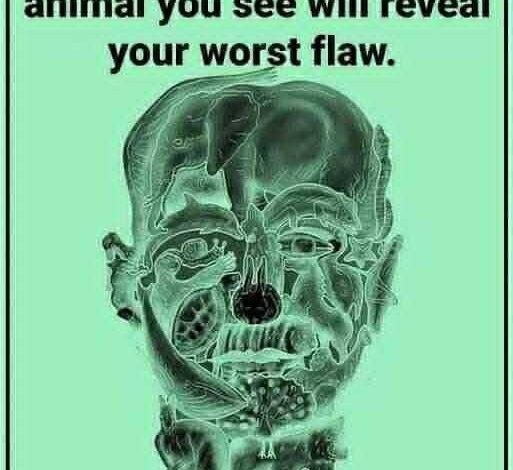
An image packed with overlapping animals can stop a person mid-scroll. One viewer sees a lion, another an elephant, and someone else notices a tiny bird. The viral challenge claims that the first creature exposes a hidden weakness. It feels personal, which explains why people compare answers and send the picture to friends.
The appeal begins with attention. Our brains sort crowded scenes using contrast, outlines, familiar shapes, and past experience. The first animal may reflect where the eyes landed, screen size, cropping, or a creature the viewer already likes. It is not a secret personality scanner, though it can still start an interesting conversation.
Popular interpretations link the lion with confidence, ambition, and control, with impatience or stubbornness as the supposed flaw. An elephant is associated with loyalty and responsibility, paired with carrying too much for others. These descriptions mix praise with a relatable weakness, allowing many readers to recognize part of themselves.
A bird commonly represents freedom, imagination, and quick thinking, while distraction is named as the drawback. A wolf suggests independence and loyalty but also suspicion or emotional distance. A horse is tied to energy and persistence, with restlessness as the shadow side. Exact meanings change across versions, revealing that the labels are storytelling rather than standardized measurement.
Other lists include dogs, cats, rabbits, bears, or owls. The dog is devoted but eager to please; the cat is self-reliant but guarded; the rabbit is sensitive but anxious; the bear is protective but inflexible; and the owl is observant but prone to overthinking. Most people can identify with several of these broad combinations.
The results often seem accurate because readers remember lines that fit and ignore those that do not. Mood affects the choice too. The same person may notice another creature when the image is enlarged or viewed later. A flattering trait beside a mild weakness also feels safer and more convincing than a harsh, specific judgment.
Friends can test this by describing what they see before reading meanings. One may focus on the largest silhouette, another on negative space, and another on a small detail. Those differences demonstrate perception: attention is shaped by expectation, familiarity, contrast, and the order in which the eyes explore a scene.
Real personality assessment looks for consistent patterns across time and situations. It cannot be reduced to a split-second response to an optical puzzle. The image should not be used to judge a partner, employee, child, or stranger, and its result should never replace direct knowledge of how someone actually behaves.
The healthiest way to enjoy the test is as a playful reflection prompt. Pick the animal honestly, read the description, and ask whether it raises a useful question. Does confidence become impatience? Does loyalty make boundaries difficult? The value comes from considering the question, not accepting the label as fate.
Try showing the picture to someone else without revealing your answer. The surprise is seeing how differently two minds organize the same scene. Laugh at the coincidences, keep any insight that genuinely helps, and discard the rest. A viral animal test can be entertaining and thought-provoking while remaining exactly what it is: a creative game, not a verdict.
People are always more complex than one image, one label, or one moments attention.
These games also reveal how easily certainty can be manufactured. A confident headline, colorful graphic, and numbered explanation can make an unsupported claim feel authoritative. Pausing to ask who designed the test, how the meanings were chosen, and whether results are repeatable is a useful media-literacy habit. The same questions help with many quizzes that promise to uncover intelligence, compatibility, or a future path from one simple choice.