TERROR ON THE TARMAC: Frontier Flight Grounded as Engine Devours Ground Equipment in Near-Catastrophic Failure
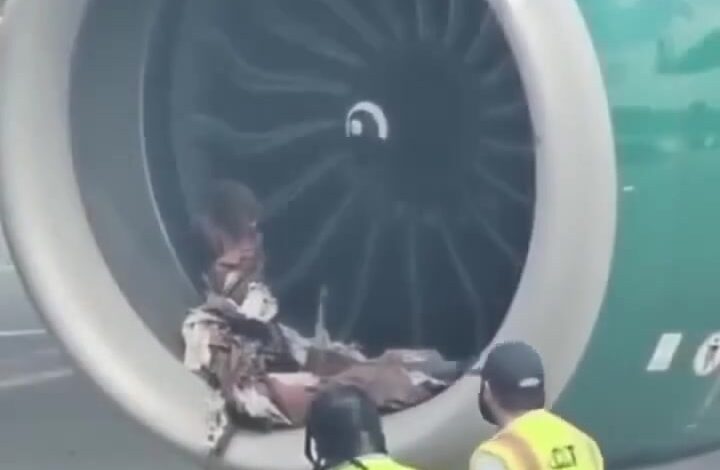
A Frontier Airlines flight preparing to depart Charlotte Douglas International Airport for New York’s LaGuardia Airport was stopped after an engine ingested a ground air-conditioning hose. What should have been a routine pushback and engine-start sequence became a serious ramp incident, leaving the aircraft grounded and passengers facing a lengthy delay.
The event centered on an Airbus A320neo and a piece of ground-support equipment positioned near it. Air-conditioning hoses are used to supply cooled air to an aircraft while it is parked. Before an engine is started and the plane begins moving, equipment connected to the aircraft must be disconnected and cleared from the danger area.
A running jet engine draws in an enormous volume of air. Anything left too close to the intake can be pulled toward it with tremendous force. In this case, the hose was sucked into the engine and torn apart. The crew shut the engine down, preventing the aircraft from departing and allowing airport personnel to secure the area.
For passengers, the sudden stop was alarming. A normal trip to New York was replaced by uncertainty as maintenance teams examined the aircraft. Although dramatic descriptions circulated about a near catastrophe, the most important fact is that the problem occurred on the ground and the flight did not continue with a potentially damaged engine.
Once an engine ingests foreign material, technicians cannot simply remove what is visible and send the plane back into service. Fragments can damage fan blades, internal components, sensors or the engine casing. Even small defects may become dangerous under the heat, vibration and loads experienced during flight. A detailed inspection is therefore required before an aircraft can be cleared.
The affected jet was taken out of service, and Frontier had to arrange another aircraft for the trip. That replacement process contributed to a delay reported to have lasted close to nine hours. Passengers had to wait while the airline coordinated a new plane, an available crew, a gate and an updated departure slot at a busy airport.
Such a delay can be deeply frustrating. Missed connections, appointments and family plans create real costs for travelers. Yet the decision to keep the damaged aircraft on the ground was not optional inconvenience; it was the safety system doing its job. Aviation rules are designed to favor inspection and caution whenever there is doubt about the condition of an engine.
The incident also puts attention on ramp procedures. Airports are crowded workplaces where baggage carts, fuel trucks, belt loaders, power units, hoses and employees move around aircraft under tight schedules. Clear communication between pilots, ramp agents and equipment operators is essential. Before an engine start, teams use checklists, signals and designated safety zones to confirm that people and objects are clear.
Investigators and the airline would need to determine precisely how the hose remained in a position where the engine could ingest it. It would be premature to assign blame without that review. Possible questions include whether the equipment had been fully disconnected, whether its placement met procedure, and whether the engine-start clearance was communicated and understood.
The episode demonstrates why foreign-object damage is treated so seriously. The term can refer to loose debris, tools, pieces of equipment or other material that enters an engine or strikes an aircraft. Airports conduct ramp inspections and debris-control programs because prevention is far less costly than engine repairs and far safer than discovering damage after takeoff.
It also shows that an aircraft remaining on the ground can be evidence of effective safeguards rather than failure. The engine stopped, the flight was canceled or reassigned, and maintenance specialists took control of the situation. Passengers eventually continued on a replacement aircraft instead of being exposed to an unacceptable mechanical risk.
For travelers watching from the cabin or terminal, the sight and sound of equipment being pulled into an engine would understandably be frightening. The calmer conclusion is that a dangerous ramp error was contained before departure. The long wait was unpleasant, but it allowed inspectors and operations teams to put safety ahead of the schedule.
Every commercial flight depends on dozens of ground tasks being completed in the correct order. This Frontier incident is a vivid reminder that aviation safety begins well before takeoff. It relies not only on pilots and aircraft systems, but also on the people who position, connect, remove and verify every piece of equipment surrounding the plane.