Switched at Birth, Bound by Love
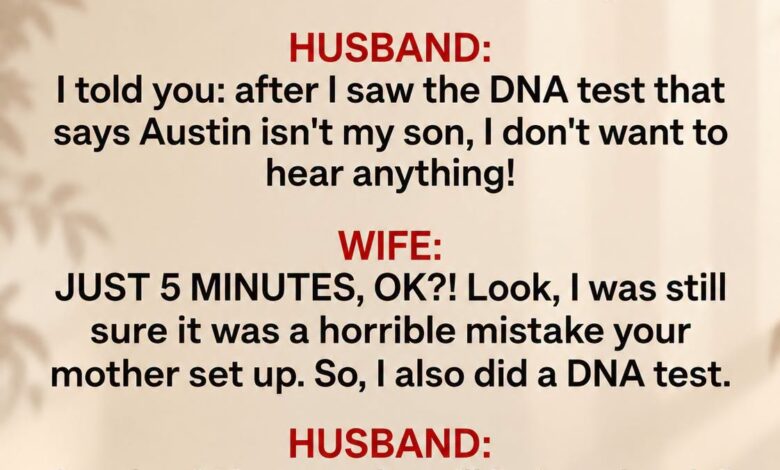
The revelation that neither Paul nor his wife shared DNA with Austin felt like the ground vanishing beneath them. Yet as the shock slowly settled, their memories refused to disappear: late-night feedings, first steps, school plays, scraped knees, whispered apologies. Those moments were undeniably real, no matter what the lab reports said. Tracing their steps back to the maternity ward, they learned the unthinkable—two babies had been switched, and two families had been living parallel lives built on a hospital’s terrible error.
Meeting their biological son for the first time was both miraculous and heartbreaking. They saw familiar features in a stranger’s face, a child who should have grown up in their home but hadn’t. Still, when faced with the decision, both families chose not to tear their worlds apart. They kept raising the sons who knew them as Mom and Dad, while slowly welcoming their biological children into their lives. In that fragile, complicated balance, they discovered that love, not blood, had always been the truest definition of family.
For Paul and his wife, the discovery created a divide between information and experience. The results could explain a biological relationship, but they could not rewrite the years they had spent caring for Austin. They knew the sound of his voice, the expressions that crossed his face, and the small habits that belonged to daily life together. None of that knowledge depended on a laboratory report.
At the same time, learning that another child was their biological son brought a connection they could not ignore. He had lived a childhood elsewhere, inside another family’s routines. There were years they had not witnessed and memories in which they had no place. Meeting him meant recognizing something familiar while accepting how much remained unknown. The relationship could not instantly become the one they might have imagined before the mistake was discovered.
The other family faced the same complicated reality from the opposite direction. Each household had raised a child with love, without knowing that the hospital had sent the babies home with the wrong parents. Neither family’s attachment was made less real by that error. The children had grown within those relationships, learning whom to trust and where they belonged through years of ordinary care.
Choosing to keep their homes intact acknowledged those bonds. The families did not treat the discovery as though the years since birth could be reversed. Instead, they made space for additional relationships while preserving the ones the children already knew. That decision allowed the truth to become part of their lives without demanding that it erase everything that came before.
Building those new connections would necessarily be different from recovering lost time. A first meeting could open a door, but it could not replace childhood. Getting to know one another meant beginning where they were, with the people they had already become. The shared knowledge of the hospital’s mistake gave them a reason to meet; patience and continued contact would give the relationships their own shape.
Austin remained the son Paul and his wife had raised. Their biological son became someone they could welcome and learn to know. Holding both truths together was difficult, but it offered a way forward that respected the children rather than treating them as parts of an error to be corrected. The families’ choice preserved the homes that love had built while allowing a wider understanding of family to grow around them.