Stop cheating Johnny
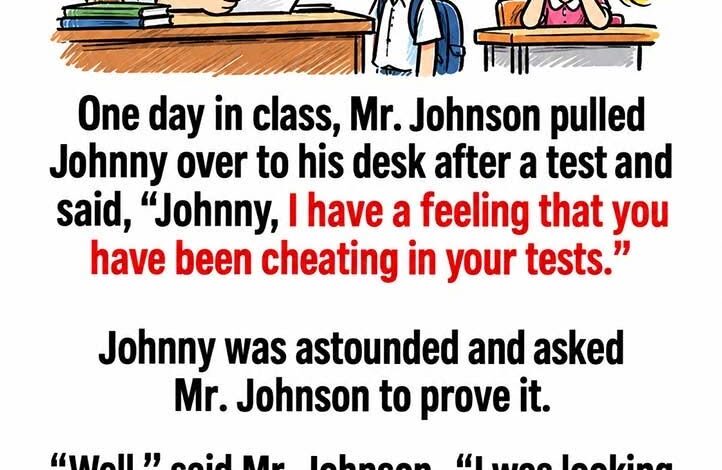
After a history test, Mr. Johnson called Johnny to his desk with a troubling suspicion. Johnny looked astonished: if his teacher thought he had cheated, he wanted evidence. Mr. Johnson pointed out that Mary, the girl sitting beside him, had named George Washington as the first president—and Johnny had written exactly the same thing. Johnny wasn’t impressed. Everyone knew that answer. Next came the question about who freed the slaves. Both students had answered Abraham Lincoln. Again, Johnny had an explanation ready: he had read his history book the night before.
Johnny's confidence rested on a point that sounded reasonable at first. Two students could certainly know the same famous historical answer without either of them looking at the other's paper. Naming George Washington did not, by itself, reveal how an answer had reached a test sheet. Johnny therefore treated the first comparison as a weakness in his teacher's argument rather than a reason to worry about his own.
The second example seemed to give him another opportunity to defend himself. Abraham Lincoln was a name he could explain through the history book, and Johnny was ready with that explanation. He wanted Mr. Johnson to see matching correct answers as something ordinary. If the class had studied the same material, why should it be surprising that two students remembered the same people? His defense depended on keeping the discussion centered on answers that could have been reached independently.
Mr. Johnson, however, had more than those first two comparisons in front of him. The conversation had not ended merely because Johnny could offer a plausible account of the easy questions. A teacher examining suspected copying would need to consider the pattern across the papers, including what happened when a student did not know an answer. That was where Johnny's self-assurance was about to become a problem.
There is an important difference between sharing a fact and sharing the response to someone else's uncertainty. A correct historical name might appear on many papers. A personal admission of not knowing is something else. It belongs to the student writing it, rather than to the subject being tested. Johnny had been defending his knowledge, but the final comparison would ask whether his paper actually expressed his own thinking at all.
The humor comes from that gap between the defense and the evidence. Johnny could argue that familiar names proved nothing, and he could insist he had studied. Neither claim would help if his final response depended on what Mary had written instead of on the question Mr. Johnson had asked. The last item on the test turned the discussion away from historical knowledge and toward the unmistakable meaning of a tiny phrase.
But Mr. Johnson wasn’t finished. He turned to the question asking who was president during the Louisiana Purchase. This time, Mary hadn’t supplied a historical name for Johnny to defend as common knowledge. Instead, she had simply written, “I don’t know.” And beneath that same question on Johnny’s paper sat the answer that undid his entire defense: “Me neither.”