Some people are only now realizing what the WC sign stands for on washrooms The Water Closet Answer
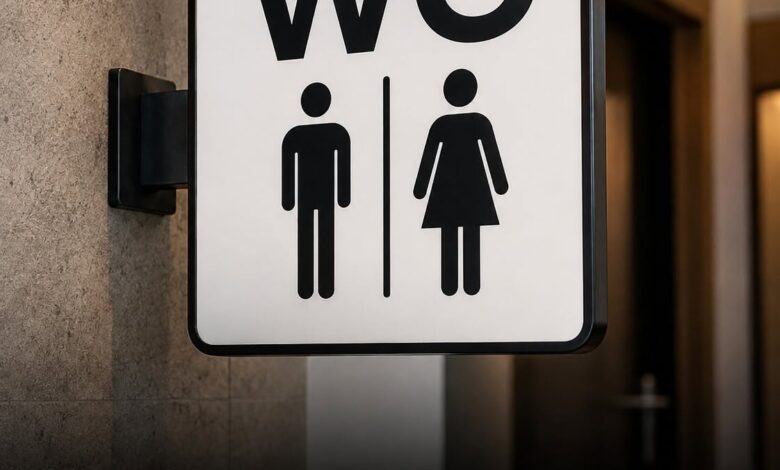
The letters WC appear on toilet doors in train stations, restaurants, hotels, and public buildings across many countries. People recognize the sign immediately, yet a surprising number have never stopped to ask what the abbreviation means.
WC stands for water closet. The phrase sounds old fashioned now, but it reflects the period when indoor plumbing began changing the layout of homes. A bathroom originally referred primarily to a room containing a bath. Water had to be carried in, heated, and poured into the tub before modern plumbing became widely available.
When flushing toilets were added to buildings, they were often placed in small private rooms resembling closets. These compact rooms contained a toilet supplied with water, so water closet became a practical name. The initials were shorter and easy to place on a door or directional sign.
The term remained especially common in Britain and Europe, and WC signs have been used since the nineteenth century. Plumbing, architecture, and everyday language changed, but the abbreviation survived. Many modern washrooms are much larger than a literal closet, yet the two letters continue to identify them.
Interest in the meaning recently spread after a social media creator answered a follower who asked what WC stood for. The short explanation became a miniature history lesson, connecting an ordinary sign with the way households adapted when running water and toilets entered the home.
The response showed how easily familiar language can outlive public knowledge of its origin. Some viewers admitted they had seen WC signs throughout their lives without ever questioning them. Others said they had wondered for years but had never taken the time to look up the answer.
People also compared the different words used in their regions. Toilet is direct and widely understood. Restroom is common in the United States, even though the room is not primarily intended for resting. Washroom is frequently used in Canada. British speakers may say loo, while bathroom is common in homes even when no bath is present.
Each term reflects a mixture of history, politeness, and local habit. Public signs must work for travelers who may not share the same vocabulary, which helps explain why a compact abbreviation such as WC remains useful. The letters are recognizable across languages even when the spoken word for the room changes.
Not everyone was surprised by the explanation. Some commenters said they had learned water closet as children and could not understand why the answer felt new to others. That difference is part of what made the discussion entertaining: a fact that seems like common knowledge in one household or country may be completely unfamiliar somewhere else.
The phrase also preserves an older distinction. A water closet could refer to a tiny room containing only the toilet, separate from the room used for bathing or washing. Some homes still follow that arrangement, and real estate descriptions may use the term for a separate enclosed toilet within a larger bathroom.
Modern signs increasingly use simple figures or the word toilets, but WC has not disappeared. It remains visible in airports, cafés, service stations, and historic buildings. Travelers often understand its purpose before they know its literal meaning.
The next time those two letters appear on a door, they carry more than directions. They are a small piece of plumbing history, a reminder of the moment when a water supplied toilet was important enough to give a tiny room a new name. The closet may have changed, but WC continues to mark the place people are looking for. Two ordinary letters preserve an unexpectedly durable piece of everyday plumbing history.