Scientists uncover rare, unusually spiky newborn animals in a protected habitat
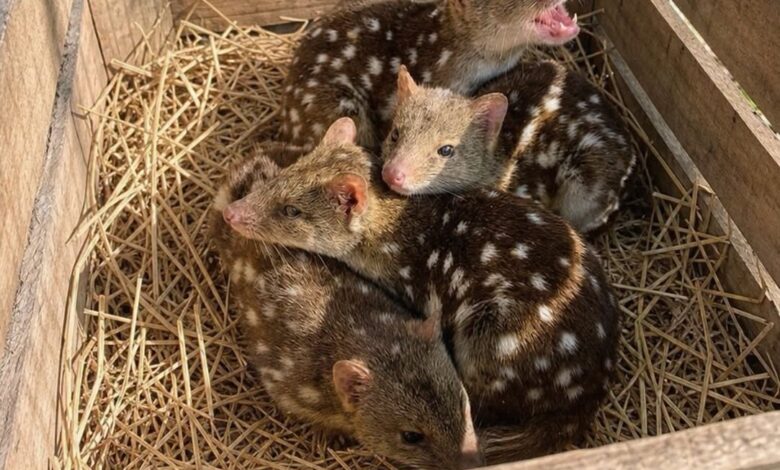
Young western quolls at Mt Gibson Wildlife Sanctuary offer an encouraging sign that a reintroduced population can do more than survive its first arrival. The presence of offspring means the animals have begun building another generation in the landscape. For conservation workers, that is a different and more demanding milestone than releasing adults and hoping they will settle into their new surroundings.
Western quolls, also known as chuditch, have faced the combined pressures of habitat loss, invasive predators, and a dramatically reduced range. Their return to a protected setting is therefore not simply a matter of moving animals from one place to another. The conditions that helped drive their decline must also be addressed, or the same pressures can follow a population into its next attempt at recovery.
At Mt Gibson, monitoring is central to understanding what happens after release. Motion-activated cameras allow ecologists to observe activity that might otherwise remain unseen, particularly when small animals move through the landscape at night. Images that look unremarkable at first can reveal feeding, movement, or the arrival of individuals that do not appear in the existing records. Careful observation turns those fragments into useful evidence.
An Australian Wildlife Conservancy announcement from April 2024 documented four independent juvenile quolls at the sanctuary. The investigation began with traps closing and bait disappearing without an animal remaining inside. Cameras showed that small quolls were taking the bait and escaping. Comparing their distinctive spots with a reference collection of released adults helped the team identify them as new, sanctuary-born animals rather than familiar individuals seen from a different angle.
That method matters because a hopeful impression is not enough on its own. A small animal in a photograph might be difficult to identify, and changing posture or lighting can make comparisons challenging. Using individual markings provides a way to test the first interpretation. It connects the excitement of seeing possible young animals with the disciplined work needed to establish what the images actually show.
The source account also describes pouch young and an animal known as Aang, using camera observations to illustrate how quolls adapt when given a chance. Those moments belong within a longer process of habitat management and monitoring. A healthy mother or a newly observed juvenile can be encouraging, but neither removes the need to keep watching for the obstacles that may affect the next stage of the population’s development.
The description of the animals as unusually spiky is an attention-grabbing way of presenting them, not the reason they matter to conservation. Their spotted appearance helps people recognize quolls, while their breeding and survival provide the significant evidence. The important discovery is not that an unknown creature has appeared. It is that a known native species is establishing young in a place where its future has required deliberate effort.
Recovery also needs to be described accurately. A local return does not reverse extinction of an entire species, because western quolls still exist. It can, however, help restore a species to a landscape from which it has disappeared or become scarce. That is substantial progress without overstating what one sighting or one breeding season can accomplish. Successful conservation depends on maintaining gains as well as celebrating them.
Safe places to shelter, suitable habitat, and management of introduced predators all belong to that continuing work. Cameras cannot create those conditions, but they can help reveal whether the conditions are working. The relationship runs both ways: management gives the animals a better chance, and observations help ecologists understand where that chance is translating into survival, breeding, and greater independence among the young.
The young quolls at Mt Gibson are hopeful precisely because their story is practical. They are not a miracle detached from effort, but living animals benefiting from a sustained attempt to repair a damaged ecological relationship. Every reliable observation adds to the picture. With careful management continuing beyond the first exciting photographs, a return that began with released animals can become something more durable: a population producing a future of its own.