Popes oneword message to the United States goes viral
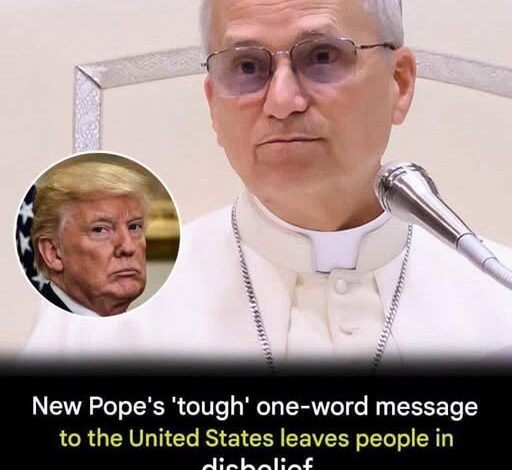
Only days after his election, Pope Leo XIV created a viral moment with a reply that consisted of a single unexpected word. After his first international press conference on May 12, 2025, a journalist asked the Chicago-born pontiff whether he had a message for the United States.
Pope Leo paused, smiled, and answered, “Many.” He then added, “God bless you all.”
The exchange lasted only seconds, but the incomplete nature of the reply invited endless interpretation. Some viewers considered it humorous. Others described it as cryptic, diplomatic, or even threatening. Social media turned the word into a test onto which people projected their own political expectations.
“Many” was not a clearly defined warning. The pope did not list grievances or identify a political party in that moment. It could simply have meant that he had many messages for his home country and could not reduce them to one sentence while moving through a crowd.
The reaction was intensified by Pope Leo’s background. Born Robert Francis Prevost in Chicago, he became the first pope from the United States. His years of ministry in Peru and his work in Vatican leadership also gave him an identity that extended beyond American politics.
Before his election, social-media activity associated with Prevost had reflected concern about immigration rhetoric and policies affecting migrants. Commentators therefore examined the “many” reply for possible criticism of the Trump administration and United States immigration policy.
His older brother, John Prevost, said publicly that the future pope was unhappy with what was happening on immigration and did not expect him to remain silent. Those comments added context, but they still did not transform one word into a detailed policy statement.
Pope Leo has also resisted simple left-right classification. Catholic teaching can produce positions that overlap with progressive politics on poverty, migration, labor, and the environment while conflicting with the political left on abortion and other moral questions.
His choice of the name Leo XIV offered another clue to his priorities. Pope Leo XIII is closely associated with modern Catholic social teaching and the 1891 encyclical Rerum Novarum, which addressed labor, wages, property, and the rights and duties of workers and employers.
That connection encouraged observers to expect attention to working people, economic dignity, and the social consequences of technological change. It did not establish that every comment from the new pope was a coded attack on an American politician.
Viral posts frequently described the answer as a “tough” or “unsettling” message. Those adjectives belong to commentators, not to the literal exchange. The full response included a blessing, which softens the idea that the pope was issuing a threat.
The moment demonstrates how public communication changes when every brief interaction can be clipped and replayed without context. A pause, smile, or single word may receive more analysis than a prepared speech because ambiguity drives participation.
The more reliable way to understand Pope Leo’s approach is to examine his homilies, formal addresses, appointments, and decisions over time. Those sources reveal priorities more clearly than a spontaneous answer shouted across a crowd.
Still, the exchange was memorable. An American journalist requested one message and received the suggestion that there were too many to count. The answer was restrained, slightly playful, and open enough to keep millions of people debating.
Pope Leo XIV may eventually deliver many specific messages to the United States about faith, migration, political division, labor, family, and responsibility. On May 12, he did not reveal all of them. He offered one word, a blessing, and a reminder that the world was listening closely to everything the new pope said. The viral power came from what he left unsaid. That silence created room for humor and concern, but it should not be mistaken for a policy declaration that the pope did not actually make.