My Neighbor Gave Me These Strange Fruits Does Anyone Know What They Are
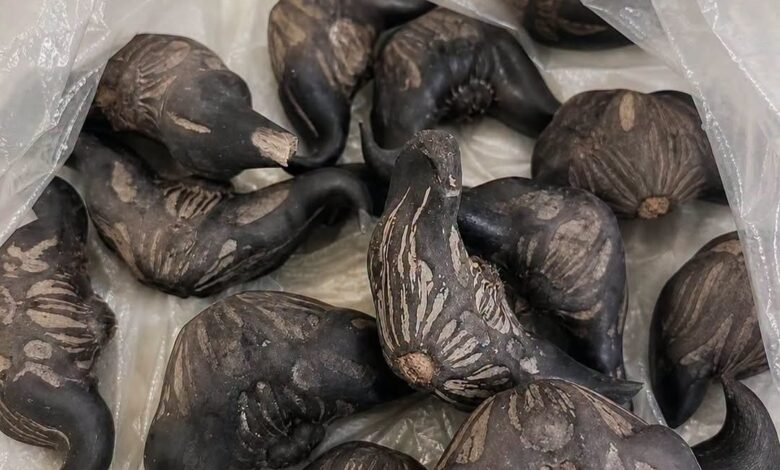
The dark objects in the bag look more like carved wooden animals than fruit. Their hard black shells end in sharp points, giving each one a horned shape. They are water caltrops, the edible fruits of an aquatic plant. Depending on the region, they may also be called water chestnuts, bat nuts, buffalo nuts, or singhara.
Water caltrops grow in ponds, lakes, and slow-moving water. The plant floats near the surface while its fruits develop below. Their unusual shape helped the seed lodge in mud and protect the pale kernel inside. The shell becomes dark and extremely hard after harvest, which is why someone seeing them for the first time may not recognize them as food.
They are not the same as the round canned water chestnuts commonly added to stir-fries. Those crisp white slices usually come from a different aquatic plant. Water caltrops have a starchy interior that is closer to a chestnut or firm potato once cooked. The flavor is mild, slightly sweet, and nutty.
The fruits should not be eaten raw. Aquatic plants can carry parasites and microorganisms from the water in which they grew. Cooking also softens the kernel and makes the shell easier to manage. Wash the fruits thoroughly before placing them in boiling water.
Boiling time depends on size and maturity, but they generally need enough time for the interior to become tender. After cooking, allow them to cool so they can be handled safely. Their points are sharp, so use a towel, sturdy gloves, or a tool designed for hard nuts rather than gripping them carelessly.
Cut or crack the shell along a stable edge, keeping fingers away from the blade. The edible portion inside should be pale and firm, without a sour odor, mold, or unusual discoloration. Discard fruits that have damaged shells, signs of decay, or an interior that smells wrong.
Cooked water caltrop can be eaten on its own with a little salt. It can also be added to soups, rice dishes, curries, and desserts. In some cuisines the dried kernel is ground into flour for breads, sweets, and foods prepared during religious fasting. Its starch makes it useful in both savory and sweet recipes.
Nutrition varies by preparation, but the kernels mainly provide carbohydrates along with fiber and several minerals. They are a seasonal food rather than a miracle cure. Claims that one unusual fruit can treat many diseases should be approached with the same care as any other unsupported health promise.
Water caltrop plants can become invasive outside areas where they are traditionally cultivated. Their floating leaves may crowd waterways, and the sharp fallen fruits can injure bare feet. Seeds or shells should not be discarded into lakes or streams. Local environmental rules may restrict possession or planting in some regions.
A neighbor who hands over a bag may assume the preparation is familiar, but asking before eating is wise. Once identified, the strange horned shells become much less mysterious. Wash them, cook them completely, open them carefully, and enjoy the starchy kernel inside. What first looks like an inedible object is a traditional aquatic food with a long history across parts of Asia and Europe.
If the bag came without instructions, ask the neighbor when the fruits were harvested and how their family usually prepares them. Fresh examples should be stored as a perishable food, not left indefinitely at room temperature simply because the shell feels hard. Cook only a small batch the first time and let their texture guide the recipe. Children should not open the pointed shells themselves, and anyone with food allergies should try unfamiliar foods cautiously. Identification matters more than an adventurous guess: several plants share common names, so match the whole fruit and its source before treating it as the familiar cooked water caltrop.