Legendary Country Music Singer And Songwriter Frankie Miller Has Passed Away At The Age Of 95
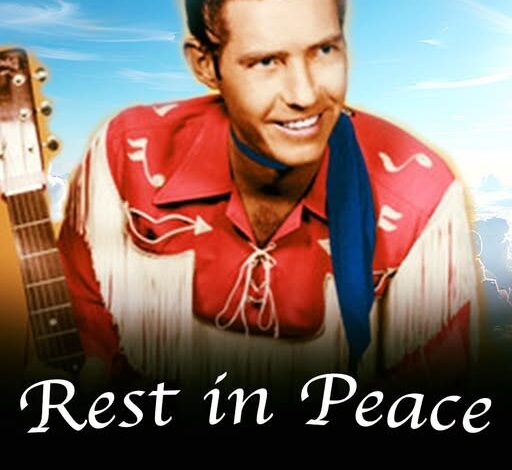
Frankie Miller’s voice carried the weight and texture that traditional country music asked of its greatest storytellers. He could make a song about work, family, or disappointment feel lived rather than performed. His death at 95 closes a remarkable life in music, but it leaves behind recordings that still connect listeners to the people and places he sang about.
Tracy Pitcox, president of Heart of Texas Records, said Miller died of natural causes at home. Even near the end of his life, the singer remained involved in the music that had shaped him. He had recently completed work on his biography, The Blackland Farmer: Life Among Country Music Legends, written by Greg Wilson.
That final project gave Miller another way to preserve the experiences behind the records. His career reached across generations, from local radio and early bands to international performances and recordings made well into later life. The book arrived as a reminder that his contribution included not only songs, but decades of firsthand memories of country music’s changing world.
Born in Victoria, Texas, on December 17, 1930, Miller began pursuing music as a teenager. He formed The Drifting Texans and appeared on local radio, gaining experience before securing a recording opportunity. Those beginnings placed him close to the everyday audiences whose lives would remain central to his music.
Military service interrupted that early progress. During the Korean War, Miller served in the Army, earned a Bronze Star, and reached the rank of sergeant. When he returned home, he resumed the musical path that the war had temporarily set aside.
His defining breakthrough came in 1959 with “Blackland Farmer.” Inspired by his uncle, the song joined a recognizable working life to a distinctive country sound. It became one of Starday Records’ major successes, reached the country Top 5, and crossed into the pop charts.
For many listeners, Miller and “Blackland Farmer” became inseparable. The record was memorable not because it disguised ordinary life as something glamorous, but because it treated that life as worthy of a song. Its enduring appeal helped make the title a fitting name for the story of his own career.
Other successes followed, including “Family Man,” “Baby Rocked Her Dolly,” and “A Little South of Memphis.” In 1960, Cashbox Magazine named him its Most Promising Country Artist. The recognition reflected the momentum of a performer whose voice and material were reaching an expanding audience.
Miller also worked alongside an extraordinary range of country artists. His touring and performing life brought him together with Johnny Cash, George Jones, Patsy Cline, Ernest Tubb, Buck Owens, Lefty Frizzell, and Willie Nelson. His songs found further audiences through recordings by performers including Webb Pierce, Jessie Colter, Pat Boone, Faron Young, and Dwight Yoakam.
Like many musicians, he also knew a life beyond the stage. He later worked selling cars in Arlington, Texas. That chapter did not erase the singer, however, and the passing of his biggest commercial years did not become the end of his relationship with music.
He returned to touring in the 1990s, performing in Texas and overseas. At 85, he traveled to Sweden in 2015. His final full-length album, A Friend Remembered: My Tribute To George Jones, followed in 2020. Pitcox also recalled a later appearance with longtime friend Willie Nelson at the Luck Reunion.
Bill Anderson remembered meeting Miller on a western Canadian tour in 1959, when both men were still establishing themselves. Miller had “Blackland Farmer,” while Anderson had released “Ninety-Nine Years.” Their friendship outlasted the uncertainty of those early audiences and became one of the lasting personal connections behind Miller’s public career.
Miller is survived by daughters Sandi Wilson and Lori Chaney, their husbands, six grandchildren, and two great-grandchildren. For his family, the loss is personal in ways no discography can capture. For listeners, the records remain a connection to a singer who kept returning to the music he loved.
Every time “Blackland Farmer” plays, that unmistakable voice is heard again: weathered, direct, and rooted in the lives it described. Miller leaves a legacy built over a lifetime, one performance and one story at a time.