Hidden Name on the Bridge
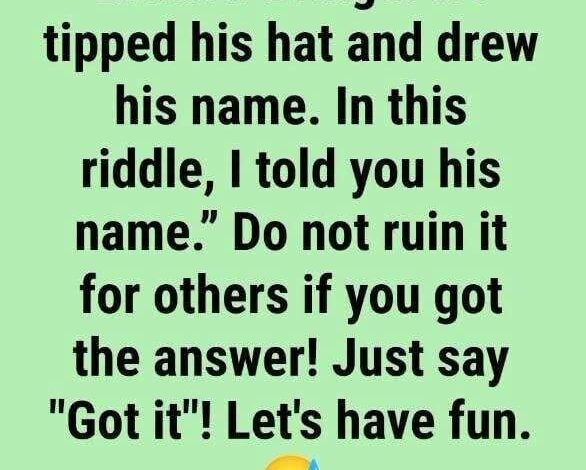
“I met a man on the London Bridge. He tipped his hat and drew his name.” The encounter sounds like the beginning of a mystery, especially when the next line insists, “In this riddle, I told you his name.” But there is no missing introduction to uncover, and the bridge itself offers no special clue. The solution comes from changing how you divide the sentence, rather than imagining anything beyond it.
The man’s name is Andrew. Put “and” and “drew” together, removing the space, and the answer appears: Andrew. Read aloud, those two words can also sound like the name, making the trick particularly satisfying when someone recites the puzzle. What initially seems like an odd description of a gentleman’s actions is actually the reveal. That is the charm of this little riddle: it invites you to search for information, then shows you that you had it from the very beginning.
The first time you hear the riddle, the scene seems to be doing the work. You picture a bridge, a man passing by and a hat tipped in greeting. It is natural to expect a name to come from an introduction. Since no introduction appears, you may look for a clue in the place, the clothing or the stranger’s behavior. Each of those details gives you something to imagine while the most useful words pass by almost unnoticed.
Try reading the line again and pausing after the hat. The sound that follows is close to the way many English speakers pronounce Andrew. On the page the resemblance is even easier to see. The letters of the word and come directly before drew. Ignore the space between the words, capitalize the first letter and the two parts form the name the riddle asks for. You do not need to rearrange any letters or supply any that are missing.
Part of the misdirection comes from grammar. The word and usually connects two actions, so the reader groups it with whatever follows as part of the sentence. Drew also has several everyday meanings. A person can draw a picture, draw a curtain or draw a cane from where it was resting. Your ear is prepared to interpret the phrase as an action, even though the same letters give you a proper name.
If you tell the puzzle aloud, read it at the pace of an ordinary conversation. A dramatic pause between the two words makes the answer easier to catch. A natural delivery lets listeners follow the scene first, then return to the language once they realize the story did not include an obvious introduction. The written version offers a different pleasure because readers can see the exact spelling change when the space goes away.
The line about having already told the name is the instruction that points back to the sentence. It invites you to reread the words rather than solve a separate mystery about the stranger. The bridge remains a memorable setting, and the gesture with the hat gives the encounter a believable rhythm. The answer sits in the ordinary conjunction and verb that connect the pieces of that scene.