Hidden Faces in Plain Sight
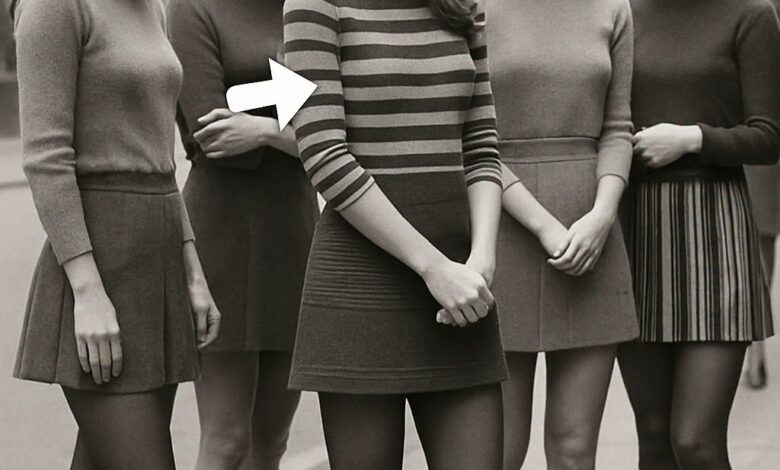
What unsettles the viewer most is not a grotesque distortion but the realization of perfect sameness where difference should exist. The faces, once dismissed as vaguely similar, resolve into a single identity repeated with surgical precision. Each woman is the same woman, multiplied and rearranged like a living pattern. The photograph stops being a memory and becomes a riddle: not “Who are they?” but “How was this done?”
Long before Photoshop, this illusion demanded patience, calculation, and an almost obsessive eye for detail. The photographer had to choreograph time itself—reframing, re-exposing, and recombining the same subject until the composite felt seamless and ordinary. That quiet ordinariness is the final, elegant cruelty of the trick. The image reminds us how rarely we truly look, and how easily reality can be bent when we accept the surface without daring to question it.
The trick works because the eye initially accepts the photograph as a whole. A row of figures, familiar clothing, and an ordinary street provide enough information to suggest a simple scene. Once that first impression has formed, the mind has little reason to question every face separately. Similarity seems natural within a group, and repetition hides inside that expectation.
Looking again changes the task. Instead of asking what kind of scene the photograph shows, the viewer begins comparing its individual details. A face that seemed merely similar becomes unmistakably the same. The discovery does not require a monster in a window or a strange object in the background. It depends on noticing something central that the first glance passed over.
That is why the illusion can feel more unsettling after it has been explained. The repeated identity was visible from the beginning. Nothing has been added to the photograph between one look and the next. What has changed is the viewer’s attention, and with it the meaning of everything already in view. An ordinary group portrait becomes a constructed arrangement of one person.
The work involved in making such an arrangement also becomes easier to appreciate. A successful composite must do more than repeat a face. Its separate parts need to feel as though they belong to the same moment. If an edge or a transition calls too much attention to itself, the viewer starts searching for the trick immediately. The convincing surface allows the repetition to remain unnoticed a little longer.
The photograph therefore invites two kinds of looking. First comes the search for the unusual detail. Then comes the slower effort to understand how the whole image persuaded the eye to overlook it. The second question can remain interesting even after the first has been answered. Knowing the secret does not remove the patience and care implied by the result.
A closer look turns a passing glance into an encounter with the photograph’s construction. The figures no longer seem like a group caught by chance, yet the familiar setting continues to make that first impression understandable. That tension is the lasting appeal of the image: the explanation is clear, but the eye can still remember how completely it accepted the scene before the repeated faces came into focus.