GLOBAL WAR ALERT: Iranian Missile Barrage Shatters Persian Gulf Peace as US Bases Under Siege!
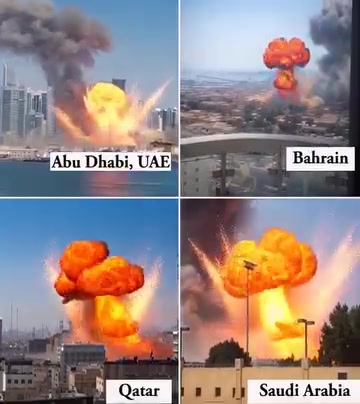
A major escalation shook the Persian Gulf on June 28, 2026, when Iran’s Islamic Revolutionary Guard Corps said it had launched ballistic missiles and drones at sites connected to United States forces in Bahrain and Kuwait. The stated targets included Ali Al Salem Air Base in Kuwait and facilities associated with the U.S. Fifth Fleet in Bahrain.
The attacks followed fresh American strikes on Iranian coastal military facilities and surveillance systems. Tehran described its operation as retaliation and accused Washington of violating an existing ceasefire framework. The exchange showed how quickly a fragile pause in fighting could give way to direct military action across several countries.
Iranian officials claimed that eight pieces of U.S.-linked military infrastructure were destroyed. That assertion required caution because it came from a party to the conflict and was not independently confirmed in full. Bahrain said its defenses intercepted a number of incoming missiles and drones, while reports from the region described damage in a residential area near the airport in Muharraq. The competing accounts underline why initial wartime claims should not be repeated as settled fact.
For people in Bahrain and Kuwait, however, the immediate danger was real regardless of the final damage assessment. Air-defense activity, warning sirens and emergency instructions disrupted daily life and forced residents to seek shelter. When missiles and drones cross populated areas, failed interceptions and falling debris can threaten civilians even when the intended target is military.
The confrontation was tied to the wider struggle over the Strait of Hormuz, one of the world’s most important shipping corridors. Oil and gas exports from Gulf states pass through the narrow waterway, so any prolonged disruption can affect energy prices and supply chains far beyond the Middle East. Commercial shipping also faces increased insurance costs and operational risk when military forces exchange fire nearby.
Iran’s choice of targets carried a strategic message. Bahrain hosts the headquarters of the U.S. Fifth Fleet, and Kuwait has long supported American military operations. By striking at sites in those countries, Tehran sought to demonstrate that regional bases could be placed at risk during a confrontation with Washington. That strategy also puts Gulf governments in a difficult position because their security partnerships can make their territory a battlefield.
The United States, meanwhile, has described its own strikes as responses to Iranian attacks and threats to maritime activity. Each side has framed its actions as defensive or retaliatory, but the result is an escalation cycle in which one operation becomes the justification for the next. Such cycles are especially dangerous when drones, missiles and air defenses operate under intense time pressure and incomplete information.
Diplomatic efforts were still being discussed after the barrage, including possible mediation through regional partners. Yet diplomacy becomes harder when public statements remain uncompromising and military operations continue. A misidentified target, an unexpected casualty count or a strike on civilian infrastructure could quickly narrow the space for negotiations.
It is also important to distinguish confirmed information from propaganda. Iran’s announcement of destroyed facilities, official denials from opposing forces and dramatic images shared online all serve political as well as informational purposes. Reliable assessments often take time and may depend on satellite imagery, independent reporting and statements from multiple governments.
The June 28 attacks did not by themselves establish that a global war was inevitable, but they represented a serious widening of an already dangerous conflict. They placed U.S.-linked installations, Gulf populations and crucial trade routes in the same zone of risk. That combination gives regional leaders and outside powers a strong reason to prevent another round of retaliation.
For civilians, official shelter guidance and verified local alerts remain more useful than viral speculation. For governments, the urgent task is to create a credible channel for de-escalation while protecting shipping and communities. The Persian Gulf has endured repeated crises, but the use of ballistic missiles and drones against bases in Bahrain and Kuwait showed how little margin for error remained.