Finding a Snake in Your House? Heres What to Do (And Why You Shouldnt Panic)
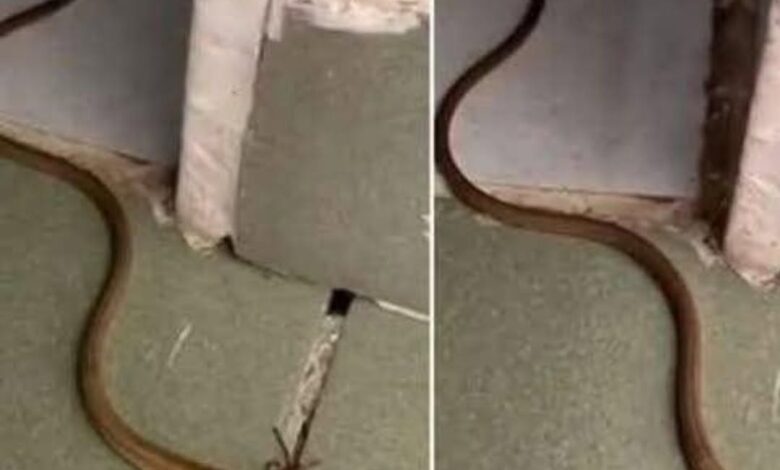
A+
Before you do anything else, try to identify the snake. This sounds scary, but it’s actually simple.
From across the room, note:
Color and pattern: Solid, banded, blotched, or diamond?
Head shape: Triangular heads often (but not always) indicate venomous species. Rounded heads usually indicate non-venomous.
Size: Small (under 12 inches), medium (1-3 feet), or large (over 3 feet)?
Body shape: Thick and heavy (like a rattlesnake) or thin and slender (like a garter snake)?
The challenging reality: Most people cannot accurately identify snakes from a distance, especially when panicking. If you are unsure—assume it could be venomous and keep your distance.
What NOT to do: Do not get close to examine the head. Do not attempt to handle or capture the snake yourself. Do not poke it with a broom or object to “see what it does.”
Step 2: Protect Yourself and Others (The Calm Method)
Here’s what to do in the first 60 seconds.
First: Isolate the snake. If possible, close the door to the room where the snake is. Slide a towel under the door to prevent it from moving into other areas. This contains the problem.
Second: Move people and pets out of the room. Calmly. No running, no screaming. Snakes sense vibrations. Sudden movements and loud noises stress them—and a stressed snake is more likely to defend itself.
Third: Keep eyes on the snake (if you can safely do so). Watch from across the room. Note where it goes if it moves. This information is invaluable when help arrives.
What NOT to do:
Do not try to kill the snake. A frightened, injured snake is far more dangerous than one left alone. Attempting to kill a snake dramatically increases your risk of being bitten.
Do not try to capture it. Even non-venomous snakes can bite. Their mouths harbor bacteria that can cause serious infection.
Do not corner it. A snake that can’t escape may become defensive. Give it space and an escape route out of the room (if possible).
Step 3: Call for Help (When and Who to Contact)
You do not need to handle this alone.
Call animal control if: The snake is in a living area (kitchen, bedroom, living room) and you cannot safely isolate it. Animal control officers are trained to capture and relocate snakes.
Call a wildlife removal service if: The snake is venomous, large, or inaccessible (inside a wall, under a heavy appliance). Wildlife removal specialists have the tools and training to handle venomous species.
Call a neighbor (only if): You are certain the snake is non-venomous and you just need moral support. Do not ask an untrained neighbor to handle a snake you’re unsure about.
Emergency services (911) are NOT appropriate for most snake encounters. Reserve 911 for actual medical emergencies—like if someone has been bitten. Animal control is the right resource.
What to tell the dispatcher:
Where the snake is (room, furniture, location within the room)
Size and color (from memory, don’t go back to look)
Whether you think it’s venomous (and why)
Whether anyone has been bitten
Step 4: If the Snake Is Venomous – Extra Precautions
This section matters. Venomous snakes in North America include rattlesnakes, copperheads, cottonmouths (water moccasins), and coral snakes. Different regions have different species.
If you suspect a venomous snake:
Do not attempt to capture or kill it. Period. The majority of venomous snakebites occur when people try to handle or kill the snake.
Evacuate the room. Close the door, block the gap under the door, and do not re-enter until professional help arrives.
Keep pets away. Dogs are often curious about snakes. A dog investigating a venomous snake is at high risk of being bitten.
Do not try to “flush it out.” Spraying water, making noise, or poking at hiding spots will only agitate the snake.
The good news: Even venomous snakes are rarely aggressive. Most bites occur when people step on snakes, try to handle them, or surprise them. If you leave it alone, it will likely stay hidden until removed by a professional.
Step 5: After the Snake Is Gone – Prevention
Once the snake is safely removed, it’s time to figure out how it got in—and how to keep others out.
Seal entry points (this is the most important step). Snakes can squeeze through gaps as small as a quarter-inch. Walk around your home’s foundation and look for:
Cracks in the foundation
Gaps around pipes, conduits, or vents
Spaces under doors (install door sweeps)
Gaps around windows
Open crawl space vents (cover with hardware cloth)
Remove food sources. Snakes follow their prey. If you have mice, rats, or large insects, snakes will come. Address pest problems with traps or professional pest control.
Remove hiding places near the house:
Keep grass mowed short
Remove wood piles, rock piles, and debris from near the foundation
Trim shrubs and bushes so they don’t touch the house (snakes can climb)
Store firewood away from the house (mice nest in woodpiles; snakes follow)
Consider snake repellents? Most commercially available snake repellents have not been proven effective. The best repellent is a clean, sealed, pest-free home.
What About the Garage? (Common Snake Entry Point)
Garages are snake magnets. They’re often cluttered, dark, and have gaps under the big door. Rodents love garages. Snakes follow.
To snake-proof your garage:
Install a door sweep on the large garage door (rubber seal along the bottom)
Seal gaps around side doors and windows
Keep the garage clutter-free (snakes love hiding under cardboard boxes)
Store items in plastic bins with tight lids, not cardboard (cardboard also attracts pests)
Set mouse traps (keep pets away from them)
Will a Snake Come Back?
This is the question everyone asks after a snake encounter.
The honest answer: If you don’t change the conditions that attracted it in the first place—yes, another snake could return. Snakes are not territorial in the way mammals are. It’s not the “same snake” coming back. It’s a new snake following the same cues: food, shelter, temperature regulation.
The good news: Once you seal entry points and remove food sources, your home becomes much less appealing to snakes. Prevention works.
A Note on Snake Conservation (Yes, Really)
I know you don’t want to hear this right now. But snakes are ecologically important.
They control rodent populations naturally. A single snake can eat dozens of mice a year. Mice carry diseases, damage homes, and contaminate food. In many ways, snakes are free, non-toxic pest control.
Most snakes you encounter in your home or yard are harmless and beneficial. Even venomous snakes play important roles in their ecosystems.
The point: You don’t have to love snakes. But you can respect them from a distance. Let animal control relocate them safely. Killing a snake (even a venomous one) is unnecessary and often illegal for non-venomous species.
Frequently Asked Questions
Can a snake climb stairs or jump?
Snakes can climb stairs—slowly, but yes. They cannot jump. If you see a snake “jump,” it’s actually striking or falling. Keeping the snake on one floor by closing doors is effective.
Are baby snakes more dangerous than adults?
It’s a myth that baby snakes can’t control their venom and are therefore more dangerous. Baby venomous snakes can control their venom just fine. However, they are smaller and may be harder to spot. Treat any venomous snake with respect regardless of size.
Why did the snake freeze when I saw it?
That’s instinct. Snakes rely on camouflage. When they feel threatened, many species freeze, hoping you won’t see them. If you see a snake frozen in place, it’s not “getting ready to attack”—it’s hoping you’ll go away.
What if my pet catches a snake?
Keep your pet away. Dogs are often bitten on the face when investigating snakes. Cats are quicker but still at risk. If your pet has been bitten (even if you don’t think the snake was venomous), go to the vet Immediately. Snake bites can cause serious infection even without venom.
Are there more snakes if I see one?
Not necessarily. Snakes are generally solitary. Seeing one snake does not indicate an infestation. However, if you have a rodent problem, you may have more than one snake.
Can snakes come up through toilets?
Extremely rare, but it has happened. Snakes can swim and navigate pipes. A tight-fitting toilet lid and regular pest control are your best prevention. Do not lose sleep over this—the odds are astronomically low.
A Calm, Encouraging Conclusion
Here’s what I learned from my kitchen snake encounter.
Panic makes everything worse. When I screamed and jumped on a chair, I didn’t help the situation. I stressed myself out, stressed the snake out, and delayed getting proper help.
Now, years later, I’ve seen several snakes in and around my home. I still feel a jolt of adrenaline. That’s normal. But I’ve learned to pause. To breathe. To assess from a distance. To call the right people.
Snakes are not monsters. They’re not omens. They’re just animals trying to survive in a world where humans have built houses on their habitats. You don’t have to love them. But you can handle encounters with knowledge instead of fear.
So if you find a snake in your home, take a breath. Step back. Make the call. You’ve got this.
Now I’d love to hear from you. Have you ever found a snake in your home or garage? What did you do? Did you panic or stay calm? Drop a comment below – your story might help someone else stay calm in a scary moment.
And if this article helped you feel more prepared, please share it with a friend who spends too much time worrying about snakes. A text, a link, a conversation. Being prepared is the best antidote to fear.
Stay calm. Stay safe. And seal those gaps. 🐍🚪
Trade BTC and ETH Without Owning the Coins
Explore key perks of BTC/USD and ETH/USD CFDs: trade seven days a week with no commissions under FSA regulation—and enjoy tight spreads from 8.7 USD on a high-performance platform. Trading derivatives involves high risk to your capital.
IC
|
Sponsored
Learn More
Global Indices Are on the Move — Time to Trade!
Dow, DAX, FTSE, S&P and more — trade the world’s biggest indices with premium tools, zero commission and fast execution. Trading derivatives involves high risk to your capital.
IC
|
Sponsored
Learn More
A Billionaire’s Reading List: 5 Books Cuban Says Everyone Should Know
Blinkist Magazine
|
Sponsored
Хирург: Преклињем вас! Ако вас боле колена, одмах избаците ово из исхране…
Zenith Lifestyle Blog
|
Sponsored
Heart Surgeon Warns: “Avoid Bone Broth At All Costs”
Gundry MD
|
Sponsored
Learn More
Twin Study Reveals Why Some Women Age Faster Than Others (It’s Not What You Think)
Beauty Review Magazine
|
Sponsored
Learn More
Apneja u snu je povezana sa ovim predmetom (prestanite da ga koristite)
memory-pillow.com
|
Sponsored
Doctor Says: “Drink This 1 Soup Daily To Prevent Collagen Loss”
Gundry MD
|
Sponsored
Learn More
📖
Recently Viewed
⏱️ Just read
Scientists May Have Actually Found One Of The Causes Of Autism
⏱️ Just read
found this in my girlfriend’s room, under the wardrobe. I’ve been sitting here staring at it trying to figure out…
⏱️ Just read
The First Animal You See Reveals Your Biggest Personality Flaw: A Fun Psychological Insight
⏱️ Just read
Which Couple Is The Happiest? Your Choice Reveals Your True Personality
⏱️ 57 mins ago
NEWS IN THE SAME CATEGORY