Dog Sniffing Explained What Your Pet Is Trying to Tell You
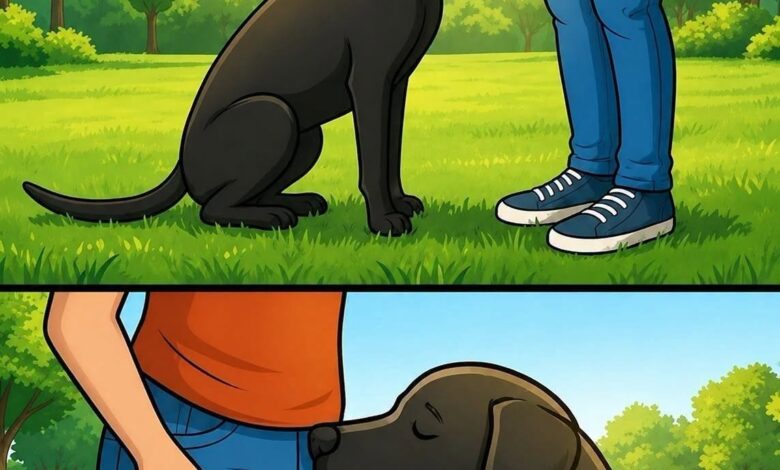
I used to become frustrated whenever my dog Gus stopped during a walk. We would begin at a brisk pace, and then he would plant his feet beside one blade of grass, a fire hydrant, or a shoe and investigate it as though nothing else existed. I tugged the leash and told him it was only grass.
Then I learned that Gus was not being stubborn. For him, sniffing was the point of the outing. He was reading the neighborhood’s morning news, checking which animals had passed, and collecting information about their health, mood, and direction. Once I understood that, I stopped treating every pause as a delay.
A dog’s nose is built for this work. Dogs can have up to 300 million olfactory receptors, compared with roughly six million in humans. A much larger proportion of their brain is devoted to analyzing scent. Where I see a patch of grass, Gus can separate layers left by soil, insects, people, weather, food, and other dogs.
Dogs also use a specialized structure often called the Jacobson’s organ to examine chemical signals, including pheromones. This helps them gather social and biological information that is invisible to us. Their sniffing pattern continually pulls new scent molecules into the nose, allowing them to study an area in remarkable detail.
When Gus pauses where another dog has been, he may be learning its sex, approximate age, reproductive status, stress level, or health. Urine and other scent marks help dogs build a mental map of neighborhood boundaries and social activity. The exchange is part introduction, part message board, and part location history.
Other scents activate older instincts. A dog may detect a squirrel, rabbit, dropped food, or an unfamiliar animal long before a person sees anything. Even a well fed pet remains interested in edible smells, and a focused nose can find crumbs that appear nonexistent to human eyes.
Dogs can also detect changes in human body chemistry. Stress, fear, and other emotional states alter hormones and scent. Trained dogs can identify certain medical changes, but an ordinary pet’s sudden interest in a person’s body does not provide a diagnosis. Persistent unusual behavior or a health concern should be discussed with an appropriate medical or veterinary professional.
Sniffing provides mental exercise as well as information. Following and sorting scents requires concentration and problem solving. A short walk with time to investigate can be more mentally tiring than a longer outing in which the dog is rushed forward without engagement.
The activity can also reduce stress. Sniffing gives a dog control over part of the walk and allows natural exploratory behavior. An anxious animal may relax when permitted to examine a new place gradually. Preventing every pause can increase frustration and remove one of the dog’s main ways of understanding its surroundings.
Different styles became easier to recognize once I stopped pulling Gus away. Some dogs methodically inspect everything. Others focus on the routes taken by dogs and people. Food motivated dogs search for snacks, cautious dogs test the environment for threats, and confident dogs explore with loose bodies and wagging tails.
I now allow extra time for scent led walks. I choose safe areas, vary the route, and let Gus decide when he has gathered enough information. If we truly need to move, I use a gentle cue instead of yanking the leash. I also prevent him from approaching dangerous rubbish, traffic, toxic plants, or anything that could injure him.
Our walks changed when I began respecting his nose. Gus became more relaxed, and I paid more attention to the signals he offered. He was never wasting time at the grass. He was observing a detailed world I could not perceive, and allowing him to read it made the walk richer for both of us.