Dad With 240 Tattoos Faces Backlash As People Think He Is A Horrible Father Then His Wife Reveals The Truth
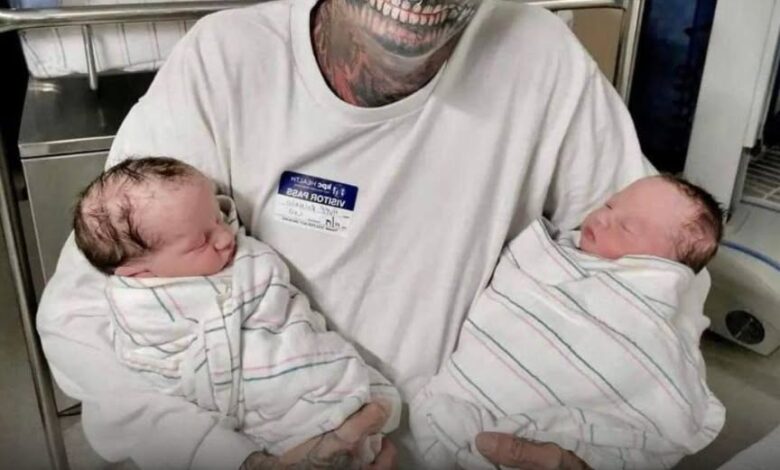
Richard Huff is a 51 year old father whose appearance often attracts attention before people learn anything about his family. More than 240 tattoos cover about 85 percent of his body, and he hopes eventually to reach complete coverage. Strangers sometimes look at the ink and decide that he must be frightening or irresponsible. His wife and children describe someone very different.
Huff’s interest in tattoos began with his legs and gradually spread. What started as a personal form of expression became a long term project across most of his body. Among the designs are the names of his children and images connected to them, including tattoos of his daughter’s lips. For him, the collection is not separate from family life; many pieces record the people who matter most to him.
He and his wife, Marita, are raising five children. Three are from Marita’s previous relationships, but she says Huff has become their true father in every meaningful sense. He is present for the daily responsibilities, the school activities and the moments that build trust over time. The commitment matters far more inside their home than the judgments made by people who only see him briefly.
Those judgments have reached the children at school. Other pupils have sometimes said that their father looks scary. His daughter has responded by defending him, explaining that the person they imagine from his tattoos is not the man she knows. To her, he is simply her father: loving, involved and dependable.
Marita admits that she was initially intimidated by Huff’s appearance. Before getting to know him, she wondered whether the heavily tattooed man in front of her might be dangerous. Conversation quickly changed that impression. She discovered someone with a big heart, and their relationship has now lasted six years.
At school, Huff makes an effort to be visible rather than allowing assumptions to keep him away. He attends parent teacher association activities and other functions involving the children. His presence gives teachers, parents and pupils a chance to see him as an active parent instead of a collection of images on skin.
The criticism has not persuaded him to hide his tattoos or to apologize for them. Huff sees the artwork as part of his identity. At the same time, he does not claim that tattoos make him a better parent. His point is simpler: they do not make him a worse one. Parenting is measured through care, patience, consistency and the willingness to show up.
His family offers the strongest answer to people who call him a horrible father. Marita describes his devotion to all five children, including the three he did not biologically father. The children speak about the support they receive. Their experience comes from years of living with him, not from a quick reaction to a photograph.
Huff’s story reveals how quickly appearance can become a substitute for evidence. Body art is highly visible, while the ordinary work of family life usually happens in private. A stranger can count tattoos but cannot see school meetings, household routines, comforting conversations or the countless small decisions through which a parent earns a child’s trust.
He still intends to add more tattoos and may eventually cover the remaining areas of his body. Whatever his final total becomes, the important numbers at home are different: five children, six years with Marita and the many family events he refuses to miss. The ink may be the first thing people notice, but those closest to Richard Huff say his dedication as a father is what truly defines him.
The family does not expect every stranger to share Huff’s taste in body art. They ask only that personal preference not be confused with a judgment about character. Their life together provides a fuller picture than a single image can offer, and it shows why the people who know his parenting best reject the assumptions made about him.