Count The Exact Number of Balls
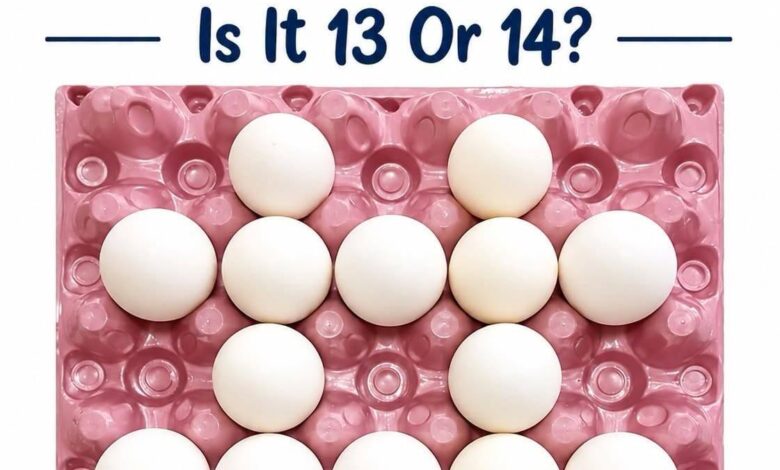
The answer is 16—not 13, and not 14. Counting from top to bottom, the five rows contain 2, 5, 2, 5, and 2 balls. Add those numbers together, and neither suggested answer survives. The empty spaces interrupt the arrangement, making a quick scan less reliable than it feels. A steadier approach is to move left to right across each row, counting every ball once before moving down. If your totals disagree, start over rather than forcing your count to match an option.
That is what makes this challenge satisfying: the misleading choice matters as much as the picture. Once two numbers are offered, it is tempting to assume one must be right. Choosing either does not mean you are bad at counting; it means the framing caught your attention. The takeaway is simple: check the evidence before accepting the options. Sometimes the correct answer was never on the menu.
The arrangement becomes easier to understand when you separate the picture into rows instead of treating the tray as one large shape. Begin with the two balls at the top. Move down to the row of five, then the middle row of two, the next row of five, and the final pair. Each row has its own subtotal. Keeping those subtotals separate helps prevent a gap from being mistaken for a ball or an actual ball from being skipped.
You can check the result a second way without relying on the original answer choices. The two wider rows contribute ten balls together. The three shorter rows contribute six. Combining those groups gives sixteen again. The value of this second pass is that it reaches the same answer through a different grouping, reducing the chance that one hurried scan has shaped the whole result.
The two suggested numbers create the real distraction. When a puzzle offers a pair of answers, many viewers naturally assume the task is to choose between them. That assumption can become stronger than the evidence in the image. Someone who counts sixteen may then begin doubting the count, looking for a reason to subtract a ball rather than questioning the choices themselves.
There is no need to force the picture into an answer that it does not support. The image and the options play different roles. The image contains the objects to be counted. The options are claims about the result. A careful count allows you to judge those claims instead of allowing them to determine what you see.
Taking a little more time also changes the experience of the puzzle. A quick glance encourages pattern recognition: the eye notices broad shapes and fills in a likely arrangement. Counting asks for a more deliberate process. Moving consistently through the rows gives every visible ball one place in the total and avoids counting the same object twice.
The solution is therefore not hidden behind a complicated mathematical trick. It comes from keeping track of ordinary objects and remaining willing to reject an incomplete set of choices. Sixteen is the count produced by the five rows. The useful habit is to trust a careful, repeatable check over the pressure to select an answer merely because it has been offered.