At Almost 103 He is the Oldest Living Star Celebrating a Century on Screen
A small group of remarkable performers now connects modern audiences with eras that otherwise survive only in old film reels, radio recordings, and fading photographs. Their long lives are not simply curiosities. They are living links to the way entertainment, music, and cultural memory developed across an entire century.
Karen Marsh Doll, born in 1919, worked as a dancer and became one of the last surviving people connected with the production of The Wizard of Oz. Her memories reach back to a studio system that operated very differently from Hollywood today. Through interviews and public appearances, she helped preserve details that would otherwise be reduced to captions in an archive.
Elizabeth Waldo, born in 1918, built a life around music, performance, and the preservation of Indigenous traditions. Her work demonstrates that longevity in the arts is not only about remaining famous. It can mean protecting sounds, instruments, and stories so that younger generations inherit more than a list of names.
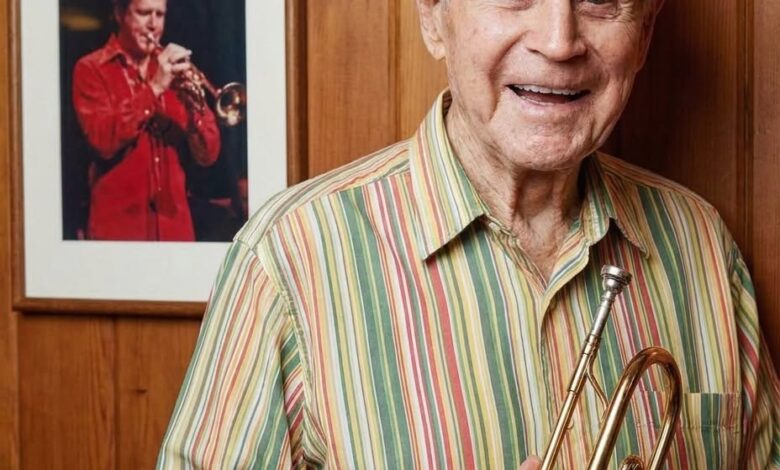
Ray Anthony, born in 1922, carried the energy of the big-band era into a new century. As a trumpeter, bandleader, and arranger, he belonged to a musical world shaped by dance halls, touring orchestras, and live radio. His continuing presence reminded listeners that the joy of swing music was created by working musicians whose careers demanded constant travel and discipline.
Around these centenarians stands another extraordinary group of veteran entertainers. June Lockhart became familiar to generations through television families and science-fiction adventures. Dick Van Dyke transformed dance, comedy, film, and television with a style that still feels light on its feet. Mel Brooks kept returning to the value of laughter, using parody to expose fear and pretension.
William Shatner and Barbara Eden remain closely identified with television characters that became part of popular culture. Their careers outlasted the original series that made them famous because they continued meeting audiences, accepting new roles, and treating their earlier work with affection rather than embarrassment.
Other major figures in their nineties continue to represent equally important histories. Clint Eastwood moved from television westerns to acting and directing. Sophia Loren carried Italian cinema to international audiences. Michael Caine’s voice and understated presence became instantly recognizable, while Julie Andrews joined extraordinary musical ability with a warmth that reached both children and adults.
Shirley MacLaine, Al Pacino, and Jane Fonda each followed a different path, yet all challenged the idea that meaningful creative life belongs only to the young. Their continued work, teaching, activism, or public reflection gives newer performers access to hard-earned knowledge about craft, failure, reinvention, and survival inside a demanding industry.
Reaching an advanced age does not make anyone immune to frailty, loss, or changing circumstances. It does, however, create a rare perspective. These artists watched silent-era habits disappear, television become a household fixture, color replace black and white, and digital platforms change how audiences discover performances. Their careers are timelines of technological and cultural change.
Their legacy is found in more than awards or famous scenes. It lives in the people they mentored, the traditions they protected, and the audiences who still respond to their work. At almost 103 and beyond, the oldest living stars are not merely names on a list. They are witnesses whose lives prove that presence does not have an expiration date and that art can carry memory forward long after its original moment has passed.
Celebrating them should mean more than marveling at a number. It means listening while firsthand memories are still available, preserving interviews and performances, and recognizing the workers around them whose names are less familiar. A century of creative life contains changes no single archive can fully explain. Their voices add texture, humor, and humanity to history.