At 75 I Used My Last Frozen Egg to Have a Baby Three Days After She Was Born a 42 Year Old Woman Knocked on My Door
I was thirty three when I froze my eggs. At the time it felt practical, not dramatic. I had work I cared about, friends who filled my weekends, and a small apartment that seemed temporary. I believed I would meet the right man, marry, and have children. The doctor warned me that frozen eggs preserved a possibility, not a promise. I signed the papers feeling that I had protected my future.
Someday never arrived. Relationships came and ended. One man wanted children without marriage, another wanted marriage but avoided every conversation about children, and a five year relationship survived by avoiding difficult questions. By my late forties, people stopped asking when it would be my turn. Their silence made the decision feel final even though I had never made it.
The eggs remained in storage. I paid the fee every year because I could not let go of the thirty three year old woman who had trusted me with that chance. I traveled, worked, retired, cared for my parents, and built a full life. Still, holidays could be beautiful and lonely at once.
At seventy five, I found the clinic documents while clearing a cabinet. Seeing my younger age beside my name made something settle inside me. I called the next morning. Tests, consultations, legal planning, and difficult questions followed. I updated my will and arranged guardianship. I knew exactly how old I would be while raising a child, but I could not spend the rest of my life wondering what might have happened.
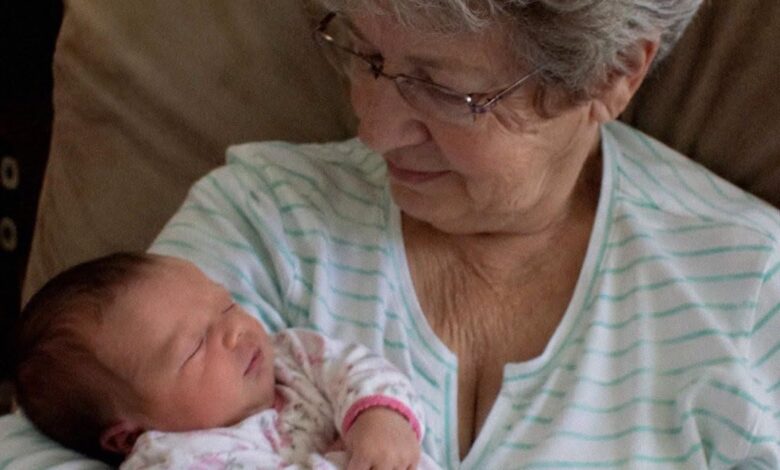
I used my last egg and found a surrogate. When the pregnancy was confirmed, I cried and laughed alone in my kitchen. Nine months later, the nurse placed Grace against me. Her fingers were tiny, her face red and scrunched, and dark hair covered her head. After forty two years, I was finally someone’s mother.
Three days after I brought her home, a woman with swollen eyes knocked on my door. She knew my name and Grace’s birthday. Her name was Ivanna, she was forty two, and the fertility clinic had called her after Grace was born. From her coat she removed an envelope filled with formal language about a possible laboratory error.
Ivanna had stored eggs at the same clinic. An internal review found that the identifying numbers on two records did not match old laboratory logs. The egg used to create Grace might have belonged to Ivanna. I held my daughter tighter and told the woman to leave, but the fear in her shaking hands mirrored my own.
Testing confirmed what the clinic feared. Ivanna was Grace’s genetic mother. The news shattered the story I had told myself throughout the pregnancy, yet it could not erase the nights I had already spent feeding Grace or the love that had formed the instant she opened her eyes.
Ivanna was not there to take her. Years earlier, the clinic had told her that her remaining egg had been destroyed after failing to survive thawing. She had grieved the end of her chance to have a biological child. Learning that a baby had been born from her egg reopened that loss in an unimaginable way.
We involved lawyers, counselors, and the clinic. Every conversation began with fear. I was Grace’s legal mother, but Ivanna was part of her truth. Trying to erase either relationship would turn the clinic’s mistake into another deliberate wound.
Slowly, we built an arrangement. Ivanna visited first with a counselor present. She learned how Grace liked to be held and cried the first time the baby gripped her finger. I watched from across the room with jealousy, compassion, and gratitude tangled together.
Months later, the three of us had a photograph taken. I was still Grace’s mother. Ivanna was no longer a stranger outside my door. We could not repair the years either of us had lost or pretend the error was harmless, but we could give Grace a life that did not begin with secrecy.
I had spent decades believing motherhood would arrive in one expected form. Instead it came through a surrogate, a laboratory mistake, and a crying woman carrying an envelope. Grace did not make our lives simple. She made them connected, and both of us chose to let love become larger than the future we had once imagined.