A Forgotten Rooftop Recording Reappeared After 23 Years Its Rare View Is Now Part of History
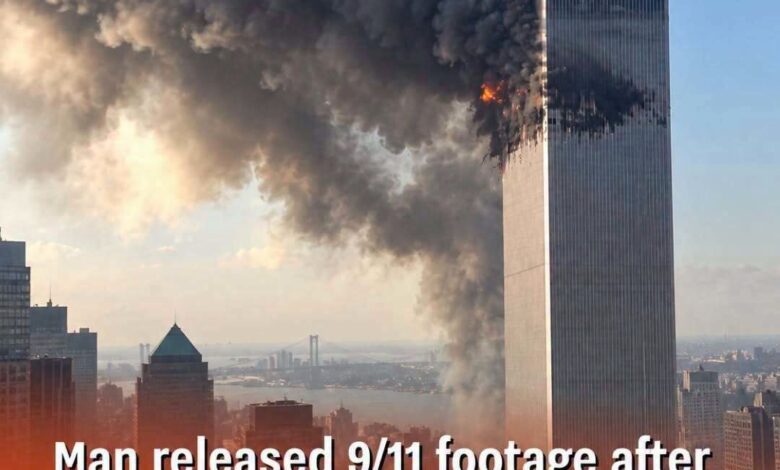
A closet cleanout brought an almost forgotten view of September 11 back into public sight. Kei Sugimoto was sorting through old videotapes when he found footage he had recorded from a rooftop in New York’s East Village in 2001. For more than two decades, the images had remained among his possessions rather than circulating with the recordings most people associate with that day.
Sugimoto was 24 when he took his camera onto the roof at 64 St. Marks Place. From there, he had a northern view of the World Trade Center. He initially understood the unfolding emergency as an accident, before the second aircraft made the nature of the attacks clear. By the time he began recording the surviving footage, the second impact had already happened. His video does not show that impact itself.
The camera was a Sony DCR-VX2000 fitted with a teleconverter. Across roughly six minutes, it captured smoke rising from the towers and the devastation that followed, including their collapse. The rooftop vantage point gave the recording a perspective different from the most familiar television images. It was one person’s view from his own part of the city, preserved on a tape that would not reach a broad audience until years later.
In 2001, sharing a home video publicly was not as simple as uploading it from a phone. YouTube had not yet arrived, and keeping a recording did not necessarily mean having a practical way to distribute it widely. Sugimoto’s tape went into storage alongside other personal recordings. As life moved on, the material remained physically present but largely out of view, vulnerable to being forgotten like so many other things kept in boxes.
When he revisited the collection in 2024, it included Hi8, Digital8, and DV tapes. Not everything had survived in usable condition. Roughly a third of the collection was blank, corrupted, or affected by deterioration. That discovery gave the sorting process a new urgency. The recordings were not simply waiting unchanged for someone to watch them; some were already becoming difficult or impossible to recover.
Digitizing the surviving material allowed the rooftop footage to move beyond its original format. Sugimoto uploaded it on July 23, 2024, about 23 years after filming it. The long interval between recording and release was part of what made the discovery striking. A historical event seen countless times could still contain a surviving personal perspective that most viewers had never encountered.
Its value does not depend on replacing established accounts. Another camera angle can add to the visual record without overturning what is already known. The location, timing, and limits of the footage matter: it begins after the second impact, and it shows what could be seen from one rooftop. Keeping those details attached to the video helps prevent a rare recording from being presented as something it is not.
The rediscovery also carries a quieter lesson about personal archives. A tape stored in a closet can hold something irreplaceable even when the box around it looks ordinary. Once a recording deteriorates beyond recovery, its specific sights and sounds cannot simply be recreated. Sugimoto’s experience makes that vulnerability tangible, because part of his collection had already been lost or damaged before he began the digital transfer.
The work of preserving September 11’s history continues in other forms as well. On August 24, 2026, New York City announced the identification of an adult woman using forensic investigative genetic genealogy. She became the 1,654th identified World Trade Center victim among the 2,753 people killed in New York. Her name was withheld at her family’s request, placing their privacy alongside the significance of the scientific achievement.
A recovered recording and an identification serve different purposes, but both show why the passage of time does not close the work of remembrance. Sugimoto’s tape adds a documented view of a terrible day. Its survival allows that view to become part of the shared record, while reminding viewers that behind every historical image were real people living through events whose consequences did not end when the camera stopped.