273 people killed in American Airlines Flight 191 at Chicago s O Hare Airport
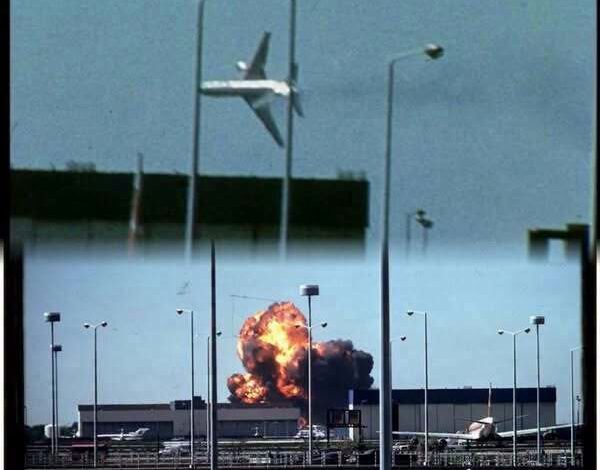
In the history of aviation accidents, some tragedies acquire strange stories that linger long after investigators determine what went wrong. One of the most unsettling accounts linked to a major air disaster involves American Airlines Flight 191, the catastrophic crash near Chicago’s O’Hare International Airport on 25 May 1979 that killed 273 people.
In the history of aviation accidents, some tragedies acquire strange stories that linger long after investigators determine what went wrong. One of the most unsettling accounts linked to a major air disaster involves American Airlines Flight 191, the catastrophic crash near Chicago’s O’Hare International Airport on 25 May 1979 that killed 273 people.
In the history of aviation accidents, some tragedies acquire strange stories that linger long after investigators determine what went wrong. One of the most unsettling accounts linked to a major air disaster involves American Airlines Flight 191, the catastrophic crash near Chicago’s O’Hare International Airport on 25 May 1979 that killed 273 people.
Flight 191 was a regularly scheduled service from Chicago to Los Angeles. The McDonnell Douglas DC-10 began its takeoff roll shortly after 3 p.m. With hundreds of passengers and crew aboard, the aircraft accelerated normally until the left engine and its mounting structure separated from the wing during rotation.
The departing engine damaged critical systems and disrupted airflow over the left wing. From the cockpit, the crew had only seconds to respond and did not have a clear view of the separation. The aircraft climbed briefly, rolled sharply to the left, and crashed into an open field near the airport. Everyone aboard was killed, along with two people on the ground.
The investigation focused on maintenance work performed before the accident. Investigators found that a procedure used to remove the engine and pylon together had placed damaging stress on the mounting structure. The resulting crack went undetected until the takeoff, when the assembly failed. The tragedy led to intense scrutiny of DC-10 operations and significant changes in maintenance practices and oversight.
Because the crash happened close to one of the country's busiest airports, many people witnessed its final moments. Images from the scene became some of the most recognizable photographs in aviation history. The scale of the loss affected airline employees, first responders, nearby residents, and families across the United States and abroad.
Over time, stories and rumors grew around the disaster, as they often do after events that are both sudden and difficult to comprehend. Some accounts took on an eerie quality and circulated far beyond Chicago. Whatever people make of those later stories, the documented tragedy remains the central fact: 273 lives were lost in a matter of seconds.
The legacy of Flight 191 is also one of lessons learned at an enormous human cost. Maintenance procedures, communication, inspection, and aircraft design all received renewed attention. Memorials and annual remembrances continue to honor the victims, while the investigation remains a powerful example of why seemingly small deviations in aviation maintenance can have catastrophic consequences.
Those lessons continue to matter today.