Trump brings up the 5 000 checks again but leaves out one key detail
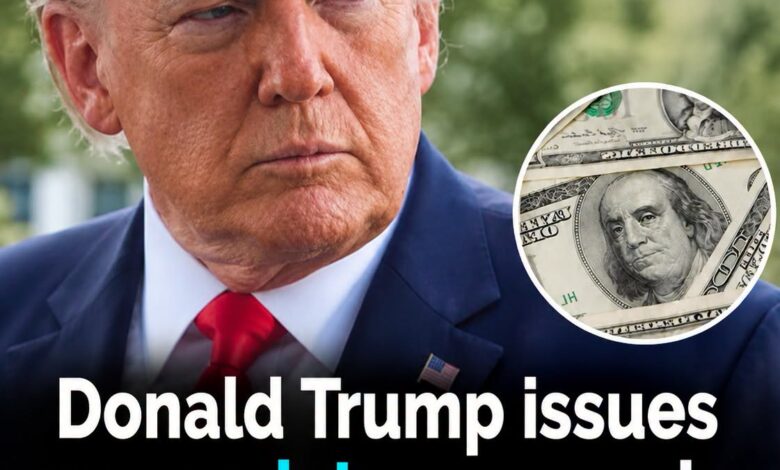
During an Oval Office event about a steel plant, Donald Trump reportedly renewed his proposal to give every American adult a $5,000 “Trump Dividend” if Republicans retain the House and Senate in November. He pointed to tariff revenue as the source of funding. But using the report’s estimate of 240 million recipients, the checks alone would cost approximately $1.2 trillion, before administrative expenses. The account identifies no approved distribution mechanism or established payment schedule.
The central hurdle goes beyond an election result: Congress controls federal spending, and a program this large would ordinarily require legislative authorization. Meanwhile, Trump and Democrats traded accusations over affordability, with DNC spokesperson Kendall Witmer arguing that working families remain squeezed by everyday expenses. For anyone counting on the money, the distinction matters: a political pledge is not an authorized benefit. Until funding, eligibility and implementation are settled, the proposed dividend remains a promise—not a scheduled check.
The scale of the proposed checks helps explain why the missing detail matters. Multiplying a headline payment by the number of possible recipients produces a national commitment, not simply an individual promise. The estimate in the report makes that distinction clear: even before the practical work of distributing funds, the proposed payments would represent a very large total expenditure. Identifying tariff revenue as the intended source does not, by itself, show how that expenditure would be approved or carried out.
The political condition attached to the pledge adds another layer of uncertainty. An election result and a payment program are separate stages. The proposal described in the report connects them rhetorically, but the account offers no completed administrative process that would turn the promise into checks arriving in people's homes. That absence is central to understanding the announcement on its own terms.
Eligibility is another unanswered part of the story. A broad statement about American adults does not explain how recipients would be identified, what information would be required, or how disputed cases would be handled. Those questions remain alongside the unresolved timetable. Without an established schedule, the announcement cannot tell a household when any proposed relief would become available.
The competing arguments about affordability show why a simple dollar figure can attract so much attention. Families facing everyday expenses may hear the pledge as the possibility of immediate help. Political opponents may focus instead on the gap between the announcement and an authorized program. Both reactions turn on the same practical issue: what would actually happen after the speech.
For that reason, the most consequential omission is the route from proposal to implementation. The report presents a renewed promise and describes substantial obstacles, but it does not present an approved benefit. Keeping those stages distinct allows the announcement to be understood without treating an unresolved possibility as an established payment.
The announcement also illustrates the difference between a memorable pledge and the details needed to administer it. A number can be stated in a sentence. Delivering that number to millions of recipients would involve decisions about authorization, funding, timing, and identification. The account leaves those decisions unresolved, which is why the proposed benefit remains uncertain.