This is what happens after sleeping near
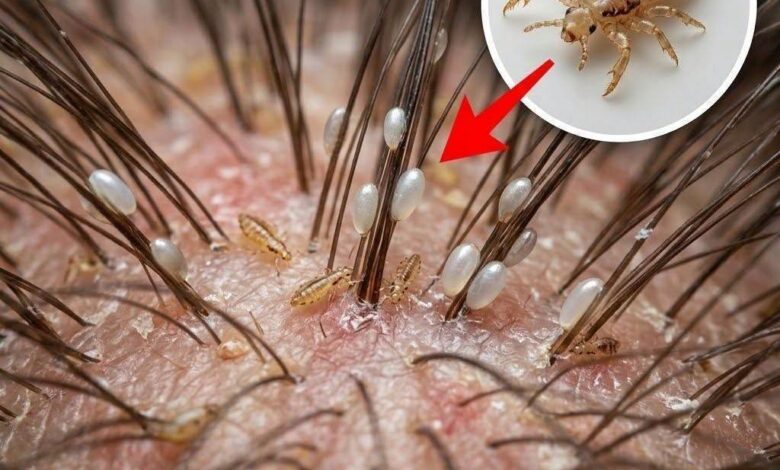
Persistent itching behind the ears or along the back of the neck can be uncomfortable. Although head lice are one possible cause, dandruff, dry skin, eczema, and allergic reactions can produce similar symptoms. The best approach is to examine the scalp carefully rather than assume lice are responsible.
Head lice are tiny, wingless parasites that live on the human scalp and feed on blood. They commonly affect school-aged children and their families, spreading primarily through direct head-to-head contact. Having lice is not a sign of poor hygiene, and most infestations can be treated successfully.
The areas behind the ears and around the nape of the neck are important places to check because lice and their eggs are often found close to the scalp. Symptoms may include persistent itching, a crawling sensation, small irritated bumps, and difficulty sleeping. However, some people experience few or no symptoms, particularly during an initial infestation.
Lice eggs, known as nits, are firmly attached to individual hair shafts and can be difficult to remove. Dandruff, by contrast, usually flakes away more easily. Finding live lice provides the clearest evidence of an active infestation, while empty egg casings may remain in the hair after lice have hatched or treatment has worked.
Head lice do not fly or jump. They crawl between people, making close head-to-head contact the main route of transmission. Sharing brushes, hats, pillowcases, or other recently used personal items can occasionally spread lice, but the risk is generally much lower than through direct contact.
If lice are confirmed, check household members and follow an appropriate treatment plan. A fine-toothed lice comb can help identify and remove insects. Depending on the product used, repeated treatment or combing may be necessary, so follow the instructions carefully.
Bedding and clothing do not usually become long-term breeding sites because lice depend on the human scalp. Wash recently used pillowcases, bedding, hats, and clothing according to their care labels. Extensive house disinfection, insecticide sprays on furniture, and throwing away belongings are generally unnecessary.
Avoid excessive scratching, which can damage the skin and potentially lead to infection. Seek medical advice if irritation persists, the scalp becomes painful or swollen, or sores develop pus or crusting.
The key is to confirm the cause before treating it. A careful scalp examination, sensible cleaning, and appropriate treatment can help control head lice without unnecessary worry or excessive household cleaning.
A useful distinction throughout the process is the difference between a symptom and a confirmed cause. Itching draws attention to the scalp, but it does not identify the problem on its own. Looking closely at the hair and scalp helps separate an assumption from what is actually present. The areas behind the ears and at the back of the neck are part of that examination, rather than proof of an infestation by themselves.
The same distinction applies after treatment. Material remaining on a hair shaft does not necessarily mean live insects are still present. Understanding what has been found can prevent repeated worry and unnecessary cleaning. The aim is to address the confirmed problem while paying attention to irritation that continues or becomes worse.