Questions Arise After an Unexpected Secret Service Scene Near Obamas House
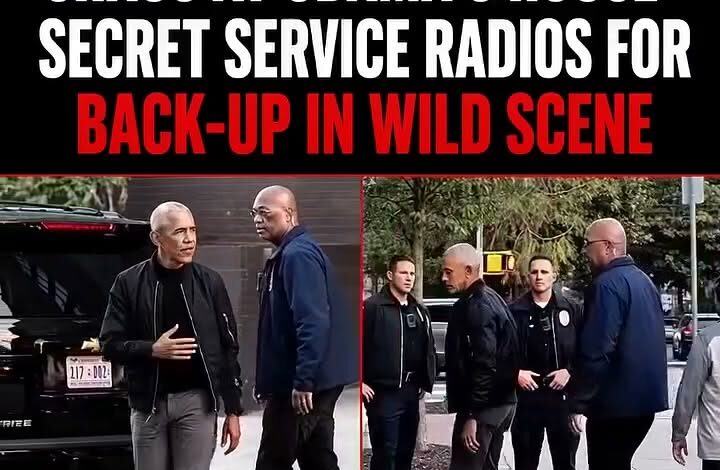
A late-night confrontation involving two Secret Service officers outside former President Barack Obama’s Washington, D.C., residence on May 21, 2025, turned into an internal controversy. Around 2:30 a.m., the officers became involved in a physical altercation, and one called for a supervisor as tensions escalated. Video and audio of the incident later became public.
The incident drew attention because the officers were assigned to protect a former president. Barack Obama continues to receive Secret Service protection, and the agency suspended both officers while launching an internal investigation. Officials did not publicly provide every detail about what caused the dispute, and there was no reported evidence that Obama was attacked or that an outside intruder exploited the confrontation.
The episode nevertheless raised questions about professionalism and security. Officers working around a protected residence must remain alert because threats can develop unexpectedly, even during overnight shifts. The incident also came amid broader scrutiny of the Secret Service, including a 2026 Government Accountability Office review that identified delays and gaps in how some security incidents led to policy changes.
Ultimately, the significance of the confrontation depends on what the investigation determined and whether any broader problems were identified. The verified facts show that two officers became involved in a physical dispute, both were suspended, and no reported outside threat took advantage of the situation. What remains important is whether the agency used the incident to strengthen supervision, training, accountability and workplace practices.
The account distinguishes between a dispute among protective personnel and a threat from outside the protected residence. That distinction is essential to understanding the episode. The confrontation is troubling because of the officers' assignment and their responsibility to maintain professional conduct, but the report does not establish that an intruder entered the area or that the former president was attacked. The questions raised concern the officers' behavior and the agency's response to it.
Suspension and investigation serve different purposes in that response. Removing personnel from an assignment addresses the immediate situation, while an investigation is needed to establish the circumstances and determine what consequences or changes should follow. The limited public detail about the cause of the confrontation leaves that second process important. A video can reveal that an incident occurred without explaining everything that led to it or every decision made afterward.
Overnight protective work also depends on cooperation among people who must remain ready during quiet periods. A disagreement that becomes physical can undermine that cooperation even when no outside threat materializes. The report's concern about supervision and training follows from that responsibility. The absence of an exploited security breach does not erase the need to examine behavior that could interfere with the assignment.
The broader scrutiny mentioned in the account places the event within a discussion about learning from security incidents. Identifying a problem is only the first part of that process. The next question is whether findings produce clear expectations, useful training, and appropriate accountability. In this case, the public account provides the basic sequence of the confrontation and the suspensions, while leaving the investigation's detailed conclusions and any resulting changes to be established through the agency's review.