DID YOU KNOW? If hair grows on your ears, its because your body! great ready
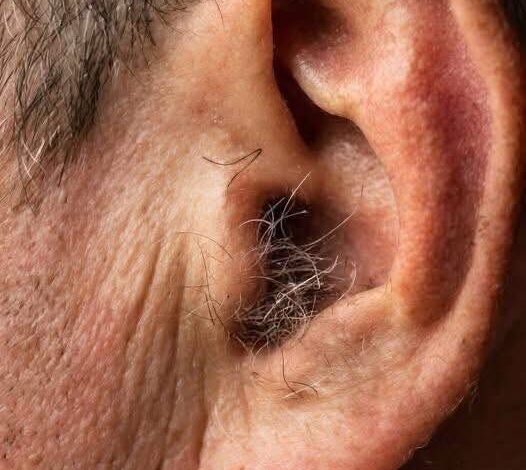
Did you know that hair growing on your ears is a completely normal part of aging? Many people notice it suddenly after fifty or sixty and immediately worry that something is wrong. Others joke about it, hide it, or feel embarrassed. The truth is far simpler: ear hair reflects normal hormonal and genetic changes over time and does not, by itself, establish an illness.
As we age, our bodies do not change uniformly. Hair may thin on the scalp while growing thicker in areas like the ears, nose, or eyebrows. This happens because hair follicles respond differently to hormones over decades. Androgens, such as testosterone and dihydrotestosterone (DHT), influence growth depending on the location. Men are more likely to develop prominent ear hair, though women may notice it after menopause when estrogen levels drop. Genetics also play a role, determining hair density, thickness, and growth patterns.
Ear hair once had practical purposes: trapping dust, keeping insects out, and protecting the ear canal. Over time, growth becomes more visible, but this is simply the body continuing its natural functions. Many myths surround ear hair, including claims that it signals poor circulation, organ disease, or hormonal imbalance. Ear hair alone cannot diagnose those conditions. Hair does not grow back thicker after trimming, either; blunt ends just create that visual illusion.
Grooming is optional and should be done safely, using small trimmers or rounded scissors. Avoid plucking deep hairs or using sharp tools in the ear canal. Ear hair is not a flaw—it is a normal, visible sign of aging, a reminder that your body has lived, adapted, and endured. Understanding this helps replace embarrassment with acceptance and reframes aging as a natural, dignified process.
In short: if hair grows on your ears, it’s simply your body aging normally. A change in appearance alone need not be treated as a warning sign, although other symptoms deserve their own attention.
Deciding whether to remove visible hair is a personal grooming choice, not a test of cleanliness or youthfulness. Someone who is comfortable leaving it alone does not need to change that preference simply because a social-media headline makes it sound unusual. Another person may prefer to tidy the outer ear as part of a familiar routine. Neither choice should become a reason for embarrassment.
It is also useful to separate appearance from symptoms. A photograph of hair on an ear cannot reveal a person’s circulation, hormone levels, or general state of health. Internet captions often encourage readers to connect a visible feature with a dramatic diagnosis, but that leap is not justified by appearance alone. Concerns about pain, discharge, irritation, or a change in hearing should be discussed with a healthcare professional rather than explained away as ordinary hair growth.
There is no need to chase every strand or attempt a deep clean inside the ear. If grooming feels awkward, uncomfortable, or difficult to see clearly, stop rather than improvise with a sharp object. The aim, when grooming is wanted, is simply to manage visible outer hair comfortably. It is not to remove a natural feature at any cost. Giving that distinction some thought can turn an anxious reaction into a much calmer, practical decision.