I Accidentally Texted My Boss Instead of My Husband His Reply Changed Everything
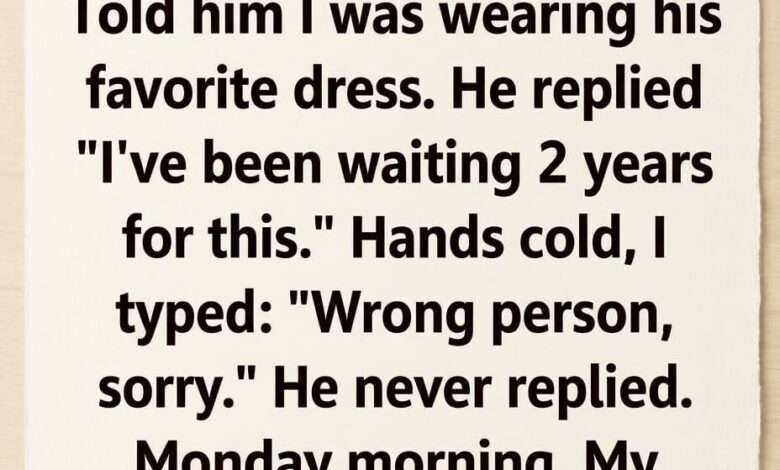
I accidentally texted my boss instead of my husband, telling him I was wearing his favorite dress. My blood ran cold when he replied, “I’ve been waiting two years for this.” Panicking, I texted back, “Wrong person, sorry,” but he never responded. On Monday morning, my colleague Sarah grabbed my arm and whispered, “Did you see what he did? He emailed HR first thing this morning.” My stomach dropped until she explained that he had reported the situation himself, admitted a boundary had been crossed, and requested to stop supervising me directly. HR moved me to another team with the same role and salary, giving us a clean break. An hour later, a message appeared in my inbox: “Handled. Won’t happen again. Take care.” For the first time since that terrifying text, I could finally breathe.
For the rest of that weekend, I kept checking my phone even when there was nothing new to read. The message had taken only a moment to send. Its consequences seemed to stretch into every quiet part of the day. I replayed the conversation, wondering whether another apology would help or only make the situation more uncomfortable.
I had meant to send a familiar, affectionate note to my husband. Instead, I had opened a door I never intended to open at work. My boss's reply made the mistake feel much bigger than a misplaced contact name. I could not tell whether his silence afterward meant embarrassment, anger, or something I had not yet imagined.
By Monday, the office felt different before I even reached my desk. Nothing in the room had changed, but I was aware of every glance and every ordinary greeting. When Sarah took my arm, I expected the worst. The mention of HR seemed to confirm every fear I had carried through the weekend.
Then she explained what had actually happened. He had contacted them himself. He had described the situation and asked for a change in the reporting arrangement. He had not left me to decide how to confront a person who controlled my work. Whatever his reply had meant in that first instant, he had recognized that the position between us could not simply continue as before.
The move to another team gave me something concrete to hold on to. My role stayed the same. My salary stayed the same. I did not have to walk into his office for routine instructions while wondering whether every conversation carried another meaning. The practical details mattered because they allowed my working day to become a working day again.
When his final message arrived, I read it without the panic that had accompanied the first one. It was brief, and it did not ask anything of me. There was no invitation to explain myself again, no effort to turn the mistake into a private conversation that would continue indefinitely. The matter had been handled, and the boundaries were clear.
I put my phone away and looked at the work in front of me. For days, I had imagined that one careless tap had made my office impossible to return to. Instead, the next step was ordinary. I could answer an email, speak to my new team, and finish the tasks I had come there to do. The relief was not dramatic. It was the quiet realization that I no longer needed to brace myself for what might happen next.