What the Linked Article Says About Doors at 24 Hour McDonalds Restaurants
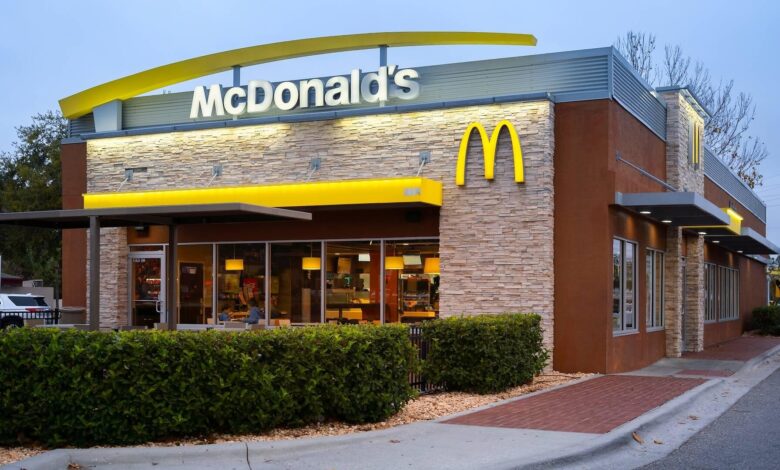
The linked page discusses a reported choice to remove doors from some round-the-clock McDonald’s restaurants. It describes the change as a way to communicate that a restaurant stays open throughout the night. It names no restaurant, country, campaign date or company announcement. The account is therefore presented here as the idea described by that page.
In the article’s interpretation, the entrance is part of the advertising. A customer who sees a locked door understands that a business has finished serving for the day. Removing that visual signal gives a clear image of continuous service. The writer argues that the image could be memorable even to someone who never notices a sign announcing opening hours.
That is an interpretation of a design choice, and it leaves practical questions unanswered. A restaurant might operate its drive-through at hours when the dining room is closed. A shop in a building shared with other businesses might also have an entrance controlled by the building. The phrase “24 hours” on its own does not specify which service is offered throughout that period. A location and its published opening hours would make it possible to check what customers could actually use.
The same need for detail applies to the physical change. The source does not explain whether a door was taken away permanently, whether a campaign used an entrance temporarily, or whether the account describes an advertising image. Without those details, readers cannot connect the article to a visit they might make to a particular restaurant. It offers a marketing concept rather than instructions about a named branch.
There is an ordinary reason that an entrance can become a persuasive visual. It is a familiar object, and most people have encountered it in both an open and closed state. Removing it creates an immediate question about how the place closes. The article uses that question to develop its argument about accessibility. It does not supply evidence about changes to the company’s overall trading schedule.
The caption circulating with the link refers to closures. The linked text instead develops a description of continuous opening. Reading past the preview matters in this case because the body does not discuss a chain-wide shutdown, name a closure programme or identify affected customers. Its subject is the image of an always-open restaurant and the meaning a viewer might give it.
In an unexpected and conversation-sparking move, McDonald’s has reportedly stripped the doors from select 24/7 locations, transforming a basic architectural feature into a living, breathing symbol of nonstop accessibility. The initiative isn’t just about staying open late — it’s about physically proving what “open all night” really means.
And in today’s attention economy, that kind of clarity cuts through the noise.
No Doors, No Limits, No Closing Time
Doors are powerful symbols. They define boundaries. They separate inside from outside. They signal when business is open — and when it’s closed. When doors are locked, the day is done.
So what happens when a global brand known for round-the-clock service removes that symbol entirely?
The message becomes impossible to ignore.
Rather than relying on illuminated “OPEN 24/7” signs or app notifications reminding customers they’re still serving, these McDonald’s locations let the building do the talking. The entrance never shuts. There is no visible barrier. No moment that visually communicates “come back tomorrow.”
The structure itself becomes the slogan.
It’s marketing by subtraction — and that’s exactly why it works.