James Stewart From Hollywood to the Army Air Corps
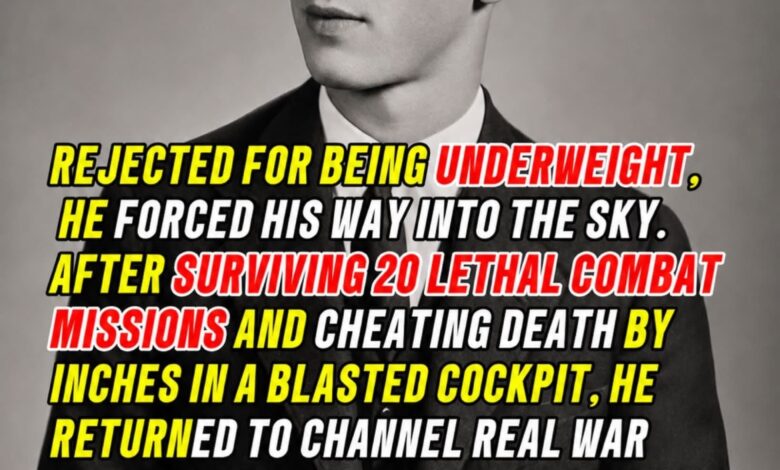
In 1941, Jimmy Stewart was at the peak of his Hollywood career. He had just won the Academy Award for Best Actor for “The Philadelphia Story” and was one of the highest-paid, most eligible bachelors in America. When World War II broke out, most Hollywood stars who drafted were kept in safe, domestic roles—making propaganda films, visiting troops, or doing bond drives. Jimmy Stewart utterly refused that path.See More…
Stewart desperately wanted to fly combat missions. However, when he first tried to enlist, the military rejected him for being underweight for his height. Instead of taking the easy way out and returning to his mansion, he hired a personal trainer, stuffed himself with high-calorie foods, and practically forced his way into the Army Air Forces after gaining the required weight.
The military still tried to keep their prized movie star on the ground as a flight instructor, terrified of the PR disaster if he died. Stewart fought the bureaucracy until he finally commanded his way onto the front lines in Europe. He didn’t sit in an office; he personally piloted 20 high-risk combat missions deep into Nazi Germany, flying massive B-24 Liberator bombers.
During these runs, his plane was repeatedly blasted by anti-aircraft fire, and he watched his close friends’ planes explode and plunge to the earth. On one terrifying mission, a German flak shell blew a hole directly through the floorboards of his cockpit—right between his feet. He survived by mere inches.
When the war ended, Stewart returned to Hollywood as a highly decorated Colonel, sporting the Distinguished Flying Cross and the French Croix de Guerre. But he was heavily traumatized by what today we call PTSD; he had lost a dangerous amount of weight, his hair had gone grey, and he suffered from a severe nervous tremor.
His very first movie back was the Christmas classic “It’s a Wonderful Life” in 1946. In the famous scene where his character, George Bailey, breaks down in a bar, weeping and begging God for help, those tears weren’t just acting. Stewart later admitted he was channeling the real-life grief, horror, and survivor’s guilt of the war.
Just like Newman in image.png, Jimmy Stewart was a man who looked death in the face and chose duty over extreme wealth and safety. He stayed in the military reserves for decades, eventually retiring as a Brigadier General—making him the highest-ranking actor in American military history. He remains one of the most deeply respected and genuinely loved figures the world has ever seen.
Posted
in
by
admin
Tags:
Comments
An Air Force account dates Stewart’s enlistment to March 19, 1941, a few weeks after he received the Academy Award for The Philadelphia Story. He entered the Army Air Corps as a private. His film experience and public profile had established him in a very different profession, but his interest in flying and his work in uniform continued well beyond that initial decision.
Stewart later flew bomber missions in World War II. When he returned to acting, he also stayed in the Air Force Reserve, where he eventually became a brigadier general. Those dates put the two sides of his life in perspective. The Reserve years overlapped with his later Hollywood career, making military service a commitment he maintained even after audiences again knew him primarily for his films.
The Jimmy Stewart Museum preserves both parts of the story in exhibits on the actor’s Hollywood work and military career. Looking at the two alongside each other helps explain why a photograph of the young actor does not tell the whole story. The public image he acquired in movies was only one part of a life that also included years of training, responsibility for aircrews, and service after the war.