The Reason Jeans Have Those Tiny Buttons Explained
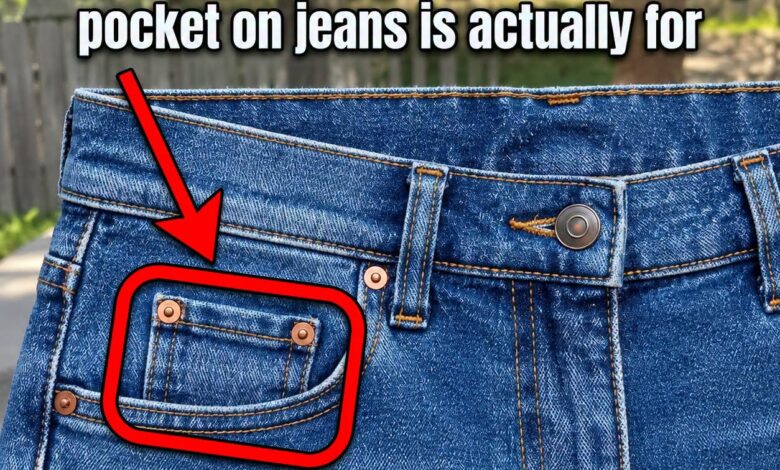
Those small metal studs on your pockets are not random style choices; they are the legacy of workers whose clothes failed them when they needed them most. In the late 1800s, miners and railroad laborers kept ripping their pants at the seams, especially around pockets strained by tools and constant motion. A tailor named Jacob Davis grew tired of repairing the same weak spots over and over.
Instead of accepting failure as inevitable, he tried something radical: reinforcing stress points with metal fasteners. By placing rivets at the corners of pockets and key seams, he stopped tears before they started. Partnering with Levi Strauss, he patented the idea, and riveted jeans soon became synonymous with toughness. Copper and brass rivets spread tension through the fabric and resisted rust, surviving years of wear. Today, those quiet metal dots still guard your denim, a small reminder that durability often begins with a simple, overlooked detail.
A pocket is one of the parts of a pair of trousers that experiences repeated strain. It is pulled open, filled, emptied, and bent as the wearer moves. The surrounding fabric may be strong, yet the point where several pieces meet can still become a weakness. Reinforcing that point addresses a specific problem instead of simply making the entire garment heavier.
The rivet is small because its job is local. It holds together the layers around a vulnerable junction and helps them resist the pulling that would otherwise fall on stitching alone. That makes its placement as important as its appearance. The metal dot near a pocket corner is there because the corner is where the fabric needs additional support.
This also explains why calling the studs buttons can be misleading. A button is generally associated with fastening and unfastening an opening. The rivets on jeans are meant to stay in place. They are part of the construction, not a closure the wearer operates. Their usefulness comes from remaining fixed while the surrounding garment is used again and again.
The original problem was practical rather than fashionable. Workers needed clothing that could continue doing its job under demanding conditions. Repeated repairs cost time, and a pocket that tore under a load could fail at an inconvenient moment. The appeal of reinforcement was that it tackled an everyday frustration directly. A modest change in construction could make a familiar garment more dependable.
Over time, that practical detail became part of the recognizable look of denim. A feature does not stop being useful simply because people begin to associate it with a style. In the case of rivets, the appearance carries a reminder of the purpose. Even when a pair of jeans is worn casually, the little metal fasteners recall clothing designed around movement and repeated use.
The next time you notice one, look at where it sits rather than only at its color or shine. Its position tells the story. The pocket corner, the seam, and the layers of fabric explain why a small piece of metal belongs there. What looks like a finishing touch is a response to strain, preserved in a garment that has traveled far beyond the workplaces that first made durability so essential.