How the Twenty Fifth Amendment Addresses Presidential Inability
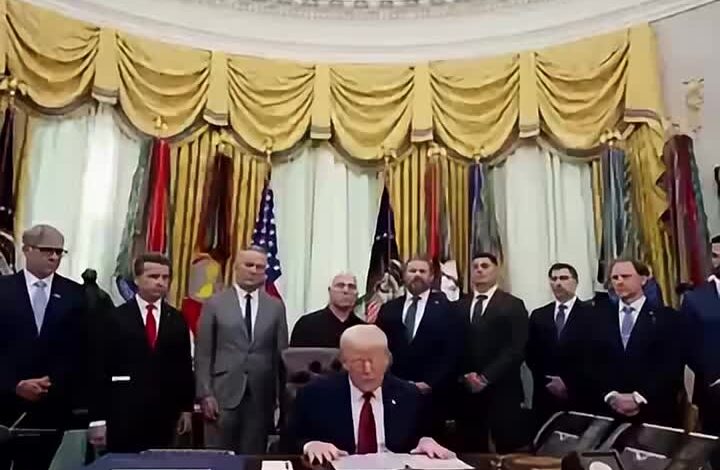
Discussion involving the Twenty-fifth Amendment to the United States Constitution and Donald Trump continues to be part of broader national conversations about constitutional oversight and executive responsibility. The amendment, ratified in 1967, was created to clarify procedures for presidential succession and to address situations in which a president may be unable to carry out the duties of the office.
Under its provisions, particularly Section 4, the process for declaring a president unable to serve requires action by the vice president along with a majority of Cabinet officials. They must formally communicate this determination to Congress, which can then play a role if the president contests the declaration. Because of these strict requirements, experts emphasize that invoking the amendment is a complex and highly consequential step, not undertaken lightly.
Legal scholars and institutions such as the Congressional Research Service often highlight that the Twenty-fifth Amendment is only one of several mechanisms for addressing concerns about presidential conduct or capacity. Other constitutional processes—including impeachment, resignation, and formal investigations—serve different purposes and follow separate procedures outlined in the Constitution.
The continued public discussion reflects broader debates about how best to ensure accountability and stability within the executive branch. While the amendment provides a framework for addressing incapacity, it is not designed as a political tool but rather as a safeguard for continuity of government. Analysts note that conversations about its use often arise during periods of political tension, illustrating how constitutional mechanisms remain central to debates about leadership, governance, and the limits of presidential power in the United States.
Section 4 begins with a written declaration delivered to the speaker of the House and the president pro tempore of the Senate. Once the vice president and the required majority submit it, the vice president assumes the powers and duties of the presidency as acting president. This makes it possible for the government to continue functioning while the president is unable to perform the job.
The amendment also anticipates disagreement. A president who declares in writing that no inability exists can resume the duties of the office unless the vice president and the required majority submit a contrary declaration within four days. If they do, Congress decides the issue. If Congress is out of session, it must assemble within 48 hours. A two-thirds vote in each house within the period specified by the amendment is required for the vice president to continue as acting president.
Section 3 supplies a different route for a president who is able to communicate an inability voluntarily. A written declaration can temporarily transfer the duties to the vice president and a subsequent written declaration can restore them. Both sections address continuity of the office. Section 4 covers the harder situation in which the president does not initiate the transfer.
These rules also explain why public discussion about a president does not trigger a transfer of power. The threshold concerns the ability to discharge the duties of the office, and the amendment assigns formal responsibilities to specific officials. Before reporting any change in who is exercising presidential powers, readers should look for the written declarations and official steps the text requires.