There is actually a rule and now I finally know why Check the 1st comment
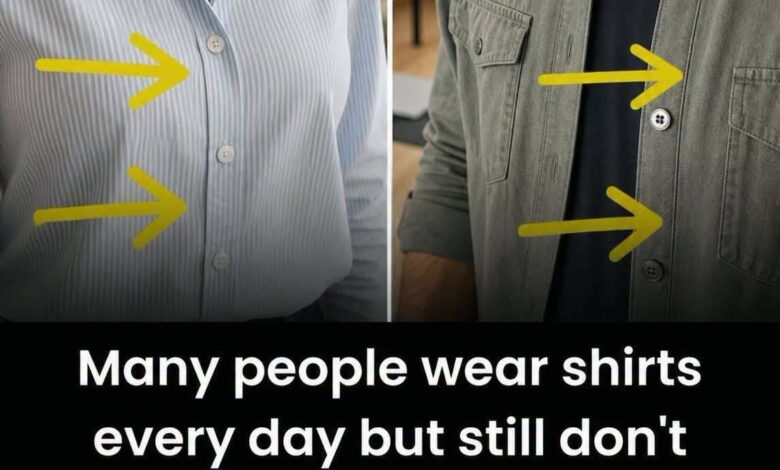
The difference in button placement between men’s and women’s shirts—a detail often overlooked—dates back centuries and reflects deeper social and historical influences. Women’s shirts button on the left, while men’s button on the right, a tradition that emerged during the 18th and 19th centuries when fashion and class were tightly intertwined.
In those times, upper-class women rarely dressed themselves. Their clothing was often complex, requiring the assistance of maids. Because most people were right-handed, it was more practical for a servant to face her mistress and fasten buttons that were placed on the left side of the garment.
This small convenience eventually became a lasting fashion norm. Left-side buttons became a quiet mark of social status, suggesting that the wearer was wealthy enough to afford help dressing. What began as a matter of practicality evolved into a subtle expression of femininity and refinement.
Men’s clothing developed differently. In earlier centuries, men frequently carried weapons, such as swords or firearms, on their left side to allow for quick access with their dominant right hand. Having buttons on the right side of their garments made it easier to unfasten clothing in moments requiring speed or defense.
This design choice, born from necessity, soon became standard in men’s attire, especially as military influence spread to civilian fashion. Over time, it symbolized practicality, readiness, and masculine identity, contrasting sharply with the decorative and status-driven nature of women’s clothing.
Though modern society no longer relies on servants or sword belts, fashion continues to reflect these historical distinctions. The way a shirt buttons remains a subtle but enduring reminder of how past customs—rooted in gender, class, and practicality—still influence modern style. Even a simple shirt carries a story sewn from centuries of human habit and hierarchy.
The explanations above are commonly repeated theories about the convention, rather than a single conclusively documented origin that accounts for every garment. Clothing practices varied by period, place, class, and type of dress. A convenient explanation can help make a detail memorable without proving that all manufacturers adopted it for the same reason at the same moment. It is worth keeping that uncertainty alongside the story.
The left and right distinction also refers to the wearer’s perspective. A person looking at someone else’s shirt sees the arrangement reversed. That small change in viewpoint is central to the dressing-assistance explanation: fastening one’s own clothing and fastening clothing while facing another person involve different hand positions. Trying both motions makes the proposed practical difference easier to understand without needing to treat the theory as settled history.
Today the arrangement is a convention, not a rule that tells anyone which shirt they may wear. Some designs follow it, while other garments use different fastenings, concealed closures, or styles that do not fit neatly into the familiar categories. Fit, comfort, fabric, and personal preference remain more useful guides to choosing clothing than the side on which a manufacturer placed the buttons.
What makes the detail interesting is the persistence of habit. Once a construction method becomes familiar to makers and customers, it can remain recognizable long after its original practical setting changes. A person fastening a shirt before work need not think about servants or military dress at all. Yet noticing the placket can open a conversation about how ordinary objects preserve traces of older expectations, even when the exact route from past to present is less certain than a neat explanation suggests.