Hollywood Remembers Robert Duvall A Legendary Career That Spanned Decades
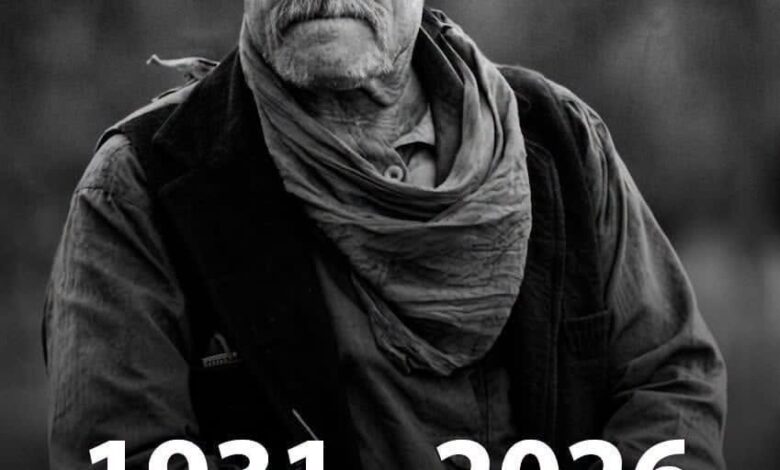
Robert Duvall built one of the most respected careers in American screen acting by making every character feel as though he had lived a full life before the camera arrived. Across more than six decades, he moved from quiet supporting roles to commanding lead performances without relying on celebrity mannerisms. His death at 95 brought tributes from viewers, filmmakers, and fellow actors who remembered an artist defined by patience, precision, and an extraordinary commitment to truth.
For many audiences, Duvall is inseparable from Tom Hagen in The Godfather and The Godfather Part II. As the Corleone family’s adopted son and trusted consigliere, he provided a calm counterweight to the violence surrounding him. Hagen rarely needed to raise his voice. Duvall communicated calculation, loyalty, and unease through a measured glance or a slight pause. In a cast filled with unforgettable performances, his restraint gave the family drama much of its credibility.
He could be just as memorable when playing a man who filled every inch of the screen. In Apocalypse Now, his Lieutenant Colonel Bill Kilgore became an emblem of war’s terrifying contradictions. The character’s confidence, theatricality, and indifference to danger produced some of cinema’s most quoted moments. Duvall made Kilgore charismatic without hiding the madness of the world around him, demonstrating how completely he could transform his energy from one role to the next.
The Great Santini gave him another difficult military figure, but this time the battlefield was a family home. As Bull Meechum, Duvall portrayed a Marine pilot whose discipline and pride damaged the people closest to him. The performance could have become a simple portrait of cruelty. Instead, he revealed the character’s insecurity, love, and inability to separate command from fatherhood. That emotional complexity earned him an Academy Award nomination and reinforced his reputation as an actor willing to inhabit uncomfortable men without asking the audience to excuse them.
His work in Tender Mercies brought him the Academy Award for Best Actor. Duvall played Mac Sledge, a country singer trying to rebuild a life marked by alcoholism and regret. The film gave him no grand transformation scene and no conventional speech designed to win applause. He sang the songs himself and allowed recovery to emerge through ordinary routines, hesitant relationships, and small choices. The quietness of the performance became its strength.
Duvall’s naturalistic style came from attention rather than display. He studied how people moved, listened, and protected themselves. He could suggest an entire history with posture or rhythm, and directors trusted him to find details that were never underlined in a script. Even when his screen time was limited, the character seldom felt incomplete. That quality made him equally valuable in sprawling epics, intimate dramas, westerns, crime stories, and television productions.
Later generations discovered him through films such as Lonesome Dove, The Apostle, A Civil Action, Open Range, and The Judge. Lonesome Dove in particular gave him one of his most beloved roles as former Texas Ranger Augustus McCrae. The warmth, humor, courage, and sadness of the character showed the full range of an actor who could make a western hero feel both legendary and deeply human.
Reports announcing his passing said he died peacefully at his home in Middleburg, Virginia, with the news shared through his representatives and his wife. The setting seemed fitting for a private man whose public life was carried principally through the work. Although honors followed him throughout his career, including an Oscar, multiple nominations, and widespread critical praise, he rarely appeared interested in turning accomplishment into spectacle.
Duvall leaves behind a filmography that functions like a long lesson in screen acting. He showed that intensity did not require volume, that a supporting performance could shape an entire story, and that familiar character types could become singular people. Hollywood remembers a legend, but audiences will continue to encounter him in the smallest choices he preserved on film: a look held for one extra second, a sentence spoken without decoration, and a character who feels entirely alive.