Some people are only now realizing what the WC sign stands for on washrooms and how Water Closet became its name
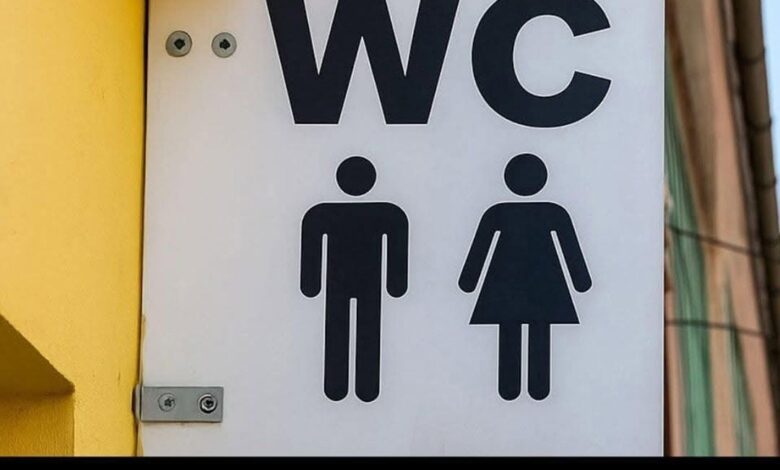
Signs marked WC appear on restroom doors in train stations, restaurants, hotels, and public buildings across Europe and many other parts of the world. The letters are so familiar that people often follow them without thinking about their meaning. Yet a surprising number of travelers only discover much later that WC stands for water closet.
The expression comes from the development of indoor plumbing. Before modern household plumbing became common, a bathroom was primarily a room for washing or bathing. Water often had to be carried in and heated, and the room did not necessarily contain a toilet. As plumbing systems improved, toilets were installed in small enclosed spaces that offered privacy. Those compact rooms became known as water closets because they combined running water with a closet-sized space.
The abbreviation remained useful on signs because it was short, easy to print, and recognizable across language barriers. A traveler might not know the local word for toilet, restroom, washroom, lavatory, or loo, but two large letters on a door could still point the way. The term became especially common in Europe and has appeared on public signs since the nineteenth century.
Modern usage varies greatly by country. In the United States, people commonly ask for the restroom or bathroom. In Canada, washroom is widespread. In Britain, toilet and loo are familiar choices, while lavatory survives in more formal contexts. Other languages have their own everyday terms, yet WC is still understood in many places where English is not the main language.
The phrase can sound odd today because most toilets are not literally hidden in closets. Many modern bathrooms contain a toilet, sink, shower, and bathtub in one room. In some homes, however, the toilet still sits in a separate small compartment inside or beside the main bathroom. Architects and real estate listings may continue to call that compartment a water closet, showing that the original meaning has never completely disappeared.
Online discussions about the initials regularly attract amused reactions. Some people say they have seen WC signs all their lives without ever asking what the letters represent. Others learned the answer as children and are amazed that it is unfamiliar to anyone else. The divide is understandable: people recognize many symbols through repetition without learning the history behind them.
The same thing happens with other old expressions embedded in daily life. Words and abbreviations survive because they remain convenient, even after the objects or customs that produced them have changed. WC is a small piece of plumbing history still visible in airports, cafés, museums, and roadside stops.
There is also a practical advantage to retaining it. Public signs have limited space, and a two-letter label is easy to place beside familiar male, female, or accessible-restroom symbols. International visitors can identify it quickly, while building owners do not need to cover a door with translations. Its endurance is therefore not only historical but functional.
Knowing the expansion of the initials also clears up a common misconception. WC is not a secret maintenance code or a modern brand name. It simply describes a small room containing a flush toilet connected to a water supply. The words sound old-fashioned, but the concept helped mark a major change in domestic comfort and sanitation.
So the next time those letters appear on a door, they carry more than directions. They point back to the period when indoor plumbing was transforming houses and a dedicated water closet was an important innovation. The room may have changed, and everyday vocabulary may differ from one country to another, but the compact sign has proved remarkably durable across generations.