CAUTION if you sleep on your right side
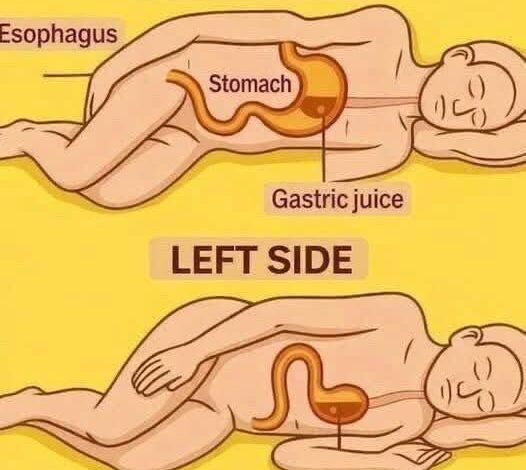
It feels natural, comfortable—even harmless. Rolling onto your right side at night is something many people do without a second thought. But what most don’t realize is that this position can quietly affect how your body functions while you sleep. What seems like a simple habit could actually be influencing your digestion in ways you’ve never considered.
Inside your body, the stomach and digestive system aren’t positioned evenly. When you lie on your right side, gravity allows stomach acids to move more freely toward the esophagus. This can increase the chances of acid reflux, that uncomfortable burning sensation many people feel after meals or during the night. Over time, this repeated exposure can lead to more noticeable discomfort and disrupted sleep.
On the other hand, when you shift to your left side, the position naturally helps keep stomach acids where they belong. The way your organs are aligned allows gravity to work in your favor, reducing the likelihood of acid moving upward. This simple change can make a surprising difference, especially for people who often wake up feeling uneasy or dealing with nighttime indigestion.
Many people who struggle with poor sleep or unexplained discomfort never think to look at their sleeping position. They focus on pillows, mattresses, or routines—while something as basic as which side they sleep on goes unnoticed. Yet this small adjustment can have a direct impact on how your body processes food and how comfortably you rest.
In the end, it’s not about completely changing how you sleep overnight—it’s about understanding how your body reacts and making small choices that support it. Sometimes, the difference between a restless night and a peaceful one comes down to something as simple as turning to the other side.
Because a sleeping position can become such an automatic habit, it may receive less attention than the more visible parts of a bedtime routine. A person may remember buying a pillow or changing a mattress while having little sense of how they settled during the night. Thinking about position brings attention back to the body itself and to the relationship between comfort, digestion, and rest described here.
Comfort also involves more than the moment of falling asleep. A position that feels familiar at bedtime may feel different later, particularly when someone notices burning or indigestion during the night. The point is to recognize a possible pattern rather than to assume that every restless night has the same explanation. Sleep can be affected by several factors, and the way someone lies down is only one part of that experience.
The comparison between the two sides offers a useful way of understanding the role of alignment. The same stomach and esophagus are involved, but their relationship to gravity changes as the body turns. That is why the discussion focuses on position rather than suggesting that the organs themselves have changed. A small movement can alter how a familiar sensation is experienced.
Ultimately, paying attention to those differences is a matter of noticing what feels comfortable and what repeatedly interrupts rest. A familiar sleeping habit does not need to become a source of alarm. Greater awareness can simply make an overlooked part of the nightly routine easier to understand, alongside the other choices that contribute to a comfortable night.