Plane Crash Near Trumps Florida Residence Kills Nine
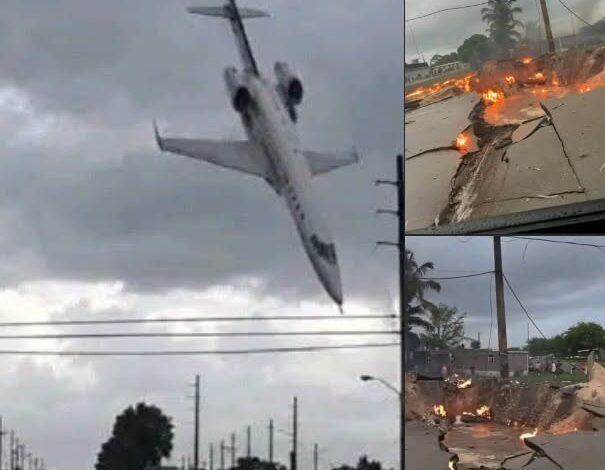
At least nine people have been confirmed dead after a private jet crashed into a residential neighbourhood in Palm Beach County, Florida, near US President Donald Trump’s Mar-a-Lago resort. The aircraft, identified as a Learjet 60, went down on Sunday, November 1, 2026, in the Cresthaven area, approximately 11 kilometres from Trump’s Florida residence. According to US Transportation Secretary Sean Duffy, all nine people aboard the aircraft lost their lives in the devastating crash.
The private jet reportedly departed from Austin, Texas, and was travelling towards the Bahamas when the incident occurred. Emergency services were quickly dispatched to the scene as authorities worked to secure the crash site and assess the damage. Florida Governor Ron DeSantis described the incident as a major tragedy, while confirming that there were no immediate reports of deaths or injuries among residents on the ground.
As a precaution, authorities reportedly evacuated approximately 600 residents from a nearby mobile home community while emergency crews responded to the situation. The crash caused significant concern throughout the surrounding neighbourhood, with officials working to ensure public safety and prevent residents from entering the affected area. Despite the scale of the incident, initial reports indicated that the casualties were limited to those aboard the aircraft.
The Federal Aviation Administration (FAA) and the National Transportation Safety Board (NTSB) have launched investigations to determine what caused the aircraft to crash. Early reports suggest the jet may have encountered severe weather conditions, including storms, turbulence and possible icing, before the incident. However, investigators have not yet confirmed whether these factors contributed to the crash, and the exact circumstances remain under investigation.
For the surrounding community, the response involved two immediate concerns: the loss of the people aboard the aircraft and the safety of those living near the crash site. The precautionary evacuation described in the account reflects the need to manage an emergency even where initial reports do not identify additional casualties on the ground. Residents needed clear directions while crews worked in an area that had suddenly become the scene of a major aviation incident.
The investigation is a separate process from that urgent response. Securing the area helps emergency personnel carry out their work, while establishing the cause requires a careful examination of the flight and the circumstances preceding the impact. Early descriptions can identify questions for investigators without answering them. A reference to severe weather, for example, does not establish the role it played in the final sequence.
That distinction is particularly important for the families of those who died. They need accurate information about the journey and its ending, rather than a conclusion drawn before the investigation is complete. The reported route from Austin toward the Bahamas, the aircraft identification, and the accounts of conditions before the crash are parts of a larger picture that investigators must assess together.
As the response moves from the immediate emergency toward a fuller understanding of the event, the central facts remain the reported loss of nine lives and the disruption experienced by the nearby neighborhood. The location drew widespread attention, but the lasting consequences belong to the passengers’ families and the community confronting the aftermath. A confirmed explanation must come from the findings of the investigation.