My Neighbor Gave Me These Strange Fruits Does Anyone Know What They Are?
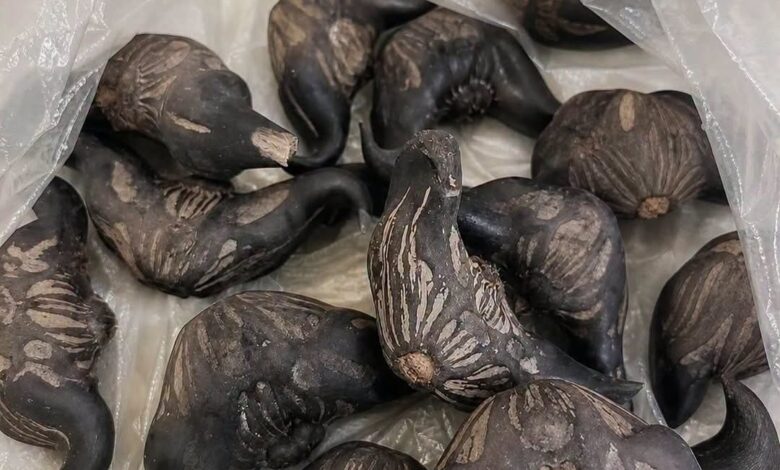
A neighbor handed over a bag of dark, angular objects that looked more like tiny horned creatures than fruit. Each one had a hard shell with sharp points at the sides, making the obvious questions unavoidable: what are they, and how could anyone possibly eat them?
They appear to be horned water caltrops, the fruit of aquatic plants in the Trapa genus. Depending on the region, people may call them water caltrops, buffalo nuts, bat nuts, devil’s nuts, or singhara. Their dramatic shape varies by species, but many have two or four pointed projections that help the fruit anchor itself in mud.
Water caltrops grow in slow-moving or still freshwater. The plants spread floating leaves across the surface while the developing fruits remain below. When mature, the fruits become dark and extremely firm. The edible part is the pale, starchy kernel hidden inside that armored shell.
Despite the shared nickname, this is not the same vegetable commonly sold in cans as Chinese water chestnut. Chinese water chestnut is a crisp underground corm from a different plant. A water caltrop is a true fruit with a nutlike seed, a tougher shell, and a texture that becomes pleasantly dense after cooking.
Correct identification must come before tasting. Several wild fruits and seed pods can look unfamiliar, and a photograph alone may not reveal where an item was collected or how it was handled. If the giver cannot confirm the name and source, ask a knowledgeable local grower, market vendor, agricultural extension service, or plant expert. Do not eat a mystery plant simply because it resembles a picture online.
Horned water caltrops are normally cooked before they are opened. A common method is to rinse them thoroughly, place them in boiling water, and cook until the interior is tender. Cooking time varies with size and maturity, so regional recipes should be followed. After the shells cool enough to handle, use a sturdy knife or nutcracker carefully, keeping the sharp horns pointed away from fingers.
The white kernel can be eaten warm once it is fully cooked. Its flavor is mild, slightly sweet, and nutty, while the texture is often compared with a chestnut or firm potato. In different Asian cuisines, cooked kernels may be served as a snack, added to soups and stir-fries, mashed, candied, dried, or ground into flour. The flour is used in breads, sweets, and foods prepared during fasting traditions in parts of India.
Raw freshwater plants can carry biological hazards from the water where they grew, and the hard shell may retain dirt. Thorough washing and cooking are therefore important. Anyone with a food allergy, a medical dietary restriction, or uncertainty about the source should consult an appropriate professional before trying them. Discard fruits that smell spoiled, feel unusually soft, or show mold.
There is also an environmental side to the story. Some Trapa species spread aggressively outside their native range, forming dense mats that block light, reduce oxygen, hinder boats, and interfere with native aquatic life. In places where water caltrop is regulated as an invasive plant, seeds and fruits should not be planted, transported, or thrown into lakes and streams. Local rules may restrict possession or movement.
So the strange bag is not necessarily a prank or a pile of decorative horns. It may contain a traditional food enjoyed by generations of people. The key is to verify the identification, confirm that the fruits came from a safe source, cook them properly, and open the shells with care. Once the armor is removed, the intimidating shape gives way to a simple starchy kernel with a long culinary history.