Prince William allegedly excluded Camilla Queen Consort from attending awards ceremonies honoring his late mother Princess Diana
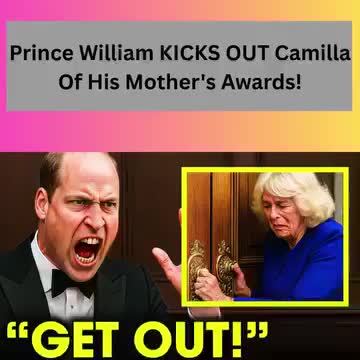
In recent headlines, a dramatic storyline has emerged:
Prince William allegedly excluded Camilla, Queen Consort, from attending awards ceremonies honoring his late mother, Princess Diana. While iconic narrative headlines make for striking tabloids, a closer examination reveals a more nuanced reality.
The Reality Behind the Rumor There is no verified record or official announcement indicating that Prince William barred Camilla from any event related to The Diana Award or other commemorations of Diana.
It is true, however, that Camilla was not present at a high-profile Diana memorial service in 2007.
At the time, Prince William and Harry had invited her, but Camilla later withdrew, stating that her presence “could divert attention from the purpose of the occasion”—the focus being Diana’s life and service
The distinction between an invitation and an exclusion is central to this story. An invitation followed by a decision not to attend describes a very different situation from a person being formally barred. When the two are treated as interchangeable, a complicated family occasion can be turned into a straightforward conflict that the available account does not establish.
The 2007 memorial was described as an occasion devoted to Diana's life and service. Within that setting, attention itself mattered. Camilla's stated concern was that her presence could draw focus away from the purpose of the gathering. Whatever readers may think about the wider history of the family, that explanation should be considered on its own terms rather than rewritten as evidence of an order from William.
There is also a difference between the memorial service and ceremonies connected with The Diana Award. They are not interchangeable simply because both honor Diana. Moving a detail from one occasion to another can make a rumor appear more specific while actually weakening its connection to what was described. Clear identification of the event helps prevent that confusion.
Royal stories often attract attention because readers already recognize the people involved and bring strong feelings about their relationships. A headline can draw on those feelings without supplying a new statement or a clearly identified incident. The emotional familiarity of the story can then make an allegation seem more firmly established than it is.
In this case, the important point remains narrow: the account provides no verified announcement that William prohibited Camilla from attending the events in question. It does describe an earlier invitation and her subsequent withdrawal from a memorial. Those details support a more restrained understanding than a headline built around exclusion.
Remembering Diana does not require turning every decision about attendance into a new family confrontation. Commemorative occasions can involve difficult judgments about privacy, public attention and respect for the person being remembered. Acknowledging that complexity leaves room for the event's purpose instead of allowing speculation about guests to become the entire story.
Readers can therefore separate the dramatic allegation from the specific episode actually described. The memorial concerned Diana's memory, and Camilla's explanation concerned keeping that memory at the center. Preserving those distinctions makes the account clearer and avoids presenting an unsupported claim as a confirmed decision by Prince William.