Raised Dump Trailer Strikes the Cambie Road Overpass on Knight Street in Richmond
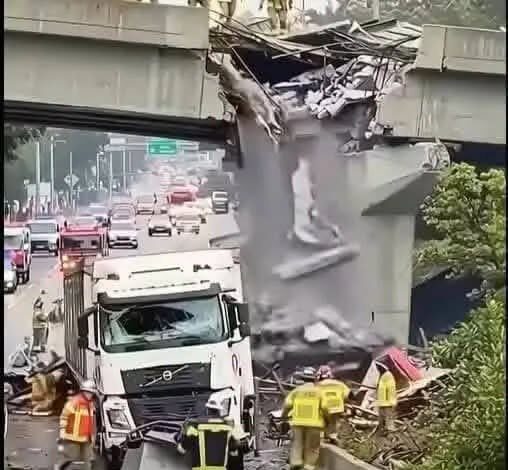
A commercial truck towing a dump trailer in a raised position struck the Cambie Road overpass
on Knight Street in Richmond, British Columbia, around 7:15 a.m., forcing the closure of all southbound lanes.
The trailer became lodged against the structure, and the impact detached the truck cab from the trailer.
Although no injuries were reported, officials ordered immediate inspections to assess possible structural damage.
Engineers and transportation authorities examined the overpass for cracks, weakened supports, and other hidden damage before determining whether it was safe to reopen.
The incident caused significant traffic congestion and disrupted commercial transportation across the region.
The crash highlights a recurring problem in British Columbia, where over-height trucks frequently collide with bridges and overpasses.
Common causes include raised truck beds, improperly measured loads, and inadequate awareness of height restrictions.
Safety experts and industry groups are calling for stronger prevention measures, including over-height detection systems, improved driver training, real-time fleet monitoring, and regular infrastructure audits.
As transportation engineer Dr. Steven Fong noted, “No single tool can eliminate accidents—
effective prevention depends on a culture of accountability shared between drivers, fleet operators, and highway authorities.”
The incident demonstrates how a single oversight can disrupt transportation networks and reinforces the need for better technology, training, and infrastructure safety measures.
The raised trailer made the collision more than an ordinary traffic obstruction. Once it struck the overpass, the vehicle and the structure became part of the same immediate problem. The cab separated from the trailer, while the trailer remained lodged at the point of impact. Clearing the road required attention to both the damaged vehicle and the bridge above it.
The absence of reported injuries was welcome, but it did not answer the question of structural safety. A bridge can require inspection even when the visible damage does not reveal every effect of an impact. Officials therefore needed engineers to examine the affected area before deciding when traffic could safely return. Reopening depended on that assessment rather than simply moving the truck out of the way.
The morning timing added to the disruption. Southbound motorists encountered closed lanes at a time when the road would normally be carrying daily journeys and commercial movements. A single obstruction could spread delays beyond the immediate site as vehicles waited or changed routes. The account describes congestion as one of the wider consequences of the collision.
For the transport industry, the incident returned attention to the height of vehicles and loads. A raised dump trailer can create a clearance problem very different from the truck's normal traveling position. The prevention measures discussed addressed that gap between what a vehicle is expected to clear and the condition in which it actually approaches a bridge.
Detection systems, training, monitoring, and infrastructure checks each address part of the same problem. None changes the importance of recognizing an unsafe clearance before the point of impact. The collision on Knight Street showed how quickly that failure could interrupt a transport route, require specialist inspections, and affect people with no connection to the vehicle involved.