How a Beloved Animal Helped Save His Caretakers Life
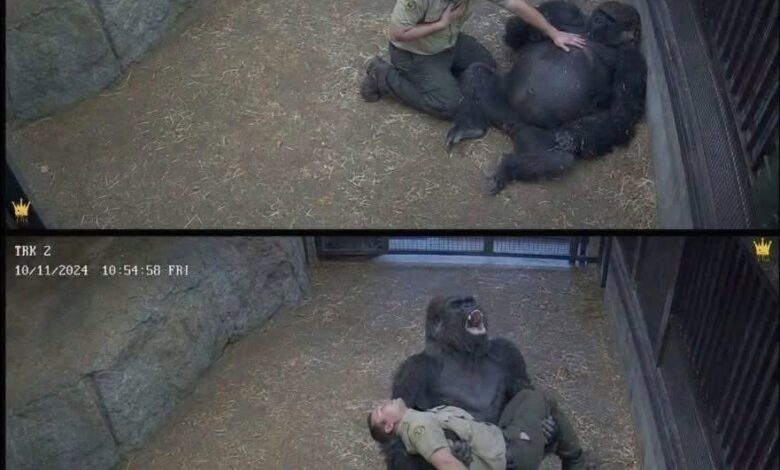
Julius had mentioned chest pain and numbness in one arm before beginning his usual work at the sanctuary. He blamed the discomfort on the spicy food he had eaten that morning and continued with his routine. During a visit with a gorilla he had cared for over many years, Julius knelt beside the animal and began giving him the familiar belly rubs he enjoyed.
Seconds later, Julius collapsed. The gorilla nudged him repeatedly, expecting a response that did not come. When the caretaker remained motionless, the animal lifted him with surprising care, carried him toward the enclosure door and began making loud calls. The noise was powerful enough to draw the attention of security staff elsewhere in the sanctuary.
Workers rushed to the enclosure and immediately understood that Julius needed help. The gorilla did not resist when staff took the unconscious man from him. Instead, he remained calm as the team moved Julius to safety and called paramedics. That cooperation allowed the emergency response to continue without another delay.
Doctors later confirmed that Julius had suffered a serious heart attack. The chest pain and numb arm he had dismissed were warning signs, not the result of breakfast. Because sanctuary staff found him quickly and emergency care began in time, he survived.
When Julius regained consciousness, his manager showed him security footage of the incident. He watched the gorilla test for a reaction, move him toward the door and call until people arrived. For a caretaker who had spent years watching over the animal, the recording carried a powerful reversal: on the day Julius could not help himself, the gorilla’s response brought other people to him.
The bond did not appear overnight. Caretaking involves repeated contact, predictable routines and close attention to an animal’s behavior. A gorilla learns the sounds, movements and habits of familiar people, just as staff learn to recognize signs of comfort, stress or agitation in the animal. Julius had become a known and trusted figure in the gorilla’s environment.
Great apes are highly observant and can respond strongly when a familiar pattern suddenly changes. Julius falling to the ground and failing to move was a dramatic break from their normal interaction. It is impossible to know exactly how the gorilla understood the medical crisis, and human emotions should not simply be assigned to an animal. What can be seen is the sequence of behavior: checking Julius, moving him, calling loudly and allowing rescuers to intervene.
The incident also carries an urgent human lesson. Chest pain and numbness in an arm can be signs of a heart attack and should not be casually explained away. Symptoms vary from person to person, but sudden pressure or pain in the chest, discomfort spreading through an arm, shortness of breath, sweating, nausea or unexplained weakness can require immediate emergency attention.
Julius was fortunate that he was not alone when he collapsed. The gorilla’s calls reached people who could contact trained medical responders. At a different time or in a quieter location, the delay might have been longer. His recovery depended on a chain of actions beginning inside the enclosure and continuing through the sanctuary staff to the hospital.
After years of providing food, care and reassurance, Julius saw his relationship with the gorilla from a new perspective. The animal did not perform a medical procedure or understand a diagnosis. He did something more immediate: he reacted when a familiar person stopped responding and created enough noise to summon help. That response gave Julius the time he needed, turning an ordinary sanctuary visit into the day a beloved animal helped save his caretaker’s life.