70YearOld Woman Who Used Her Deceased Sons Sperm to Have His Child Through Surrogacy Shares Update After Birth
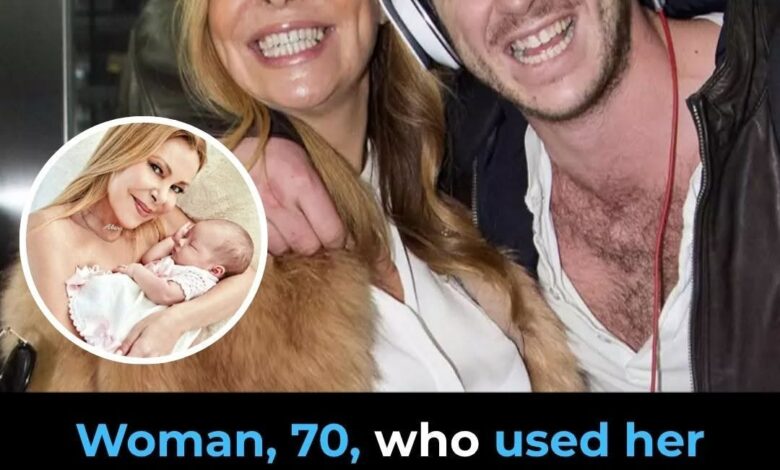
Ana Obregón’s home is filled with toys again. Stuffed animals, a ball pool, and the daily needs of a growing little girl have brought movement and laughter into a life that had been dominated by the loss of her son. The Spanish actress has spoken about the joy of raising Anita, while making clear that the child’s arrival did not erase her grief.
The family relationship has often been obscured by the headlines. Anita is Obregón’s granddaughter biologically, not a child conceived using Obregón’s own eggs. According to the actress, the girl was born through surrogacy using donor eggs and sperm preserved by her late son, Aless Lequio. Obregón has described herself as Anita’s adoptive mother while also emphasizing that she is Aless’s daughter.
Aless died from cancer in 2020. His illness and death changed the course of his mother’s life. She has recalled the shock of learning that a young man in his twenties had an aggressive disease, and the collapse of the ordinary assumption that there would always be more time. The future she had imagined for him suddenly became uncertain and then was lost.
Obregón says that becoming a father had been one of Aless’s wishes. Her decision to pursue surrogacy was, in her account, an attempt to honor that wish after his death. Anita was born in the United States in March 2023, and the circumstances of her birth soon became a subject of intense public discussion in Spain.
In an interview with ¡Hola! following the birth, Obregón explained the biological connection directly. She wanted people to understand that the baby was her granddaughter and that Aless would remain part of the child’s story. She also spoke about telling Anita about her father as she grew older, including the pride and affection with which the family remembered him.
The public debate did not disappear after that explanation. Surrogacy, parenthood after bereavement, the wishes of someone who has died, and the responsibilities of an older caregiver all became part of the discussion. Yet Obregón’s own updates have focused increasingly on the ordinary details of caring for a child rather than on the headlines surrounding the arrangement.
Those ordinary details are vivid. She has described a house occupied by playthings and a granddaughter who wants her to join in. A ball pool is not simply something Anita uses while an adult watches from nearby; in Obregón’s telling, the little girl draws her into the game. The routine asks her to be present, responsive, and involved.
At seventy, when she shared the update, she also acknowledged that childcare could be physically demanding. Lifting Anita was becoming harder as the child grew heavier. Her back did not always welcome the work, even when she delighted in the time they spent together. That admission gave a practical dimension to a story usually told in sweeping emotional terms.
She has also become more fearful. Losing Aless altered her sense of what could happen to someone she loved, and she has said that her worries about Anita are stronger than the worries she remembers from raising her son. Happiness and vigilance now exist side by side.
Obregón has described the years between Aless’s death and Anita’s birth as a period when she felt almost absent from life. Caring for her granddaughter gave her days a renewed structure and purpose. Meals, play, comfort, and small discoveries required attention in a way that grief alone had not.
That renewed purpose is not the same as replacing Aless. She has repeatedly acknowledged that the pain of losing a child remains. Anita brings companionship and delight, but she is also a separate person with her own life ahead of her, connected to a father she will come to know through memories and stories.
The most revealing part of Obregón’s update is that joy and sorrow are not presented as opposites. She can laugh about being pulled into a ball pool and still miss her son profoundly. The house is busy again, but the absence remains. Raising Anita has not returned her to the life she once had; it has given her a different life in which love, responsibility, remembrance, and everyday happiness now share the same rooms.
Sources: Ana Obregón discusses Anita and Aless.