A Womans Chin Hair Could Be a Sign of More Than Just Aging, Experts Say
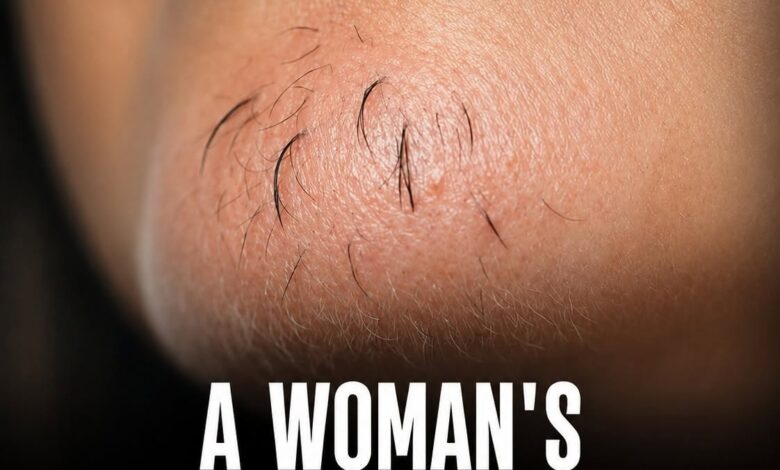
A coarse hair on the chin can be surprisingly noticeable, especially when it seems to have appeared overnight. For many women, though, an occasional facial hair is an ordinary variation rather than a sign that something is seriously wrong. The useful question is not simply whether a hair is there, but whether the pattern is changing and whether other symptoms have appeared alongside it.
Hair follicles respond to hormones, including androgens. Women naturally produce these hormones too. Some follicles are more sensitive to their effects than others, which helps explain why two people with similar hormone levels may have different amounts of visible facial hair. Genetics also influence where hair grows, how coarse it becomes, and how noticeable it looks.
That means a few chin hairs do not automatically establish a hormone disorder. A family tendency toward stronger facial hair may be relevant, and changes can occur gradually over time. Seeing one dark strand in the mirror is not enough to diagnose a medical condition, even when a dramatic headline suggests an immediate answer.
Hormonal transitions can affect the pattern. Puberty, pregnancy, perimenopause, and menopause all involve changes in the body’s hormone balance. As estrogen levels change, androgen effects may become more apparent in some women. Hair that was previously fine or less visible can become easier to notice, particularly around the chin and upper lip.
The pace of change matters. A few hairs that have appeared slowly over years are different from a rapid increase in coarse facial or body hair. A clinician will also be interested in what else has changed, rather than considering the chin in isolation. The history surrounding the hair growth often provides more useful information than the appearance of one follicle.
One possible explanation for increased facial hair is polycystic ovary syndrome, often called PCOS. It can involve higher androgen activity along with irregular periods, acne, and difficulties related to ovulation or fertility. Weight changes may also be part of a person’s experience. Not everyone has the same combination of symptoms, and chin hair alone does not confirm the condition.
This is why comparing yourself with a photograph or a short checklist can be misleading. Someone may have visible facial hair without PCOS, while someone with PCOS may be concerned about other symptoms entirely. If the pattern suggests a hormonal issue, a healthcare professional can decide what assessment is appropriate in the context of the person’s age, history, menstrual pattern, and other concerns.
Medication can be another part of the picture. If increased hair growth seems to have started after a new prescription or a change in treatment, mention the timing to the prescribing clinician. Do not stop a medicine on your own because you suspect a connection. A review can help determine whether the medicine is relevant and whether any adjustment is needed.
Sudden or rapidly increasing hair growth deserves particular attention, especially when accompanied by changes such as a deeper voice, marked acne, or irregular periods. These combinations do not supply their own diagnosis, but they are good reasons to arrange medical evaluation rather than assuming everything is simply part of aging.
For women who mainly want to remove a few unwanted hairs, there are several cosmetic options. Tweezing or waxing may be practical for small areas. Laser treatment can be useful for appropriate hair and skin types, though suitability and expectations should be discussed with a qualified provider. Prescription options may be available in some circumstances. The best choice depends on the pattern of growth, skin sensitivity, and personal preference.
Cosmetic removal and medical assessment serve different purposes. Removing a hair can address how it looks or feels; it does not tell someone why the growth changed. If there is an underlying hormonal condition, treating that condition may be part of longer-term management. If there is no concerning change, cosmetic treatment remains a personal decision rather than a medical obligation.
There is no need to treat every chin hair as an emergency or every change as meaningless. Gradual, isolated growth is often benign. A new pattern, a rapid increase, or accompanying symptoms gives a reason to ask more questions. Paying attention to those distinctions offers a calmer and more useful response than letting a single strand become a diagnosis.