The Kids on Our Street Had Always Played Outside Then a New Neighbor Moved in and Demanded Quiet for Her Morning Yoga
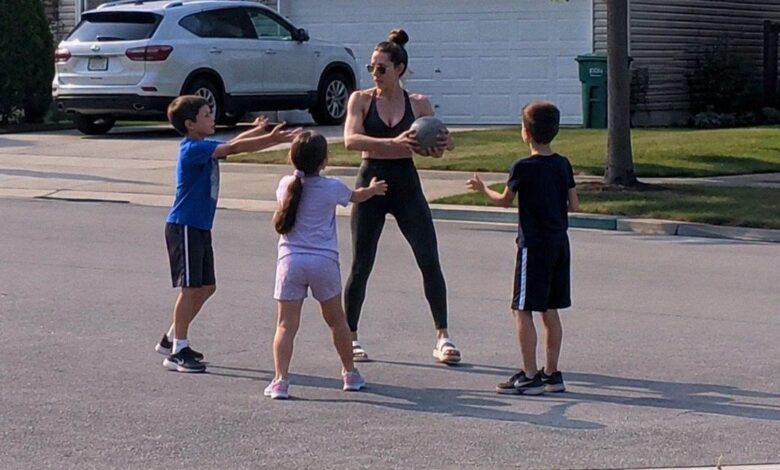
Our cul-de-sac had always belonged to the ordinary life of the nine houses around it. There was no through traffic, and the children played in the circle at the bottom of the street. That was one of the reasons my husband and I had chosen to live there. Our six-year-old and nine-year-old could ride their bikes, play with their neighbors, and grow up in a place where people knew them.
For eleven years, Walter at number 14 had watched that life from his porch. He kept a bucket of sidewalk chalk near the steps, and any child could help themselves. Then, last spring, he married Brooke. He was sixty-eight; she was twenty-nine. At the June block party, she stayed on her feet rather than sitting with the rest of us.
Two weeks later, she appeared on my porch at 8:40 in the morning carrying coffee. She wanted the street quiet between eight and nine because that was when she practiced yoga. I initially laughed, thinking she was joking. She wasn’t. When I pointed out that it was July and the children were playing on a public street, she described that hour as the thing keeping her sane. Then she called my children “little creatures.”
I asked her to repeat herself. She brushed the words aside and returned to complaining about screaming. My children were six and nine. They played; they were not spending the morning shrieking at her windows. Brooke visited four more houses that day with the same demand.
At the July neighborhood meeting, Dana challenged her expectations of a cul-de-sac. Brooke answered by dismissing the mothers as people with nothing else going on and suggesting that some residents had jobs to consider. Walter finally said her name. She told him not to, and he lowered his eyes. He did not speak again that evening.
By August, the chalk bucket had disappeared. My daughter asked where it had gone, and I had no answer. Then I came home early one Thursday and found both children sitting on our front steps doing nothing. Ethan, my nine-year-old, explained that Brooke had told them they were no longer allowed in the circle. She had said she had already discussed it with me.
I sent the children inside. The following evening, I called Dana. She called the Patels, and by nine that night eight households had agreed to come outside together. At 7:50 on Saturday morning, I watched the first family leave their driveway.
At 7:52, Dana appeared with folding chairs and a thermos. At 7:54, the Patels brought their small plastic basketball hoop. Mrs. Green arrived with a fresh bucket of chalk at 7:56, and my husband wheeled out our children’s bikes two minutes later. By eight, nineteen children and fourteen adults were in the cul-de-sac. Nobody played loud music or deliberately shouted. We drank coffee while the children used the street as they always had.
Brooke emerged at 8:03 with her yoga mat. She looked around, then came toward me demanding an explanation. I admitted I had invited the neighbors out at that time. I did not want Ethan learning that an unreasonable demand had to be answered with dishonesty or anger.
She called the gathering harassment. I told her we were simply using a public cul-de-sac on a Saturday morning. When I explained why we had gathered, she denied telling the children they could no longer play there. Ethan looked uncomfortable, so I did not force him to speak. Dana, Mr. Patel, and Mrs. Green said their children or grandchildren had heard the same thing.
Brooke insisted she had only asked them to respect her quiet hour. I told her she was entitled to want peace inside her own house, but ordinary daytime neighborhood sounds were part of living beside other people. When she complained that the long-standing residents acted as though they owned the street, I answered that none of us owned it. That included her.
Walter stepped onto his porch. Brooke asked him to support her, but he questioned whether she had told the children they could not play in the circle. She tried to explain it as a matter of getting them to listen. This time, he did not retreat into silence.
He walked over to Mrs. Green’s chalk bucket, remarked on its quality, and picked up a piece of yellow chalk. My daughter told him his old chalk had been better. He smiled, crouched beside her, and drew a crooked sun near her dinosaur. When Brooke accused him of humiliating her, he quietly pointed out that she used that word whenever someone refused to do what she wanted.
Walter admitted he had taken his bucket inside because Brooke said the children near the porch made her anxious. He apologized to us and to the children. My daughter asked whether he could bring it back. He said he could. Brooke went into the house and slammed the door, but nobody cheered. I was grateful. We had come outside to reclaim a shared space, not to enjoy humiliating someone.
Dana offered Walter coffee, and he stayed with us for almost an hour. At 8:47, he went into his garage. A minute later, he returned with the old red bucket and set it beside the porch steps. At 9:05, Brooke came out without her mat and asked to speak with him. They went inside together.
The next morning, a printed sign appeared on their mailbox requesting quiet between eight and nine. Dana sent me a photograph. We decided to leave it alone. They could make a request on their own mailbox, and the rest of us could continue our normal lives. Sunday was quieter anyway, and school camp began for several families on Monday.
About a week later, Brooke emailed a formal noise complaint to the neighborhood association. She wanted a morning quiet policy. Dana opposed it, Mr. Patel pointed out that the activity was ordinary use of a public road, and our treasurer, Tom, reminded everyone that we were not an HOA. Our voluntary association collected money for flowers, holiday lights, block parties, and small projects. We had no power to fine residents or impose binding rules on the street.
I replied that the association did not regulate lawful use of public streets and sidewalks. County noise rules still applied, but her request was outside our authority. She asked whether children had more rights than homeowners. I answered that both were residents. Three days passed without another reply.
Then Walter came to my door holding a casserole dish that wasn’t mine. I recognized it as an excuse to talk and invited him in for coffee. He told me Brooke had endured a bad relationship and an apartment where neighbors fought through the night. Yoga had become a way to manage panic attacks.
I could understand why quiet mattered to her. I still could not agree that her distress gave her control of a public street. Walter said he had told her something similar, and she was staying with her sister. He described nearly a year of apologizing for the television, the porch light, his coffee grinder, the neighbor’s dog, and the children. Each thing he removed seemed to be replaced by another problem.
I did not offer marriage advice. I only told him that caring about someone and setting a boundary did not have to be opposites. He stayed over his coffee for a while, then managed a little humor before leaving.
Brooke returned four days later. For almost two weeks, nothing happened. The children played, Walter sat on his porch, and the chalk remained outside. Then, one Saturday at 8:30, I saw Brooke doing yoga on the lawn while bikes and balls moved around the circle.
She told me she was trying noise exposure. Her therapist had suggested that removing every ordinary neighborhood sound was not a lasting solution. I tried not to look too pleased. Then my daughter asked whether she could teach her a handstand. Brooke hesitated, refused to do it on concrete, and soon had four children practicing on Walter’s grass. He came outside and quietly watched from the porch.
Over the next month, the mailbox sign disappeared. Brooke still practiced from eight to nine, sometimes indoors and sometimes outside. If the children became genuinely wild beside her yard, we asked them to move toward the circle. Consideration worked better when it was mutual. When Ethan fell off his bike one morning, Brooke reached him before I did and checked his elbow. They even laughed together about how loudly he had yelled.
At the September meeting, she asked that bicycles not be left in the road. Everyone agreed. She looked surprised that we had accepted a reasonable request so readily. Walter smiled beside her.
We never became a perfectly harmonious street. Dana remained cautious, and Brooke still thought our meetings lasted too long. But she stopped calling the children little creatures, and Walter stopped vanishing whenever she was upset. His chalk bucket stayed beside the steps.
Last Saturday at about 8:20, my daughter was drawing while Brooke practiced and Walter read his newspaper. Ethan and Arjun raced past on scooters. Brooke asked them to slow down, and they apologized. A few minutes later, my daughter attempted a handstand, toppled sideways into the grass, and began laughing. Brooke laughed too. It was 8:27 in the morning, and I had absolutely no complaint.