A Mysterious Discovery on Our Bathroom Floor Turned Out to Be a Bath Bead
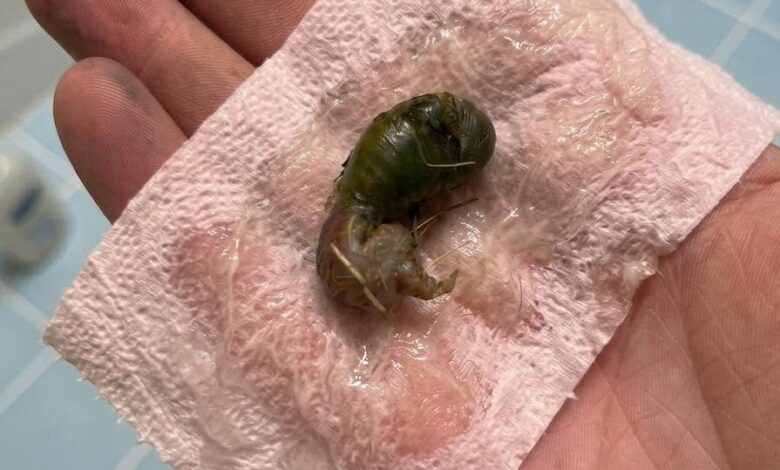
I noticed the strange green object on the bathroom floor and immediately began imagining everything it might be. It looked soft, translucent, and out of place. I could not remember seeing it before, and no one in the house claimed to know where it came from. The longer I stared, the less harmless it seemed.
The next morning, I sent a photograph to my sister. She had no answer, so I posted it in a neighborhood Facebook group. Suggestions arrived quickly. People called it a shell-less slug, sea glass, a soap sample, an unfinished geode, and even an alien egg. The guesses were entertaining, but none looked quite right.
Finally, I called my mother. She laughed as soon as she saw the picture. It was a bath bead, she said, the kind designed to dissolve in warm water and release fragrance. I had not bought bath beads in years and did not remember having any in the house, so the answer only created a second mystery.
I searched beneath the sink. Behind a bottle of shampoo sat a small mesh bag filled with colorful scented beads. Several were the same bright green as the object on the floor. The identification was correct. After asking the children a few more questions, the path became obvious. My youngest daughter had pulled out the bag while playing, dropped one bead, and become distracted before putting it back.
The explanation involved no pest, leak, contamination, or visitor from another planet. It was a bath bead, a child, and a forgotten moment. My mind had supplied danger because it dislikes an empty space where an answer should be.
That reaction is deeply human. When we cannot identify something, we do not remain neutral for long. We build stories from whatever details are available, and the stories often lean toward threat. Our ancestors benefited from treating an unexplained movement in the bushes as a predator. In a modern bathroom, the same instinct can transform a harmless bead into evidence of infestation.
Many household mysteries have ordinary explanations. A gel sphere may be a bath product or a moisture absorber from packaging. White powder near masonry can be mineral efflorescence. Brown grains near wood might be insect material, but they might also be coffee grounds. A black sticky mark can be old adhesive, and a hard dark pellet may be a dried bean from a child’s craft instead of a sign of mice.
Ordinary does not mean every unknown object should be handled carelessly. If something may be sharp, chemical, biological, or connected with pests, avoid touching it with bare hands. Take a clear photograph, ask other household members, look for related damage or residue, and move it only with gloves or a tool. If it returns or appears dangerous, contact an appropriate professional.
Online identification groups can help, but photographs can distort size, color, and texture. A confident stranger may still be wrong. Comparing the object with products already in the home and checking the surrounding area usually provides better clues. Children and pets are also excellent sources of unexpected objects, even when they have forgotten the event.
My dramatic mystery ended under the sink. I had been ready to call an exterminator or plumber, while the answer sat in a mesh bag a few feet away. The experience left me with a useful rule: pause before turning an unknown into a crisis. Ask the simple questions, inspect the obvious places, and talk to the people who share the house. Sometimes the alien egg is only a lavender bath bead waiting to dissolve in warm water.