My Neighbor Constantly Borrowed My Appliances When She Returned My Mixer Dirty and Broken, I Taught Her a Lesson
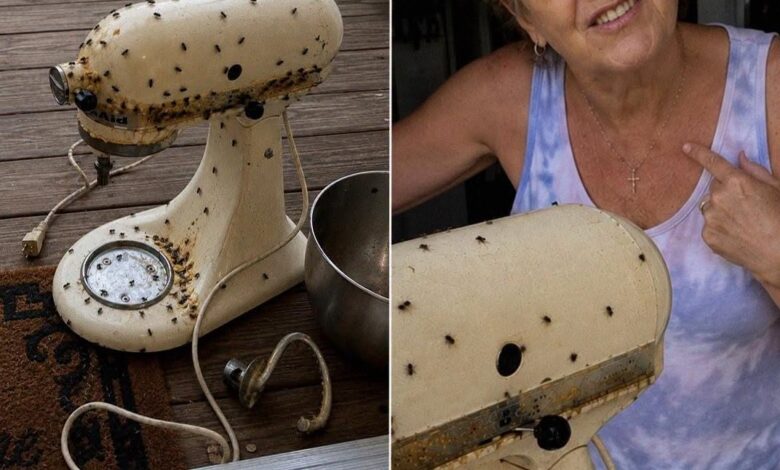
My neighbor Denise had borrowed nearly everything she could think to ask for. First it was my ladder, then the pressure washer, the crock pot, a cooler, and my best roasting pan. Each item returned late, dirty, or missing something. I kept overlooking it because I did not want a feud with the person living next door.
Then Denise asked for my cream-colored KitchenAid mixer. My mother bought that machine in 1989 and used it every Sunday until standing in the kitchen became difficult for her. It carried memories of birthdays, holiday bread, and ordinary family afternoons. I told Denise no and explained exactly why it mattered to me.
She laughed as if my answer were unreasonable. She promised she needed it for only one cake and would be extremely careful. My daughter was watching from the porch, Denise would not stop pressing, and I finally heard myself agree.
On Saturday morning, I found the mixer sitting beside my doormat. Denise had not knocked or handed it back. Dried cream filled the seam where the head met the body. I plugged it in, and the motor made a sound it had never made in thirty-six years. When I confronted Denise, she blamed the machine for being old and complained that its failure had ruined her gathering.
I took it to Greg, a repair specialist familiar with older mixers. He found damage caused by overloading and continued use after the motor began struggling. Restoring it would cost $347. Denise refused to pay. In her mind, lending something meant I accepted every consequence, even when her carelessness caused the damage.
I did not shout or damage anything of hers. I simply stopped allowing politeness to erase responsibility. Soon Denise needed a cooler, crock pot, and folding tables for her niece’s graduation party. Rental options were expensive or unavailable, so she returned to my door expecting another easy favor.
This time I brought out a written agreement. To borrow the party equipment, Denise would leave a refundable $350 deposit and pay the $347 repair bill for my mixer. If every item came back clean, complete, and on time, she would receive the entire deposit. The repair payment would go directly toward the harm she had already caused.
Denise protested, searched for alternatives, and eventually came back. She signed the paper and paid $697. The written terms made it impossible to pretend the amounts were the same thing. One protected the items she was about to borrow, while the other settled an existing debt.
After the party, every piece returned spotless. Nothing was late, missing, or broken. I refunded the full $350 exactly as promised. Greg used the remaining money to restore my mother’s KitchenAid, and the familiar mixer returned to its place on my counter.
The result was not revenge. It was a boundary Denise could finally understand. Borrowed property received better care once negligence carried a clear cost. Later she apologized. When she eventually asked for the pressure washer again, she did not assume I would say yes. She asked whether there was a form to sign.
I photographed the items before and after every future loan and wrote down accessories such as lids, cables, and attachments. That small inventory removed uncertainty for both of us. Denise knew the expected return condition, and I no longer had to wonder whether objecting to damage would make me seem unreasonable.
Generosity does not require accepting disrespect. A loan carries obligations, especially when an object has financial or sentimental value. By stating the conditions before another item left my home, I turned a one-sided expectation into a fair agreement. Denise remained my neighbor, the mixer was saved, and I learned that a calm boundary can teach more than an angry confrontation.