Breaking News NASA Confirms Asteroid 1998 OR2 Will Safely Pass Earth
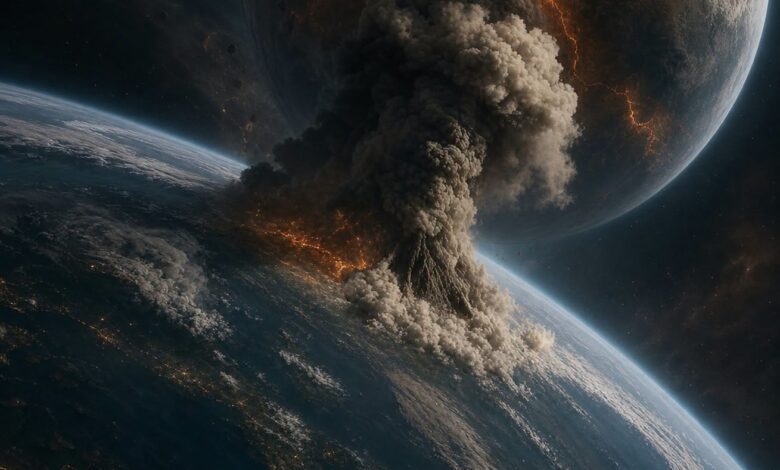
Claims that NASA confirmed Earth would begin facing a dramatic asteroid threat in 2026 have circulated widely, often beside alarming images and unfinished headlines. The specific object commonly mentioned is asteroid 1998 OR2. NASA’s published information does not support the idea that this asteroid is on a collision course with Earth. Its well-known close approach occurred in April 2020, when it passed about 3.9 million miles away—more than sixteen times the distance between Earth and the Moon.
Asteroid 1998 OR2 was discovered in July 1998 by the Near-Earth Asteroid Tracking program. Astronomers have observed its orbit for decades. The object is called “potentially hazardous” under a technical classification based on size and how close its orbit can come to Earth’s orbit. That label does not mean an impact is predicted. It identifies an object that deserves continued tracking.
The difference between a close approach and a dangerous approach is essential. Space is vast, and a distance that sounds small on an astronomical scale can still be millions of miles. During the 2020 pass, radar observations helped scientists refine their understanding of the asteroid’s shape, rotation and trajectory. The event was an opportunity for research, not an emergency.
NASA and other space agencies operate survey programs that search for near-Earth objects. Telescopes repeatedly photograph the sky, and software looks for points of light moving against distant stars. Once an object is found, additional observations allow scientists to calculate its orbit. The longer the observation record, the more confidently they can predict where it will travel in the future.
Planetary defense is nevertheless a serious field. Earth has been struck by asteroids throughout its history, and researchers do not dismiss that natural risk. The practical response is early detection. If a threatening object were identified many years in advance, a relatively small change to its speed could cause it to miss Earth by a large distance later.
NASA’s DART mission demonstrated one possible technique in 2022 by deliberately striking Dimorphos, the small moon of asteroid Didymos. The collision changed Dimorphos’s orbit around its companion. DART did not respond to a real threat; it was a controlled experiment showing that a spacecraft could alter an asteroid’s motion. Follow-up measurements continue to improve future planning.
Online headlines often exploit the phrase “NASA confirms” because it sounds authoritative while leaving the supposed confirmation unfinished. Readers can protect themselves by looking for the named object, date and a direct link to NASA or another recognized observatory. NASA’s Center for Near-Earth Object Studies maintains current information on known approaches. If a post provides only a dramatic image and asks readers to open a comment, that is a reason for caution.
No monitoring system can promise that every small object will be found immediately. Small asteroids are difficult to detect, especially when approaching from the direction of the Sun. Yet the largest objects capable of global effects are also the easiest to see at great distances, and surveys have identified most of the very large near-Earth asteroids believed to exist.
Asteroid 1998 OR2 is valuable precisely because it can be studied during safe passes. Each observation improves orbit calculations and helps researchers test radar, communication and response systems. The lesson is not that disaster will begin in a particular year. It is that preparation works best while no object is threatening.
The sky contains real hazards, but fear is not a substitute for data. NASA did not announce that 1998 OR2 would strike Earth in 2026. The responsible conclusion is calmer and more useful: scientists track near-Earth objects continuously, publish their calculations and are developing tools that could one day prevent an impact if a genuine threat is discovered.