Donald Trump threatens to deport Robert De Niro after actors sick and demented comment about him
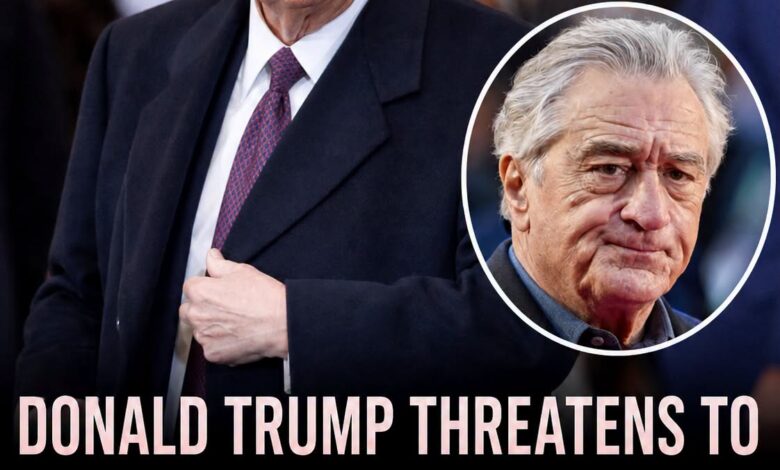
Robert De Niro intensified his long running criticism of Donald Trump with an appeal that sounded less like a film promotion than a political rally. Speaking on a podcast and later at his State of the Swamp event, the actor warned that Trump would ruin the country and urged Americans to take to the streets to defend it.
De Niro framed his opposition through the Constitution, accountability, and his own idea of patriotism. He argued that love of country does not belong to one slogan or one political movement. In his view, citizens can demonstrate loyalty by protesting leaders they believe are abusing power rather than by remaining silent.
Trump answered through Truth Social with an attack directed at the actor personally. He characterized De Niro as Trump Deranged and described him as sick, demented, and of low intelligence. The response did not address the actor’s constitutional argument in detail. It turned the exchange into another public contest of contempt.
The president also grouped De Niro with Democratic congresswomen Ilhan Omar and Rashida Tlaib. By placing the three critics together, Trump portrayed them as hostile figures who should be sent away. The language transformed a dispute over leadership into a question of belonging and suggested removal as the answer to political opposition.
De Niro is an American born in New York, which made the threat to deport him more symbolic than a straightforward immigration proposal. The point was exclusion. Trump’s message treated a prominent critic as someone outside the national community, while De Niro’s remarks claimed that confronting Trump was itself an act of American responsibility.
Neither man softened his language. De Niro spoke with anger and fear about the country’s direction. Trump responded with insults designed for maximum attention. Their exchange followed a familiar pattern in which celebrity, politics, and social media amplify one another until the personalities become more visible than the issues being argued.
Supporters of De Niro viewed the remarks as a forceful defense of democratic institutions. Trump’s supporters saw another wealthy entertainer attacking a president and ordinary voters from a position of privilege. Each audience received language that confirmed its existing judgment, leaving little space for persuasion across the divide.
The State of the Swamp appearance was important because it showed De Niro choosing the role of activist openly. He did not present himself as a neutral observer. He invoked protest, civic action, and resistance, accepting that his words would attract a direct response from the president and further connect his public identity to politics.
Trump’s reply likewise served more than one purpose. It punished a critic, energized supporters, and shifted attention from De Niro’s warnings to the spectacle of their feud. The deportation language ensured that the exchange would travel across headlines and social platforms, where outrage from both sides increased its reach.
What remained was not a policy debate but a portrait of a country divided into political tribes. De Niro and Trump both said they were defending America, yet their messages offered incompatible definitions of the threat. One called for protest against a president. The other answered by imagining critics removed. The confrontation revealed how quickly disagreement can become a fight over who counts as American at all.
The phrase take to the streets also carried different meanings for different listeners. De Niro’s supporters heard a call for lawful public protest and civic participation. Critics treated it as inflammatory language from an actor with a large platform. The dispute demonstrated why political speech by celebrities rarely remains limited to its literal words. Reputation, audience, and partisan expectation determine how the same sentence is understood before any detailed argument begins.